


How far can solar street lights go in the "long run" of lifespan?
Release Time : 2025-12-23
Driven by both green energy and smart city construction, solar street lights have expanded from remote rural areas to urban secondary roads, park trails, and even industrial areas. A well-configured solar street light system is not only about lighting effects but also about its ability to operate stably over long periods under wind, sun, and extreme temperatures.
1. Structural Body: The "Skeleton" of the Light Pole Determines a Ten-Year Foundation
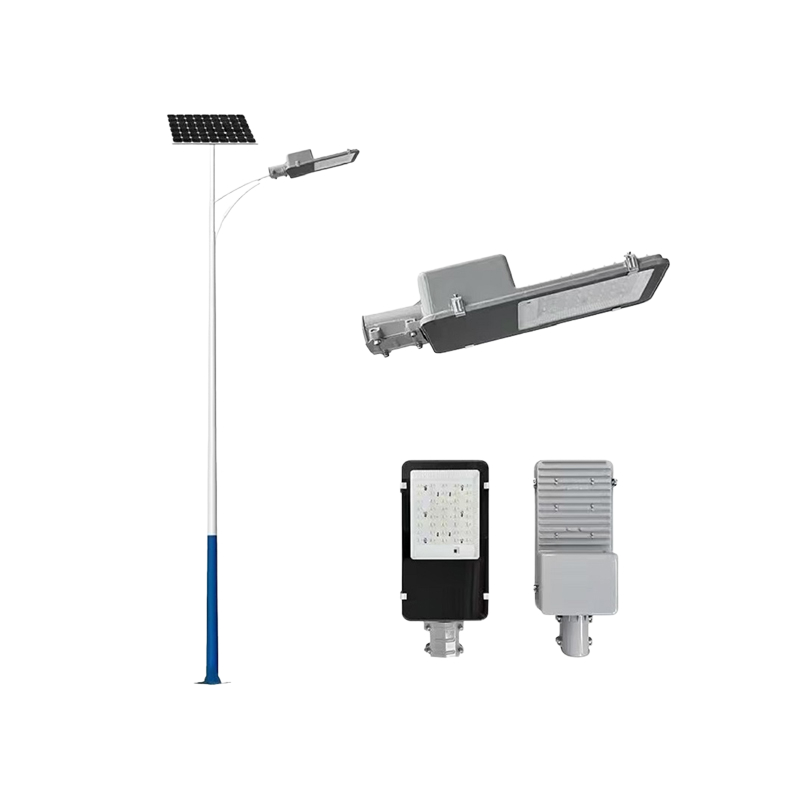
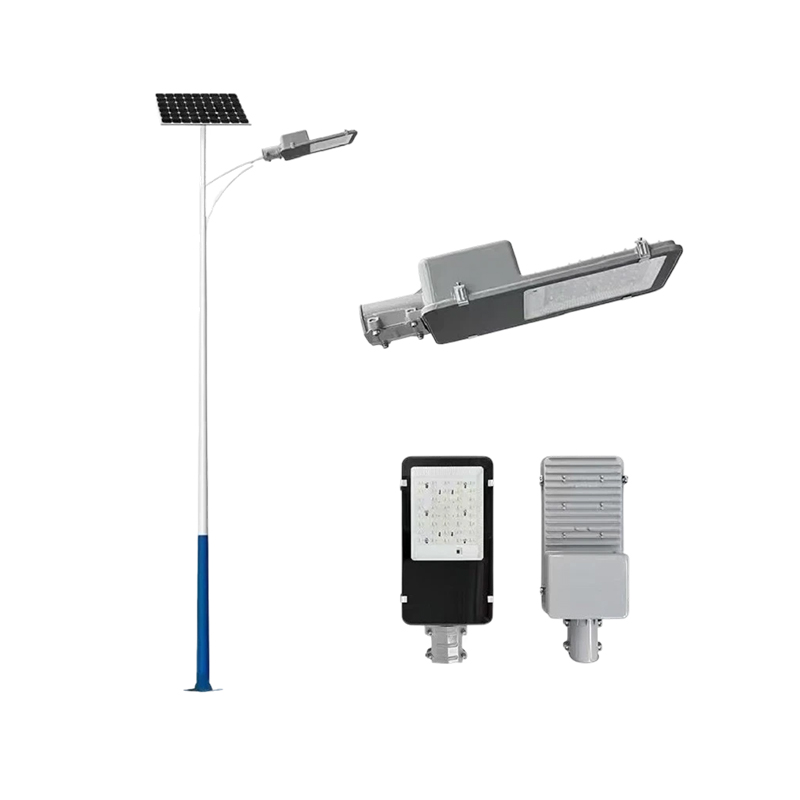
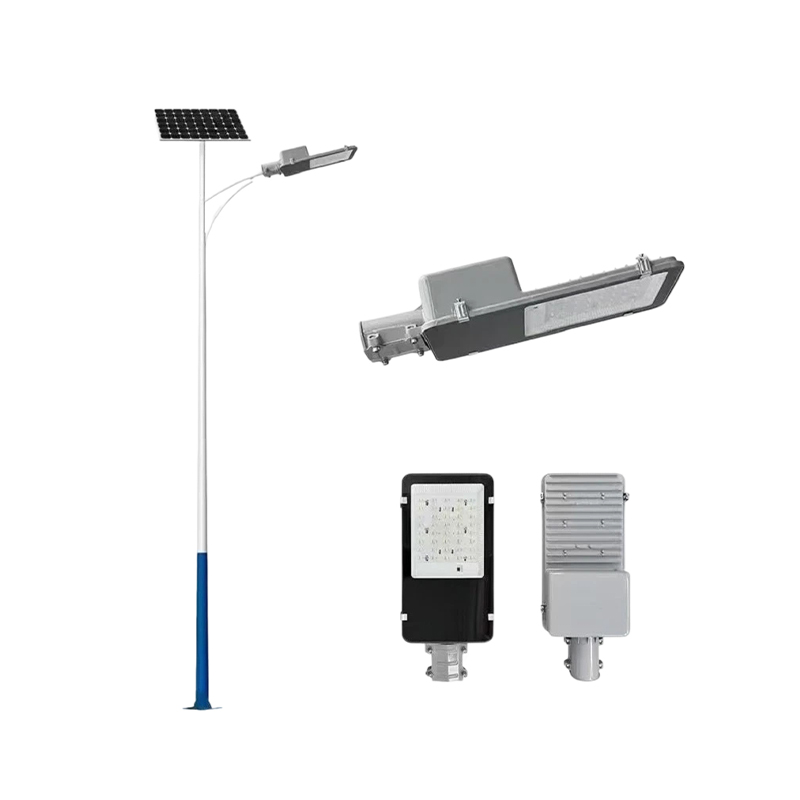
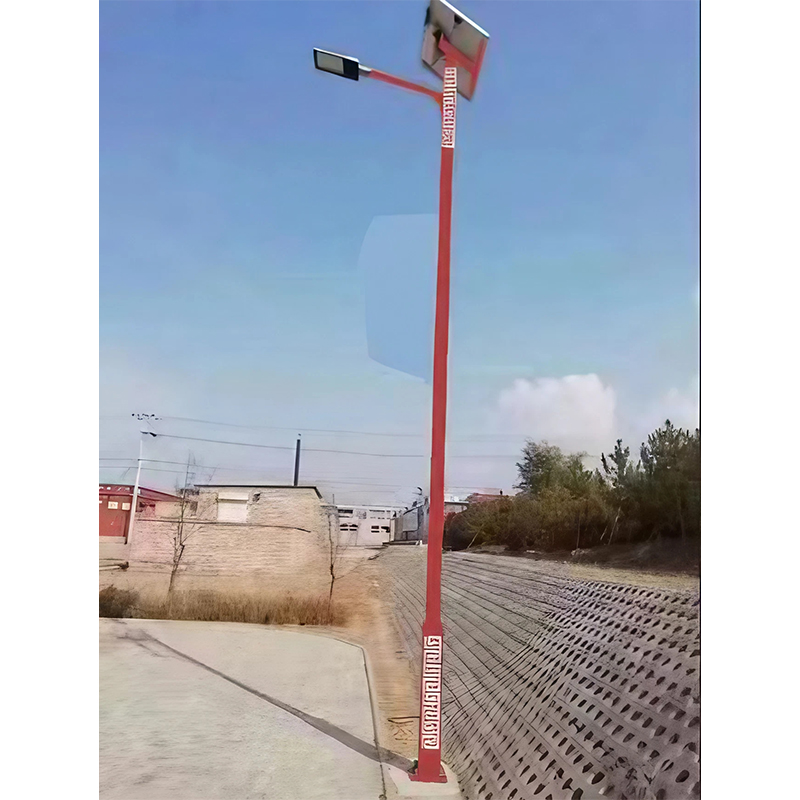
As the supporting framework of the entire system, the durability of the light pole directly affects safety and aesthetics. This example uses a one-piece formed tapered tube of Q235 carbon structural steel, possessing excellent strength and wind resistance. More importantly, the light pole undergoes double anti-corrosion treatment: hot-dip galvanizing followed by outdoor-specific polyester powder coating. Hot-dip galvanizing forms a dense zinc-iron alloy layer, which, even with surface scratches, protects the substrate through sacrificial anode protection; the outer powder coating further isolates it from ultraviolet rays, acid rain, and salt spray corrosion. Under normal conditions, these light poles are designed to last 15-20 years, far exceeding the lifespan of electronic components, providing a solid foundation for the system's longevity.
2. Light Source System: 60W LED + IP65, Ten Years of Illumination is Not a Dream
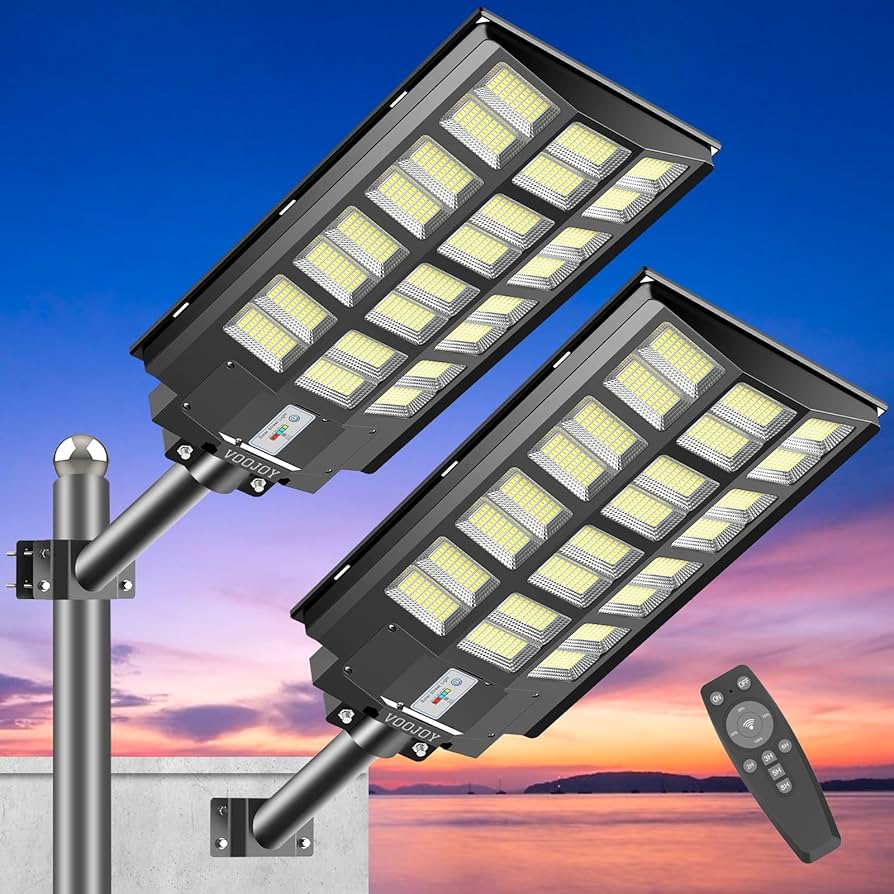
The LED light source is the core of energy consumption and luminous efficiency. This configuration uses a 60W high-power LED module, combined with a high-efficiency heat-dissipating aluminum substrate and optical lenses, to meet road lighting requirements while keeping light decay within a reasonable range. The lifespan can reach over 50,000 hours, which, based on 6 hours of daily operation, translates to a theoretical service life exceeding 22 years. The IP65 protection rating ensures that dust cannot enter, water jets cannot penetrate the interior, and it effectively resists rain, insects, and moisture, avoiding premature light decay or short circuits due to sealing failure. Therefore, as long as the driver power supply is reliable, the LED head itself is fully capable of "completing" the entire system's lifespan.
3. Core Bottleneck: The Real Lifespan Boundary of the 40Ah Lithium Iron Phosphate Battery
Although the light pole and LEDs have long lifespans, the energy storage battery remains the key bottleneck determining the system's "effective lifespan." This example uses a 40Ah lithium iron phosphate (LiFePO₄) battery, whose advantages are:
Long cycle life: Under standard conditions, it can complete 2000–3000 full cycles;
High thermal stability: Decomposition temperature >270℃, safety far superior to ternary lithium batteries;
Overcharge and over-discharge resistance: With an intelligent controller, deep damage can be effectively avoided.
Theoretically, based on one charge and discharge cycle per day, the lifespan is 5.5–8 years. However, in actual outdoor environments, high temperatures accelerate electrolyte aging, and low temperatures without heating protection can easily cause lithium deposition. While long-term shallow charging and discharging extends the cycle count, calendar aging is still inevitable. Therefore, a nominal lifespan of 5–7 years is a reasonable expectation. Fortunately, the lithium iron phosphate battery can still maintain basic lighting function after its capacity decays to 80%, and this system only operates for 6 hours per day, with a relatively light load, which helps extend the actual usable lifespan.
4. Energy Source: The Sustained Power Generation Capacity of a 60W High-Efficiency Solar Panel
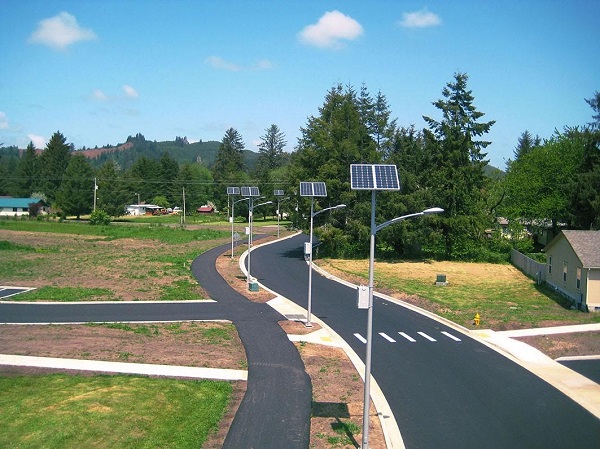
The solar panel is the "energy heart" of the system. This configuration uses 60W monocrystalline silicon modules with a conversion efficiency of ≥18%, which is currently among the mainstream high-efficiency levels. High-quality EVA film and tempered glass encapsulation, combined with an IP68 junction box, resist UV yellowing and damp heat aging. This redundant design for both power generation and consumption significantly reduces the risk of deep battery discharge, indirectly extending overall battery life.
5. Intelligent Control: The Invisible "Lifespan Guardian"
The system is equipped with an MPPT or high-efficiency PWM controller, featuring:
Automatic start/stop with light control; overcharge/over-discharge protection; temperature-compensated charging; and multi-stage dimming strategies.
These functions not only improve energy efficiency but also significantly slow down battery aging. For example, avoiding reverse current loss at night, preventing full charging at high temperatures in summer, and limiting current at low temperatures in winter are all key details for extending battery life. Furthermore, some high-end models support remote monitoring, providing early warnings of battery health status and enabling preventative replacement.
In summary, under ideal operating conditions, this high-spec solar street light system has an effective lifespan of 7-8 years. Specifically, the light poles and LEDs can serve for over 10 years; the solar panels can continuously and efficiently generate electricity for over 15 years; and the lithium iron phosphate battery is the first component to be replaced. With a modular design, only the battery needs to be replaced to extend the system's lifespan, truly achieving "one-time installation, ten years of lighting." The longevity of solar street lights is not determined by a single parameter, but rather by the synergistic effect of materials, configuration, control, and the environment. When every aspect withstands the test of time, this endurance race of green lighting can steadily run into the next decade.
1. Structural Body: The "Skeleton" of the Light Pole Determines a Ten-Year Foundation
As the supporting framework of the entire system, the durability of the light pole directly affects safety and aesthetics. This example uses a one-piece formed tapered tube of Q235 carbon structural steel, possessing excellent strength and wind resistance. More importantly, the light pole undergoes double anti-corrosion treatment: hot-dip galvanizing followed by outdoor-specific polyester powder coating. Hot-dip galvanizing forms a dense zinc-iron alloy layer, which, even with surface scratches, protects the substrate through sacrificial anode protection; the outer powder coating further isolates it from ultraviolet rays, acid rain, and salt spray corrosion. Under normal conditions, these light poles are designed to last 15-20 years, far exceeding the lifespan of electronic components, providing a solid foundation for the system's longevity.
2. Light Source System: 60W LED + IP65, Ten Years of Illumination is Not a Dream
The LED light source is the core of energy consumption and luminous efficiency. This configuration uses a 60W high-power LED module, combined with a high-efficiency heat-dissipating aluminum substrate and optical lenses, to meet road lighting requirements while keeping light decay within a reasonable range. The lifespan can reach over 50,000 hours, which, based on 6 hours of daily operation, translates to a theoretical service life exceeding 22 years. The IP65 protection rating ensures that dust cannot enter, water jets cannot penetrate the interior, and it effectively resists rain, insects, and moisture, avoiding premature light decay or short circuits due to sealing failure. Therefore, as long as the driver power supply is reliable, the LED head itself is fully capable of "completing" the entire system's lifespan.
3. Core Bottleneck: The Real Lifespan Boundary of the 40Ah Lithium Iron Phosphate Battery
Although the light pole and LEDs have long lifespans, the energy storage battery remains the key bottleneck determining the system's "effective lifespan." This example uses a 40Ah lithium iron phosphate (LiFePO₄) battery, whose advantages are:
Long cycle life: Under standard conditions, it can complete 2000–3000 full cycles;
High thermal stability: Decomposition temperature >270℃, safety far superior to ternary lithium batteries;
Overcharge and over-discharge resistance: With an intelligent controller, deep damage can be effectively avoided.
Theoretically, based on one charge and discharge cycle per day, the lifespan is 5.5–8 years. However, in actual outdoor environments, high temperatures accelerate electrolyte aging, and low temperatures without heating protection can easily cause lithium deposition. While long-term shallow charging and discharging extends the cycle count, calendar aging is still inevitable. Therefore, a nominal lifespan of 5–7 years is a reasonable expectation. Fortunately, the lithium iron phosphate battery can still maintain basic lighting function after its capacity decays to 80%, and this system only operates for 6 hours per day, with a relatively light load, which helps extend the actual usable lifespan.
4. Energy Source: The Sustained Power Generation Capacity of a 60W High-Efficiency Solar Panel
The solar panel is the "energy heart" of the system. This configuration uses 60W monocrystalline silicon modules with a conversion efficiency of ≥18%, which is currently among the mainstream high-efficiency levels. High-quality EVA film and tempered glass encapsulation, combined with an IP68 junction box, resist UV yellowing and damp heat aging. This redundant design for both power generation and consumption significantly reduces the risk of deep battery discharge, indirectly extending overall battery life.
5. Intelligent Control: The Invisible "Lifespan Guardian"
The system is equipped with an MPPT or high-efficiency PWM controller, featuring:
Automatic start/stop with light control; overcharge/over-discharge protection; temperature-compensated charging; and multi-stage dimming strategies.
These functions not only improve energy efficiency but also significantly slow down battery aging. For example, avoiding reverse current loss at night, preventing full charging at high temperatures in summer, and limiting current at low temperatures in winter are all key details for extending battery life. Furthermore, some high-end models support remote monitoring, providing early warnings of battery health status and enabling preventative replacement.
In summary, under ideal operating conditions, this high-spec solar street light system has an effective lifespan of 7-8 years. Specifically, the light poles and LEDs can serve for over 10 years; the solar panels can continuously and efficiently generate electricity for over 15 years; and the lithium iron phosphate battery is the first component to be replaced. With a modular design, only the battery needs to be replaced to extend the system's lifespan, truly achieving "one-time installation, ten years of lighting." The longevity of solar street lights is not determined by a single parameter, but rather by the synergistic effect of materials, configuration, control, and the environment. When every aspect withstands the test of time, this endurance race of green lighting can steadily run into the next decade.