


How do solar street lights create new low-carbon living scenarios?
Release Time : 2025-12-30
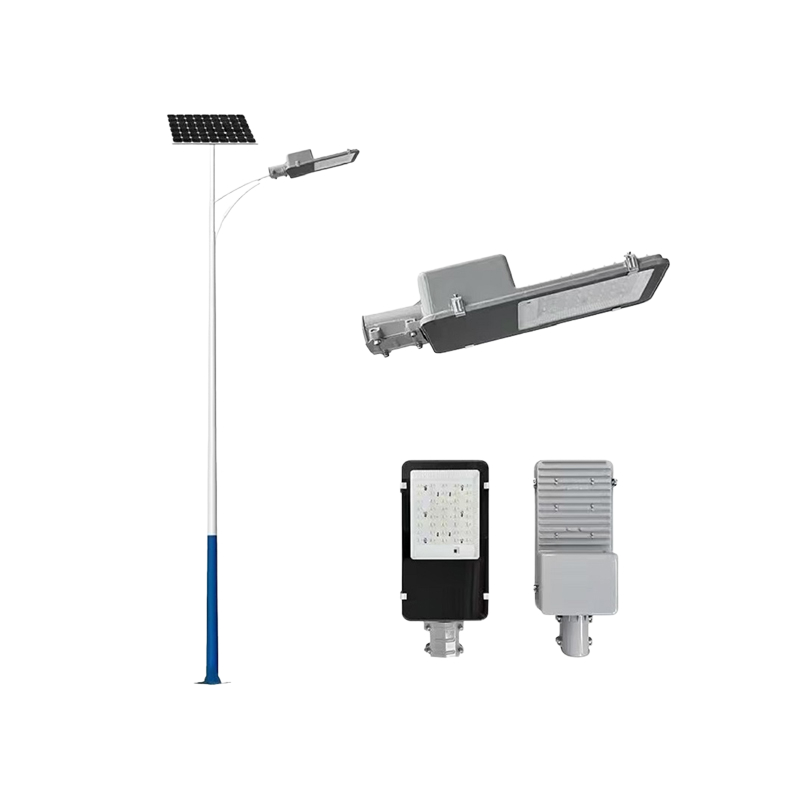
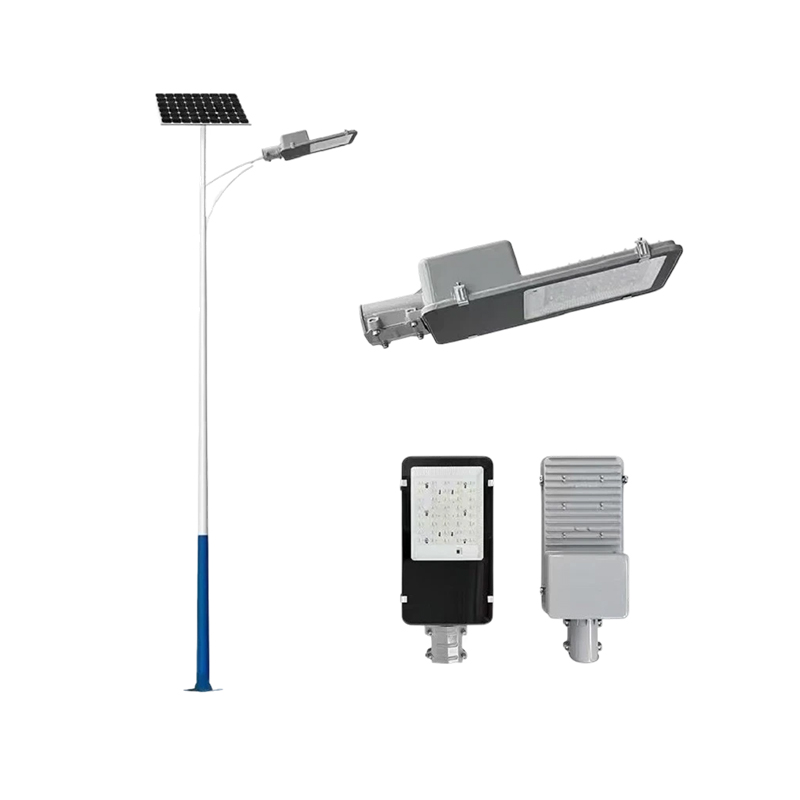
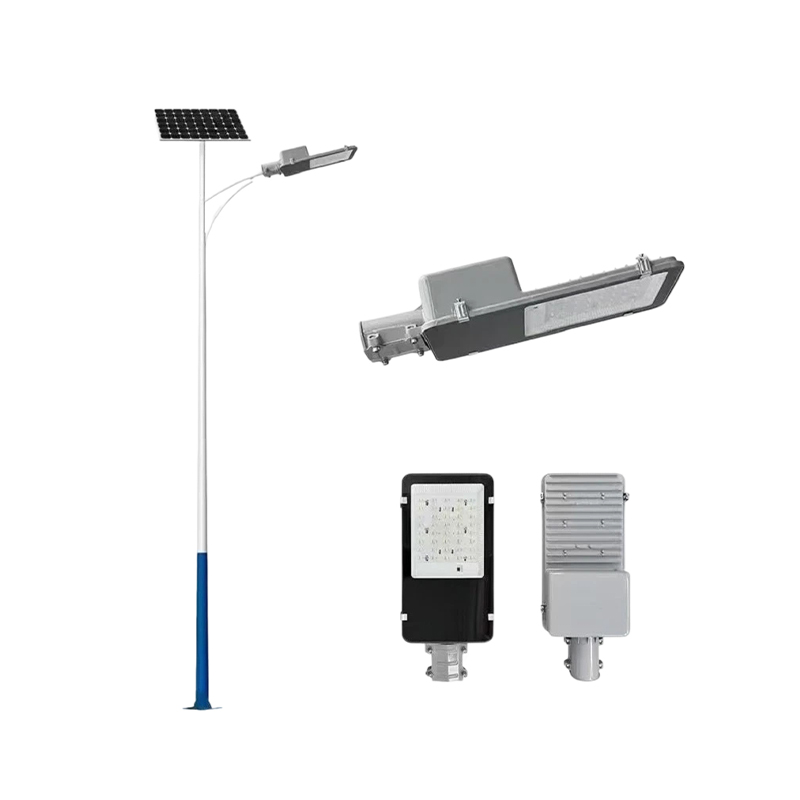
Against the backdrop of global efforts to address climate change and promote green and low-carbon transformation, urban public lighting systems are undergoing a profound energy revolution. Solar street lights, as a model of the integration of renewable energy and intelligent control technology, not only effectively reduce municipal energy consumption and carbon emissions, but also, with their advantages of "zero grid dependence, low maintenance costs, and high environmental adaptability," have become an important carrier for building new low-carbon living scenarios. Taking solar street lights as an example—a 6-meter-high tapered light pole made of Q235 steel, a 60W LED light source, a 40Ah lithium iron phosphate battery, and a 60W high-efficiency solar panel—this system illustrates how it illuminates a green future through integrated design and intelligent operation.
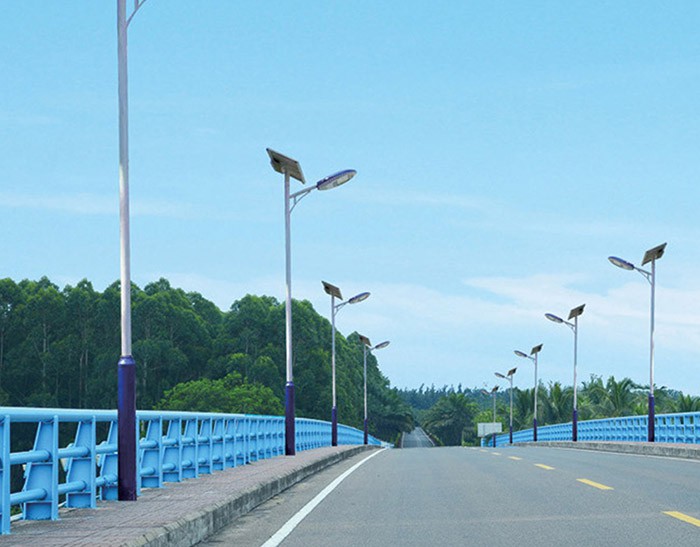
1. Robust and Reliable Structure: Laying the Foundation for Long-Term Outdoor Operation
Solar street lights use high-quality Q235 carbon structural steel, and are manufactured into tapered light poles through a one-piece molding process, reaching a total height of 6 meters. This not only meets the coverage requirements of road lighting but also possesses excellent wind and earthquake resistance. The light pole surface undergoes hot-dip galvanizing, resulting in a uniform zinc layer with strong adhesion, effectively isolating moisture and oxygen to prevent corrosion of the metal substrate. On top of this, a special outdoor anti-rust paint is applied, forming a double anti-corrosion barrier, ensuring structural stability for over 10 years even in complex climatic conditions such as high humidity in coastal areas, severe cold in northern regions, or rainy areas.
This "steel frame + protection" design not only enhances product durability but also significantly reduces the frequency and cost of subsequent maintenance, truly achieving "worry-free installation." This provides physical support for the widespread application of solar street lights in rural roads, park trails, community squares, and other areas without or with weak power grids.
2. High-Efficiency LED Light Source: Balancing Energy Saving and Lighting Quality
The lighting core uses a 60W high-power LED lamp head, with a luminous efficacy of over 130 lm/W, saving more than 60% energy compared to traditional high-pressure sodium lamps. Its color temperature can be customized according to scene requirements, with a color rendering index Ra>70, ensuring clear nighttime visibility and natural color reproduction. Meanwhile, the lamp body achieves an IP65 waterproof rating, making it completely dustproof and able to withstand heavy rain, ensuring stable operation even during typhoons or continuous rainfall.
More importantly, the LED light source has a lifespan of over 50,000 hours, which, combined with an intelligent dimming strategy, further extends its service life. With a daily operating time of 6 hours, the theoretical lifespan exceeds 20 years, far surpassing the battery and control system, fundamentally solving the maintenance problem of frequent light source replacements in traditional streetlights.
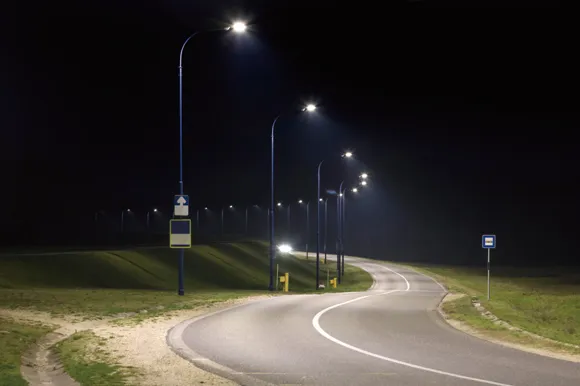
3. High-Performance Energy Storage System: Ensuring Stable Power Supply and Long-Lifespan Operation
Energy storage is a core component of solar streetlights. This product is equipped with a 40Ah lithium iron phosphate battery, which, compared to the earlier lead-acid batteries, offers significant advantages such as higher energy density, longer cycle life, superior high and low temperature performance, and no memory effect. Under standard operating conditions, this battery can support a lifespan of 5-7 years or more, with over 2000 charge-discharge cycles, and retains over 80% of its discharge capacity even at -20℃.
With a 40Ah capacity and a 60W load, the system easily meets the power needs of 6 hours of daily operation, while retaining some redundancy to cope with continuous cloudy and rainy weather. The system features a built-in intelligent battery management system that monitors voltage, current, and temperature in real time to prevent overcharging, over-discharging, and short circuits, ensuring safe and long-lasting operation.
4. High-Efficiency Photovoltaic Modules: Maximizing Daytime Energy Capture
The top-mounted 60W monocrystalline silicon solar panel boasts a photoelectric conversion efficiency exceeding 18%, maximizing power generation within a limited installation area. Based on an average of 4.5 hours of sunshine per year in central and eastern my country, it can generate approximately 270Wh of electricity daily, fully covering the 6 hours of nighttime lighting with a slight surplus. The system design already considers 3-5 days of continuous operation even in cloudy and rainy weather.
The solar panel uses a tempered glass + EVA + backsheet encapsulation structure, making it impact-resistant and aging-resistant, with less than 20% power degradation over 25 years. The bracket angle is optimized and fixed according to the local latitude, achieving efficient energy capture without the need for a tracking system, balancing performance and cost.
5. Intelligent Operating Mode: On-Demand Lighting for More Precise Energy Saving
The system employs dual-mode intelligent control (light control + time control): it automatically turns on at dusk and automatically turns off at dawn, requiring no manual intervention. Users can also flexibly adjust the operating time via remote control or mobile app, for example, setting a "full power for the first 3 hours + half power for the last 3 hours" mode, further saving energy while ensuring lighting effects.
In addition, the system has a low-battery protection mechanism: when continuous rain causes the battery level to fall below the safe threshold, it automatically enters energy-saving mode to avoid deep discharge damage to the battery, and resumes normal operation after the weather clears up. This "adaptive" logic greatly improves the system's environmental adaptability and reliability.
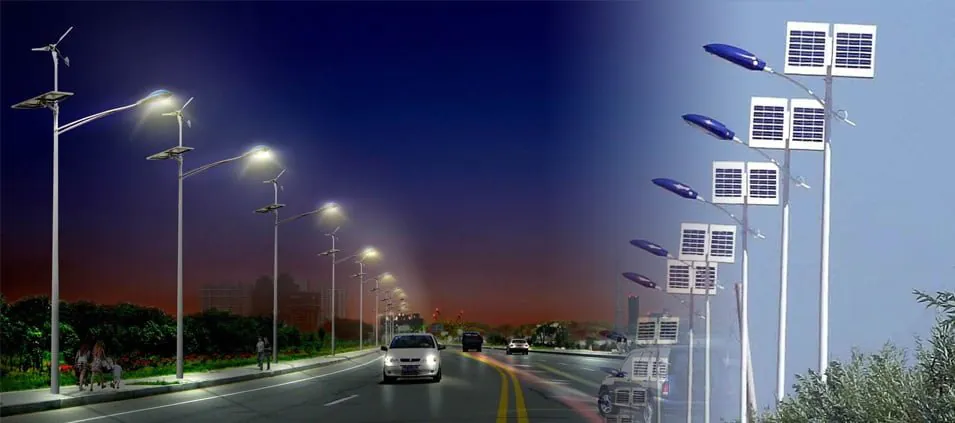
6. Building New Low-Carbon Living Scenarios: From Functional Lighting to Ecological Value
The significance of solar street lights goes far beyond "illuminating the night." It eliminates the need for road excavation and cable laying, reducing construction carbon emissions; it operates with zero electricity costs and zero carbon emissions, reducing CO₂ emissions by approximately 300 kg per light per year; its modular design facilitates mass deployment, contributing to rural revitalization and the "capillary" construction of smart cities.
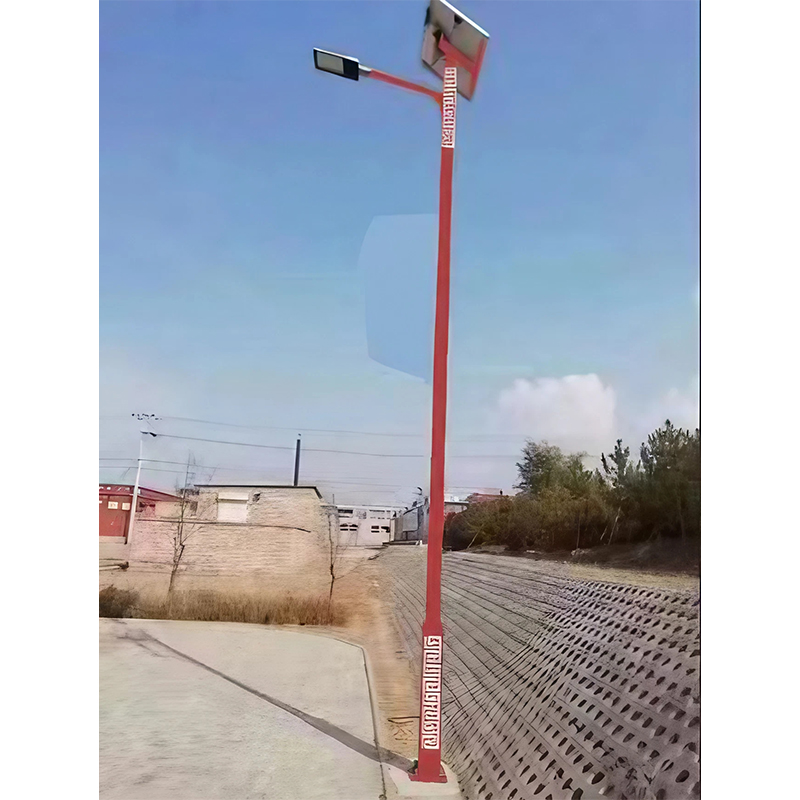
In parks, greenways, campuses, and scenic areas, solar street lights have become a visual symbol of a low-carbon lifestyle. They convey the sustainable concept of "taking from nature and using clean energy," subtly guiding the public to pay attention to green technology and practice environmentally friendly behaviors. In the future, with the integration of the Internet of Things and energy storage technology, solar street lights can also integrate environmental monitoring, Wi-Fi hotspots, emergency charging, and other functions, upgrading into multifunctional urban micro-nodes and truly becoming the infrastructure fulcrum for building new low-carbon living scenarios.
With its robust structure, high-efficiency light source, long-life battery, and intelligent control, solar street lights are not only a mature and reliable lighting solution but also a micro-practice leading to a green future. Guided by the "dual carbon" goal, every self-generating and intelligently operating solar street light is reducing the burden on the earth and adding color to life. When millions of such lights illuminate the night skies of urban and rural areas, what we are building will not only be a road of light but also a broad avenue to a low-carbon, intelligent, and sustainable life.
1. Robust and Reliable Structure: Laying the Foundation for Long-Term Outdoor Operation
Solar street lights use high-quality Q235 carbon structural steel, and are manufactured into tapered light poles through a one-piece molding process, reaching a total height of 6 meters. This not only meets the coverage requirements of road lighting but also possesses excellent wind and earthquake resistance. The light pole surface undergoes hot-dip galvanizing, resulting in a uniform zinc layer with strong adhesion, effectively isolating moisture and oxygen to prevent corrosion of the metal substrate. On top of this, a special outdoor anti-rust paint is applied, forming a double anti-corrosion barrier, ensuring structural stability for over 10 years even in complex climatic conditions such as high humidity in coastal areas, severe cold in northern regions, or rainy areas.
This "steel frame + protection" design not only enhances product durability but also significantly reduces the frequency and cost of subsequent maintenance, truly achieving "worry-free installation." This provides physical support for the widespread application of solar street lights in rural roads, park trails, community squares, and other areas without or with weak power grids.
2. High-Efficiency LED Light Source: Balancing Energy Saving and Lighting Quality
The lighting core uses a 60W high-power LED lamp head, with a luminous efficacy of over 130 lm/W, saving more than 60% energy compared to traditional high-pressure sodium lamps. Its color temperature can be customized according to scene requirements, with a color rendering index Ra>70, ensuring clear nighttime visibility and natural color reproduction. Meanwhile, the lamp body achieves an IP65 waterproof rating, making it completely dustproof and able to withstand heavy rain, ensuring stable operation even during typhoons or continuous rainfall.
More importantly, the LED light source has a lifespan of over 50,000 hours, which, combined with an intelligent dimming strategy, further extends its service life. With a daily operating time of 6 hours, the theoretical lifespan exceeds 20 years, far surpassing the battery and control system, fundamentally solving the maintenance problem of frequent light source replacements in traditional streetlights.
3. High-Performance Energy Storage System: Ensuring Stable Power Supply and Long-Lifespan Operation
Energy storage is a core component of solar streetlights. This product is equipped with a 40Ah lithium iron phosphate battery, which, compared to the earlier lead-acid batteries, offers significant advantages such as higher energy density, longer cycle life, superior high and low temperature performance, and no memory effect. Under standard operating conditions, this battery can support a lifespan of 5-7 years or more, with over 2000 charge-discharge cycles, and retains over 80% of its discharge capacity even at -20℃.
With a 40Ah capacity and a 60W load, the system easily meets the power needs of 6 hours of daily operation, while retaining some redundancy to cope with continuous cloudy and rainy weather. The system features a built-in intelligent battery management system that monitors voltage, current, and temperature in real time to prevent overcharging, over-discharging, and short circuits, ensuring safe and long-lasting operation.
4. High-Efficiency Photovoltaic Modules: Maximizing Daytime Energy Capture
The top-mounted 60W monocrystalline silicon solar panel boasts a photoelectric conversion efficiency exceeding 18%, maximizing power generation within a limited installation area. Based on an average of 4.5 hours of sunshine per year in central and eastern my country, it can generate approximately 270Wh of electricity daily, fully covering the 6 hours of nighttime lighting with a slight surplus. The system design already considers 3-5 days of continuous operation even in cloudy and rainy weather.
The solar panel uses a tempered glass + EVA + backsheet encapsulation structure, making it impact-resistant and aging-resistant, with less than 20% power degradation over 25 years. The bracket angle is optimized and fixed according to the local latitude, achieving efficient energy capture without the need for a tracking system, balancing performance and cost.
5. Intelligent Operating Mode: On-Demand Lighting for More Precise Energy Saving
The system employs dual-mode intelligent control (light control + time control): it automatically turns on at dusk and automatically turns off at dawn, requiring no manual intervention. Users can also flexibly adjust the operating time via remote control or mobile app, for example, setting a "full power for the first 3 hours + half power for the last 3 hours" mode, further saving energy while ensuring lighting effects.
In addition, the system has a low-battery protection mechanism: when continuous rain causes the battery level to fall below the safe threshold, it automatically enters energy-saving mode to avoid deep discharge damage to the battery, and resumes normal operation after the weather clears up. This "adaptive" logic greatly improves the system's environmental adaptability and reliability.
6. Building New Low-Carbon Living Scenarios: From Functional Lighting to Ecological Value
The significance of solar street lights goes far beyond "illuminating the night." It eliminates the need for road excavation and cable laying, reducing construction carbon emissions; it operates with zero electricity costs and zero carbon emissions, reducing CO₂ emissions by approximately 300 kg per light per year; its modular design facilitates mass deployment, contributing to rural revitalization and the "capillary" construction of smart cities.
In parks, greenways, campuses, and scenic areas, solar street lights have become a visual symbol of a low-carbon lifestyle. They convey the sustainable concept of "taking from nature and using clean energy," subtly guiding the public to pay attention to green technology and practice environmentally friendly behaviors. In the future, with the integration of the Internet of Things and energy storage technology, solar street lights can also integrate environmental monitoring, Wi-Fi hotspots, emergency charging, and other functions, upgrading into multifunctional urban micro-nodes and truly becoming the infrastructure fulcrum for building new low-carbon living scenarios.
With its robust structure, high-efficiency light source, long-life battery, and intelligent control, solar street lights are not only a mature and reliable lighting solution but also a micro-practice leading to a green future. Guided by the "dual carbon" goal, every self-generating and intelligently operating solar street light is reducing the burden on the earth and adding color to life. When millions of such lights illuminate the night skies of urban and rural areas, what we are building will not only be a road of light but also a broad avenue to a low-carbon, intelligent, and sustainable life.