


How do solar street lights adapt to extreme wind, rain, and dust environments with an IP65 or higher protection rating?
Release Time : 2026-01-05
Against the backdrop of escalating global climate change and frequent extreme weather events, the environmental adaptability of outdoor lighting equipment has become a key indicator of its reliability and lifespan. As independent intelligent terminals exposed to the natural environment for extended periods, solar street lights must maintain stable operation under harsh conditions such as high temperatures, torrential rain, strong winds, dust storms, and salt spray. An IP65 or higher protection rating is the core technological guarantee for resisting external damage.
1. The Meaning of IP65 Protection Rating: A Dual Barrier of Dust and Water Protection
In IP65, "6" represents "complete dust protection"—no dust can enter the equipment; "5" represents "water jet protection"—able to withstand low-pressure water jets from any direction without being affected. For solar street lights deployed on the edge of deserts, in coastal typhoon zones, in windy and sandy plateaus, or in industrially polluted areas, this rating means that its core components can effectively isolate sand erosion, rainwater penetration, and moisture condensation, fundamentally avoiding short circuits, corrosion, optical attenuation, and other malfunctions.
2. Fully Enclosed Structure Design: Building a Physical Sealing Defense
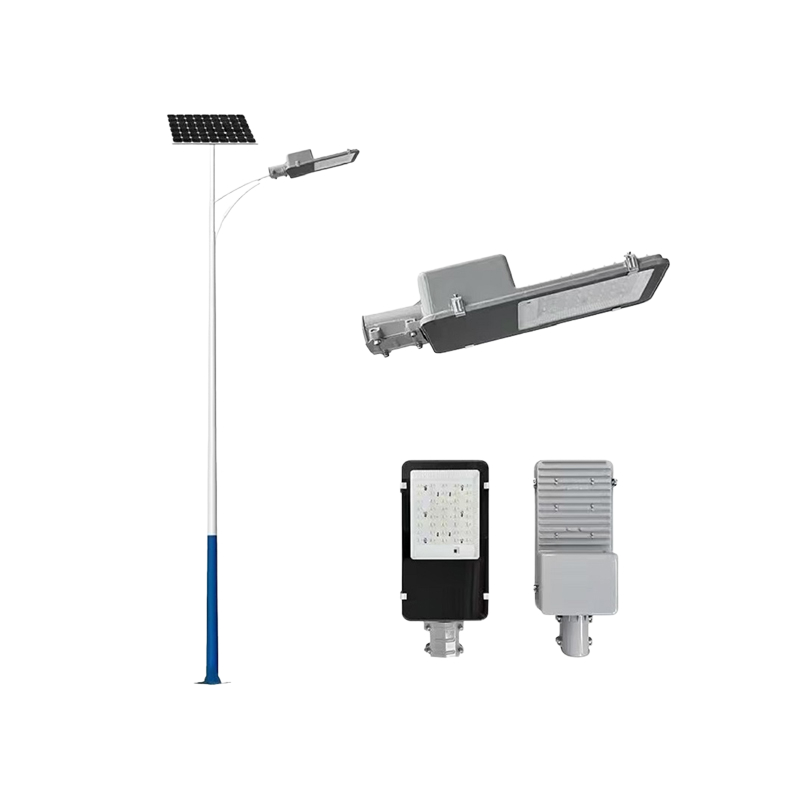
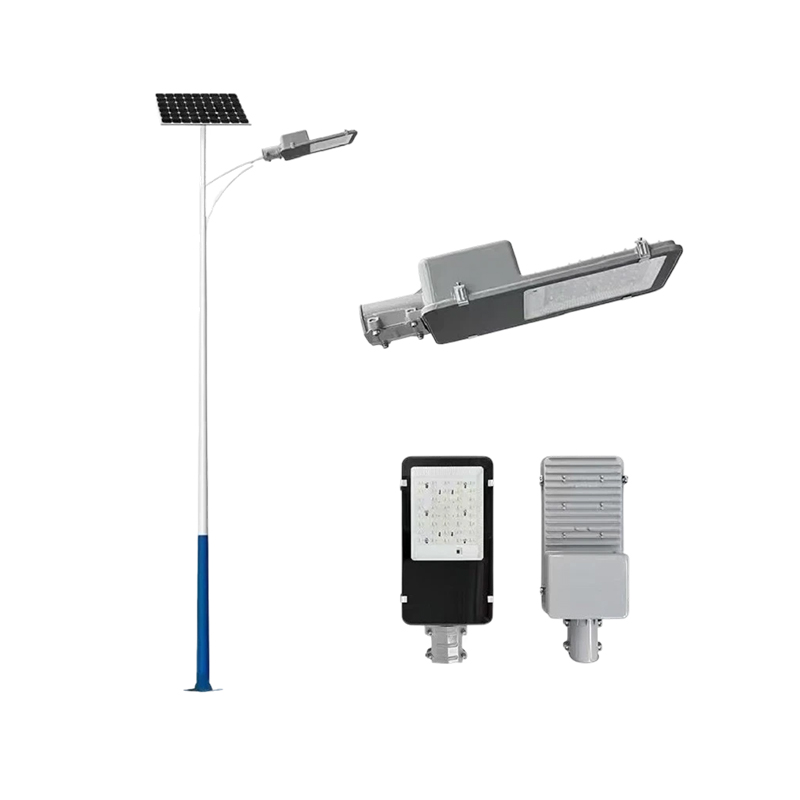
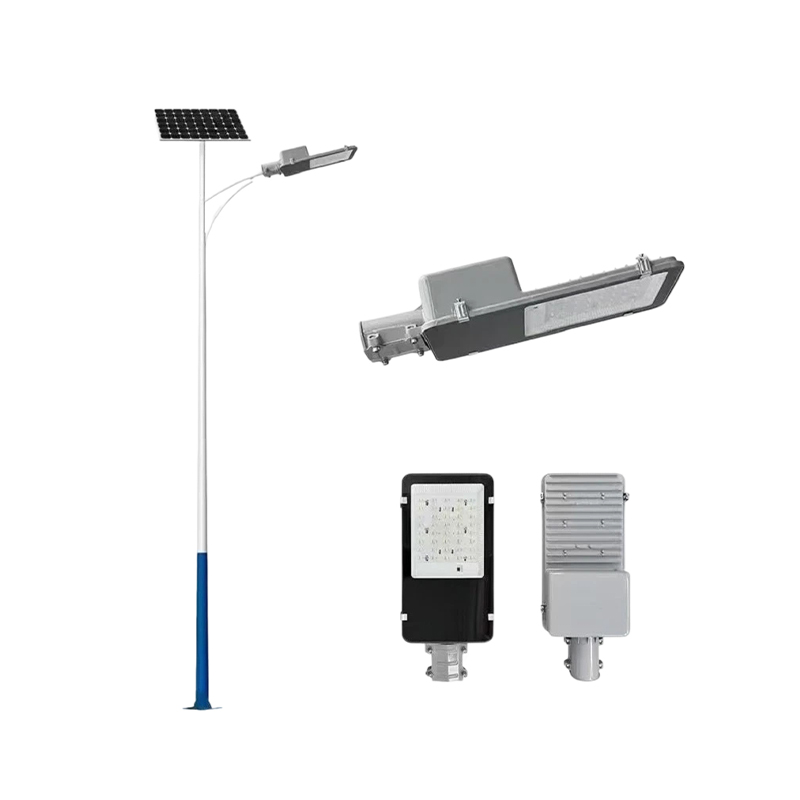
Achieving IP65 protection relies primarily on an integrated die-cast aluminum housing and a high-precision sealing structure. LED lamp heads typically use ADC12 or A380 die-cast aluminum alloy housings with anodized or powder-coated surfaces, offering both high strength and corrosion resistance. Silicone or EPDM sealing rings are embedded at critical joints, utilizing the material's elasticity to form a continuous, seamless compression seal after bolt tightening. Even under temperature variations ranging from -30℃ to +70℃, the sealing rings maintain flexibility, preventing micro-gaps caused by thermal expansion and contraction. Furthermore, all external cable interfaces use PG waterproof connectors or M16/M20 threaded waterproof glands, ensuring overall sealing even when power cables and sensor cables are inserted. Some high-end products even integrate the controller and lithium battery inside the lamp post or within the lamp body's sealed cavity, further reducing the number of external openings and enhancing system-level protection.
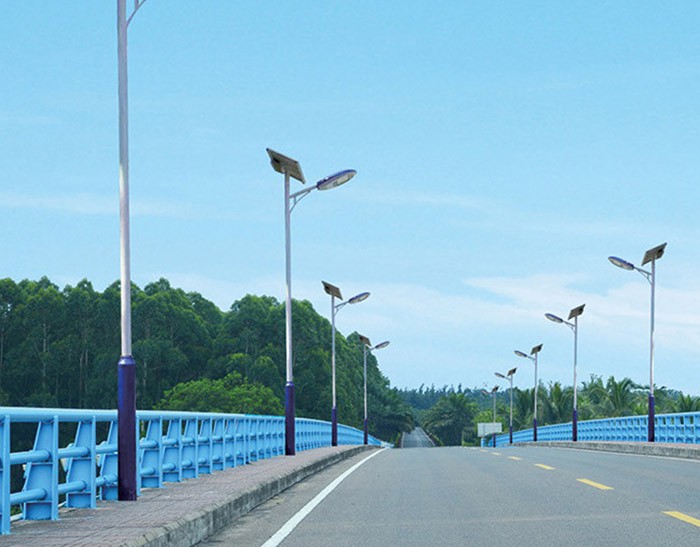
3. Resistance to Wind and Sand Erosion: Preventing Abrasion and Clogging
In windy and sandy areas such as the Gobi Desert in Northwest China and the Middle Eastern deserts, fine particles suspended in the air have extremely strong abrasive properties. If sand and dust penetrate the interior of the lamp, they will not only scratch the LED lens and reduce luminous efficiency, but may also block the heat dissipation channels, leading to overheating and failure. The IP65 "complete dustproof" characteristic is achieved through multiple labyrinthine air intake paths + microporous hydrophobic membrane: even if there are extremely small gaps in the outer shell, sand and dust particles will be trapped due to inertial settling in the tortuous channels; at the same time, in areas where internal and external air pressure need to be balanced, an ePTFE breathable membrane with a pore size of less than 1 micrometer is used, which can block dust and liquid water, but allows gas molecules to pass freely, avoiding negative pressure dust absorption or positive pressure bulging in the sealed cavity due to day and night temperature differences.
4. Rainstorm and Typhoon Response: Reliable Sealing Under Dynamic Water Pressure
Coastal areas often face heavy rainfall and splashing seawater accompanying typhoons. IP65 requires the equipment to withstand jets of water from any direction under a rainfall intensity of 6.3 mm/min. To address this, Solar Street Lights typically use tempered glass or PC material for their lampshades, permanently bonded to the metal base via ultrasonic welding or silicone structural adhesive, eliminating potential water seepage paths associated with traditional screw fixation. The lamp body surface is designed with drainage channels and holes to guide rainwater quickly down, preventing water accumulation. Crucially, the internal circuit board is coated with conformal coating, preventing copper foil oxidation and electrochemical migration even if trace amounts of moisture penetrate. The lithium iron phosphate battery pack is encapsulated in an IP67-rated independent battery box, providing double protection for the core energy safety.
5. Synergistic Thermal Management and Protection: Avoiding the "Sealed = Overheating" Trap
High protection levels often face heat dissipation challenges—complete sealing hinders heat dissipation, leading to increased LED junction temperature and accelerated light decay. Solar Street Lights cleverly resolves this issue through passive cooling and thermal isolation design: the die-cast aluminum lamp housing itself acts as a high-efficiency heat sink, with dense fins on its surface increasing the convection area; thermally conductive silicone grease and an aluminum substrate are used between the LED module and the driver power supply to achieve low thermal resistance conduction; simultaneously, heat-generating components are separated from the battery and controller to avoid heat accumulation. Thus, while ensuring IP65 sealing, the LED operating temperature is maintained below 85℃, guaranteeing a lifespan of over 50,000 hours.
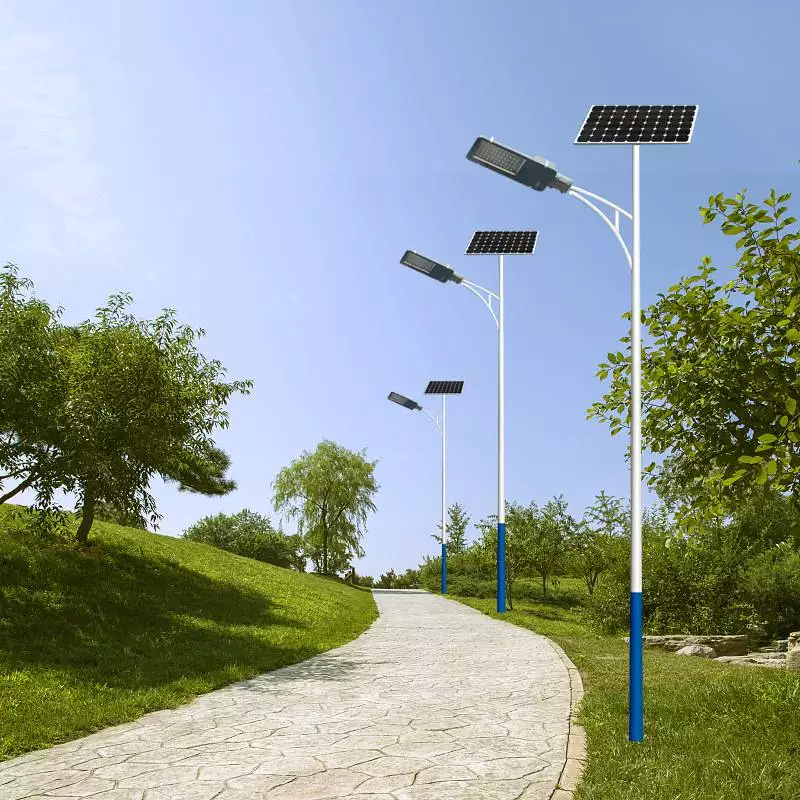
IP65 and higher protection ratings are not merely certification labels for solar street lights, but the cornerstone of their survival in diverse global climates. Through precise sealing structures, the application of weather-resistant materials, intelligent thermal management, and system-level protection strategies, these street lights can remain lit in torrential rains, retain their color in sandstorms, and function reliably in extreme heat and cold. In today's era of green infrastructure driven by dual-carbon goals, highly environmentally adaptable solar street lights are silently and resiliently illuminating every path towards a sustainable future for humanity.
1. The Meaning of IP65 Protection Rating: A Dual Barrier of Dust and Water Protection
In IP65, "6" represents "complete dust protection"—no dust can enter the equipment; "5" represents "water jet protection"—able to withstand low-pressure water jets from any direction without being affected. For solar street lights deployed on the edge of deserts, in coastal typhoon zones, in windy and sandy plateaus, or in industrially polluted areas, this rating means that its core components can effectively isolate sand erosion, rainwater penetration, and moisture condensation, fundamentally avoiding short circuits, corrosion, optical attenuation, and other malfunctions.
2. Fully Enclosed Structure Design: Building a Physical Sealing Defense
Achieving IP65 protection relies primarily on an integrated die-cast aluminum housing and a high-precision sealing structure. LED lamp heads typically use ADC12 or A380 die-cast aluminum alloy housings with anodized or powder-coated surfaces, offering both high strength and corrosion resistance. Silicone or EPDM sealing rings are embedded at critical joints, utilizing the material's elasticity to form a continuous, seamless compression seal after bolt tightening. Even under temperature variations ranging from -30℃ to +70℃, the sealing rings maintain flexibility, preventing micro-gaps caused by thermal expansion and contraction. Furthermore, all external cable interfaces use PG waterproof connectors or M16/M20 threaded waterproof glands, ensuring overall sealing even when power cables and sensor cables are inserted. Some high-end products even integrate the controller and lithium battery inside the lamp post or within the lamp body's sealed cavity, further reducing the number of external openings and enhancing system-level protection.
3. Resistance to Wind and Sand Erosion: Preventing Abrasion and Clogging
In windy and sandy areas such as the Gobi Desert in Northwest China and the Middle Eastern deserts, fine particles suspended in the air have extremely strong abrasive properties. If sand and dust penetrate the interior of the lamp, they will not only scratch the LED lens and reduce luminous efficiency, but may also block the heat dissipation channels, leading to overheating and failure. The IP65 "complete dustproof" characteristic is achieved through multiple labyrinthine air intake paths + microporous hydrophobic membrane: even if there are extremely small gaps in the outer shell, sand and dust particles will be trapped due to inertial settling in the tortuous channels; at the same time, in areas where internal and external air pressure need to be balanced, an ePTFE breathable membrane with a pore size of less than 1 micrometer is used, which can block dust and liquid water, but allows gas molecules to pass freely, avoiding negative pressure dust absorption or positive pressure bulging in the sealed cavity due to day and night temperature differences.
4. Rainstorm and Typhoon Response: Reliable Sealing Under Dynamic Water Pressure
Coastal areas often face heavy rainfall and splashing seawater accompanying typhoons. IP65 requires the equipment to withstand jets of water from any direction under a rainfall intensity of 6.3 mm/min. To address this, Solar Street Lights typically use tempered glass or PC material for their lampshades, permanently bonded to the metal base via ultrasonic welding or silicone structural adhesive, eliminating potential water seepage paths associated with traditional screw fixation. The lamp body surface is designed with drainage channels and holes to guide rainwater quickly down, preventing water accumulation. Crucially, the internal circuit board is coated with conformal coating, preventing copper foil oxidation and electrochemical migration even if trace amounts of moisture penetrate. The lithium iron phosphate battery pack is encapsulated in an IP67-rated independent battery box, providing double protection for the core energy safety.
5. Synergistic Thermal Management and Protection: Avoiding the "Sealed = Overheating" Trap
High protection levels often face heat dissipation challenges—complete sealing hinders heat dissipation, leading to increased LED junction temperature and accelerated light decay. Solar Street Lights cleverly resolves this issue through passive cooling and thermal isolation design: the die-cast aluminum lamp housing itself acts as a high-efficiency heat sink, with dense fins on its surface increasing the convection area; thermally conductive silicone grease and an aluminum substrate are used between the LED module and the driver power supply to achieve low thermal resistance conduction; simultaneously, heat-generating components are separated from the battery and controller to avoid heat accumulation. Thus, while ensuring IP65 sealing, the LED operating temperature is maintained below 85℃, guaranteeing a lifespan of over 50,000 hours.
IP65 and higher protection ratings are not merely certification labels for solar street lights, but the cornerstone of their survival in diverse global climates. Through precise sealing structures, the application of weather-resistant materials, intelligent thermal management, and system-level protection strategies, these street lights can remain lit in torrential rains, retain their color in sandstorms, and function reliably in extreme heat and cold. In today's era of green infrastructure driven by dual-carbon goals, highly environmentally adaptable solar street lights are silently and resiliently illuminating every path towards a sustainable future for humanity.