


How do solar street lights protect the nighttime ecological environment through light pollution control design?
Release Time : 2026-01-06
With the continuous advancement of urbanization and infrastructure construction, while public lighting enhances nighttime safety and convenience, it also brings increasingly serious light pollution problems. Excessive lighting, glare, sky glow, and light intrusion into natural habitats have profoundly impacted wildlife behavior, plant physiological rhythms, and even human health. Against this backdrop, solar street lights, combining green energy attributes with intelligent control capabilities, are effectively mitigating interference with the nighttime ecological environment while ensuring lighting functionality through a series of targeted light pollution control designs.
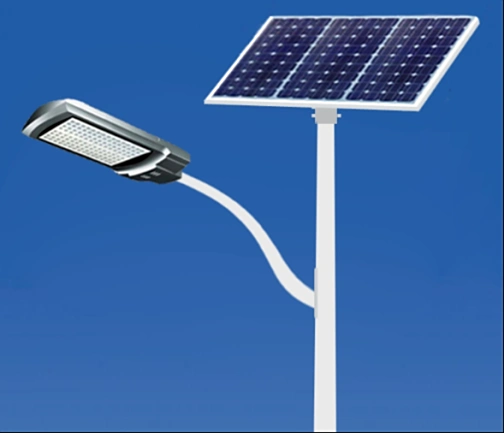
1. Precise Light Distribution Design: Curbing Ineffective Light Spillage at the Source
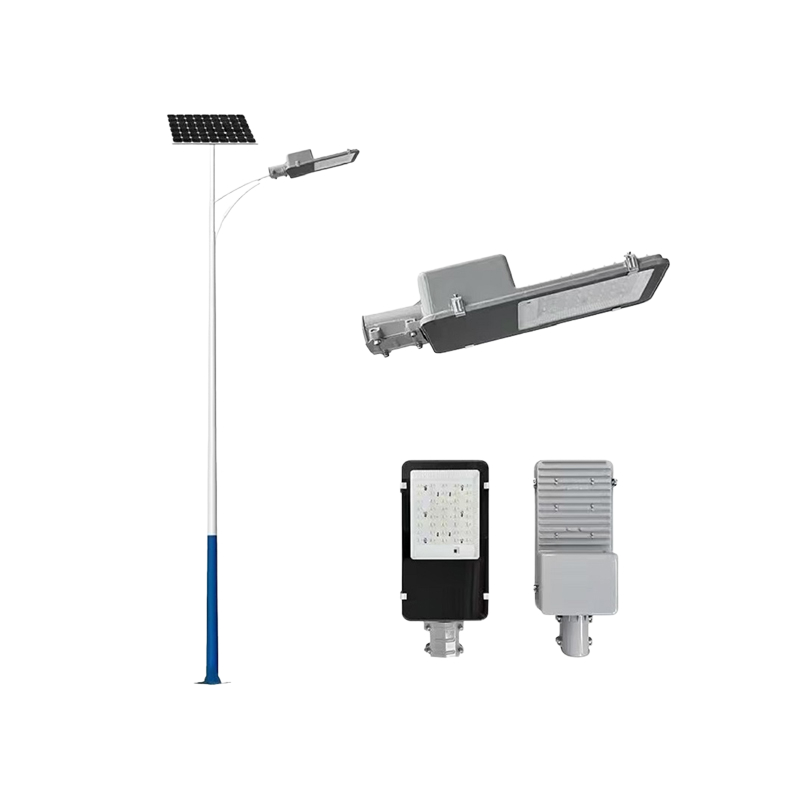
Traditional high-pressure sodium lamps or ordinary LED streetlights often use omnidirectional or wide-angle light emission, resulting in a large amount of light scattering upwards or laterally. This not only wastes energy but also directly causes sky glow and light intrusion into neighboring areas. Modern eco-friendly solar street lights emphasize the concept of "precise lighting" in their lamp head design. Its 60W high-brightness LED light source is typically paired with a cut-off or semi-cut-off optical lens/reflector, strictly controlling over 95% of the luminous flux within the effective lighting area of the road or sidewalk, minimizing upward and lateral spillover.
2. Intelligent Working Mode: On-Demand Lighting, Avoiding Over-Lighting
Light pollution stems not only from improper light direction but also from "unnecessary lighting." Many traditional streetlights remain on all night, consuming energy and releasing light pollution even when no one is passing by. This solar street light employs intelligent light control + timer dual-mode control: it automatically starts after dark but only operates for 6 hours before automatically turning off. This strategy is based on actual pedestrian and vehicle traffic patterns, ensuring lighting safety during peak hours while avoiding ineffective lighting during the low-activity period in the early morning.
More importantly, this mode works synergistically with a 40Ah high-capacity lithium iron phosphate battery—with a battery life of 5-7 years, supporting stable power supply, eliminating the need for excessive energy storage for "all-night lighting." Some high-end models can be upgraded to a human/vehicle sensing mode: entering a low-power standby state during late night, only brightening momentarily when a moving target is detected, further achieving "lights on when people are present, lights off when people leave," minimizing light interference. This on-demand lighting logic fundamentally reduces total light emissions, which is of great significance for protecting the tranquility of the nighttime ecosystem.
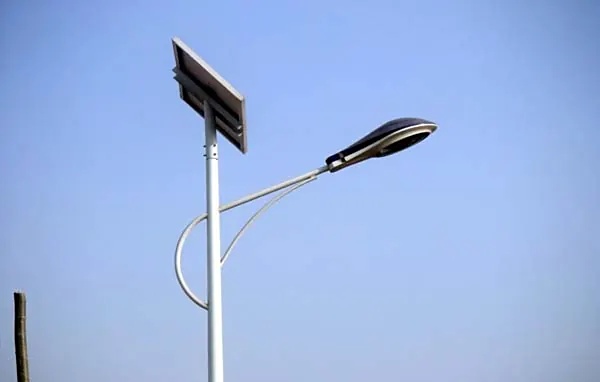
3. Color Temperature and Spectrum Optimization: Reducing Stimulation to Biosensitive Wavelengths
Besides intensity and direction, the color temperature and spectral composition of light are also key factors affecting ecology. Numerous studies have confirmed that short-wavelength blue light has the strongest inhibitory effect on insect phototaxis, bird navigation, and human melatonin secretion. Therefore, eco-friendly solar street lights generally use warm white LEDs below 3000K, whose blue light component is significantly lower than that of cool white light above 5000K.
Although the color temperature is not explicitly stated in this example, the industry trend is clear: in ecologically sensitive areas such as parks, wetlands, and nature reserves, 2700K–3000K light sources are preferred. With the high luminous efficacy of 60W high-efficiency LEDs, even with a lower color temperature, illuminance requirements can still be met. This balance of "low blue light + sufficient illuminance" ensures visual comfort while significantly reducing physiological disturbances to nocturnal creatures, acting as an invisible defense against light pollution.
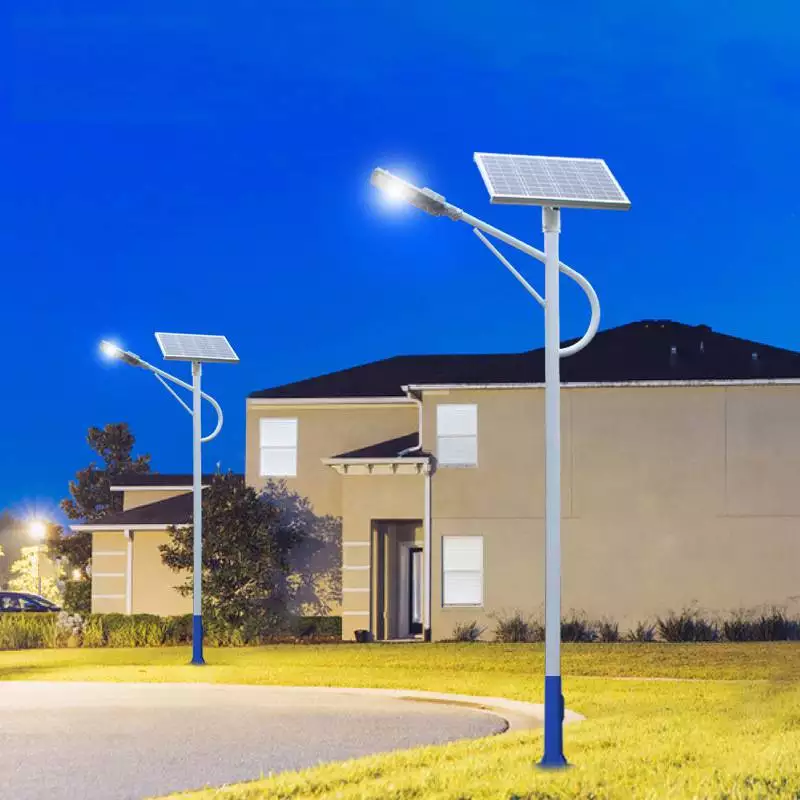
4. System Self-sufficiency and No Grid Dependence: Avoiding Impulsive Lighting Expansion
Traditional grid streetlights, with electricity costs borne by the government, often experience irrational expansion characterized by "more installations, longer operating hours, and higher brightness," exacerbating light pollution. Solar streetlights, however, possess a naturally self-sufficient energy characteristic, creating a constraint: the limited power generation and storage capacity of each light forces designers to be meticulous—installing only where necessary, providing only the necessary brightness, and operating only for the necessary duration. This "hard constraint on resources" promotes more rational and restrained lighting planning, suppressing the spread of light pollution from an institutional perspective. Furthermore, the IP65 waterproof and dustproof design ensures stable long-term outdoor operation, reducing abnormal continuous lighting or flickering caused by malfunctions and preventing sudden light interference that could disturb wildlife.
In conclusion, solar street lights are not simply "replacing power lines with the sun," but rather a comprehensive light pollution control system built upon four pillars: precise light distribution, intelligent timing control, spectral optimization, and system self-sufficiency. In wetland parks, they prevent strong light from disturbing waterbirds; on rural roads, they reduce interference with firefly breeding; and on mountain trails, they protect the foraging routes of nocturnal animals. The restrained emission of each light is a respect for the ecological rights of the night.
1. Precise Light Distribution Design: Curbing Ineffective Light Spillage at the Source
Traditional high-pressure sodium lamps or ordinary LED streetlights often use omnidirectional or wide-angle light emission, resulting in a large amount of light scattering upwards or laterally. This not only wastes energy but also directly causes sky glow and light intrusion into neighboring areas. Modern eco-friendly solar street lights emphasize the concept of "precise lighting" in their lamp head design. Its 60W high-brightness LED light source is typically paired with a cut-off or semi-cut-off optical lens/reflector, strictly controlling over 95% of the luminous flux within the effective lighting area of the road or sidewalk, minimizing upward and lateral spillover.
2. Intelligent Working Mode: On-Demand Lighting, Avoiding Over-Lighting
Light pollution stems not only from improper light direction but also from "unnecessary lighting." Many traditional streetlights remain on all night, consuming energy and releasing light pollution even when no one is passing by. This solar street light employs intelligent light control + timer dual-mode control: it automatically starts after dark but only operates for 6 hours before automatically turning off. This strategy is based on actual pedestrian and vehicle traffic patterns, ensuring lighting safety during peak hours while avoiding ineffective lighting during the low-activity period in the early morning.
More importantly, this mode works synergistically with a 40Ah high-capacity lithium iron phosphate battery—with a battery life of 5-7 years, supporting stable power supply, eliminating the need for excessive energy storage for "all-night lighting." Some high-end models can be upgraded to a human/vehicle sensing mode: entering a low-power standby state during late night, only brightening momentarily when a moving target is detected, further achieving "lights on when people are present, lights off when people leave," minimizing light interference. This on-demand lighting logic fundamentally reduces total light emissions, which is of great significance for protecting the tranquility of the nighttime ecosystem.
3. Color Temperature and Spectrum Optimization: Reducing Stimulation to Biosensitive Wavelengths
Besides intensity and direction, the color temperature and spectral composition of light are also key factors affecting ecology. Numerous studies have confirmed that short-wavelength blue light has the strongest inhibitory effect on insect phototaxis, bird navigation, and human melatonin secretion. Therefore, eco-friendly solar street lights generally use warm white LEDs below 3000K, whose blue light component is significantly lower than that of cool white light above 5000K.
Although the color temperature is not explicitly stated in this example, the industry trend is clear: in ecologically sensitive areas such as parks, wetlands, and nature reserves, 2700K–3000K light sources are preferred. With the high luminous efficacy of 60W high-efficiency LEDs, even with a lower color temperature, illuminance requirements can still be met. This balance of "low blue light + sufficient illuminance" ensures visual comfort while significantly reducing physiological disturbances to nocturnal creatures, acting as an invisible defense against light pollution.
4. System Self-sufficiency and No Grid Dependence: Avoiding Impulsive Lighting Expansion
Traditional grid streetlights, with electricity costs borne by the government, often experience irrational expansion characterized by "more installations, longer operating hours, and higher brightness," exacerbating light pollution. Solar streetlights, however, possess a naturally self-sufficient energy characteristic, creating a constraint: the limited power generation and storage capacity of each light forces designers to be meticulous—installing only where necessary, providing only the necessary brightness, and operating only for the necessary duration. This "hard constraint on resources" promotes more rational and restrained lighting planning, suppressing the spread of light pollution from an institutional perspective. Furthermore, the IP65 waterproof and dustproof design ensures stable long-term outdoor operation, reducing abnormal continuous lighting or flickering caused by malfunctions and preventing sudden light interference that could disturb wildlife.
In conclusion, solar street lights are not simply "replacing power lines with the sun," but rather a comprehensive light pollution control system built upon four pillars: precise light distribution, intelligent timing control, spectral optimization, and system self-sufficiency. In wetland parks, they prevent strong light from disturbing waterbirds; on rural roads, they reduce interference with firefly breeding; and on mountain trails, they protect the foraging routes of nocturnal animals. The restrained emission of each light is a respect for the ecological rights of the night.