


Solar street lights effectively prevent traffic accidents and improve public safety at night
Release Time : 2026-01-20
In today's era of simultaneous urbanization and rural revitalization, public lighting is not only a convenient facility but also a crucial infrastructure for ensuring traffic safety and public order. While traditional electric streetlights offer widespread coverage, blind spots often exist in remote roads, rural alleys, park trails, and newly developed areas due to difficulties in wiring, high costs, or unstable power supply. Solar street lights, with their advantages of independent power supply, flexible deployment, and intelligent control, are becoming a key solution for filling these "dark corners" and are playing an increasingly significant role in preventing traffic accidents and improving public safety.
1. Eliminating blind spots and reducing the risk of nighttime traffic accidents
Extensive traffic data shows that the accident rate at night is much higher than during the day, with insufficient lighting being a major contributing factor. In areas without streetlights or with poor lighting, drivers have limited visibility and find it difficult to identify pedestrians, non-motorized vehicles, obstacles, or road markings in time, easily leading to collisions, being run over, or even running off the road. Solar street lights do not rely on the municipal power grid and can be quickly installed in any location requiring illumination—whether it's a winding rural road, a newly built industrial park, or a mountain trail lacking electricity. Their high-brightness LED light source, combined with a scientifically designed light distribution, provides uniform, glare-free road lighting, significantly improving road visibility. Especially in accident-prone areas such as curves, intersections, and around schools, the installation of solar street lights increases driver reaction time and makes pedestrian silhouettes clearer, effectively reducing accidents caused by blind spots. Pilot programs in multiple locations have shown that the installation of solar street lights has reduced the nighttime traffic accident rate on relevant road sections by an average of over 30%.
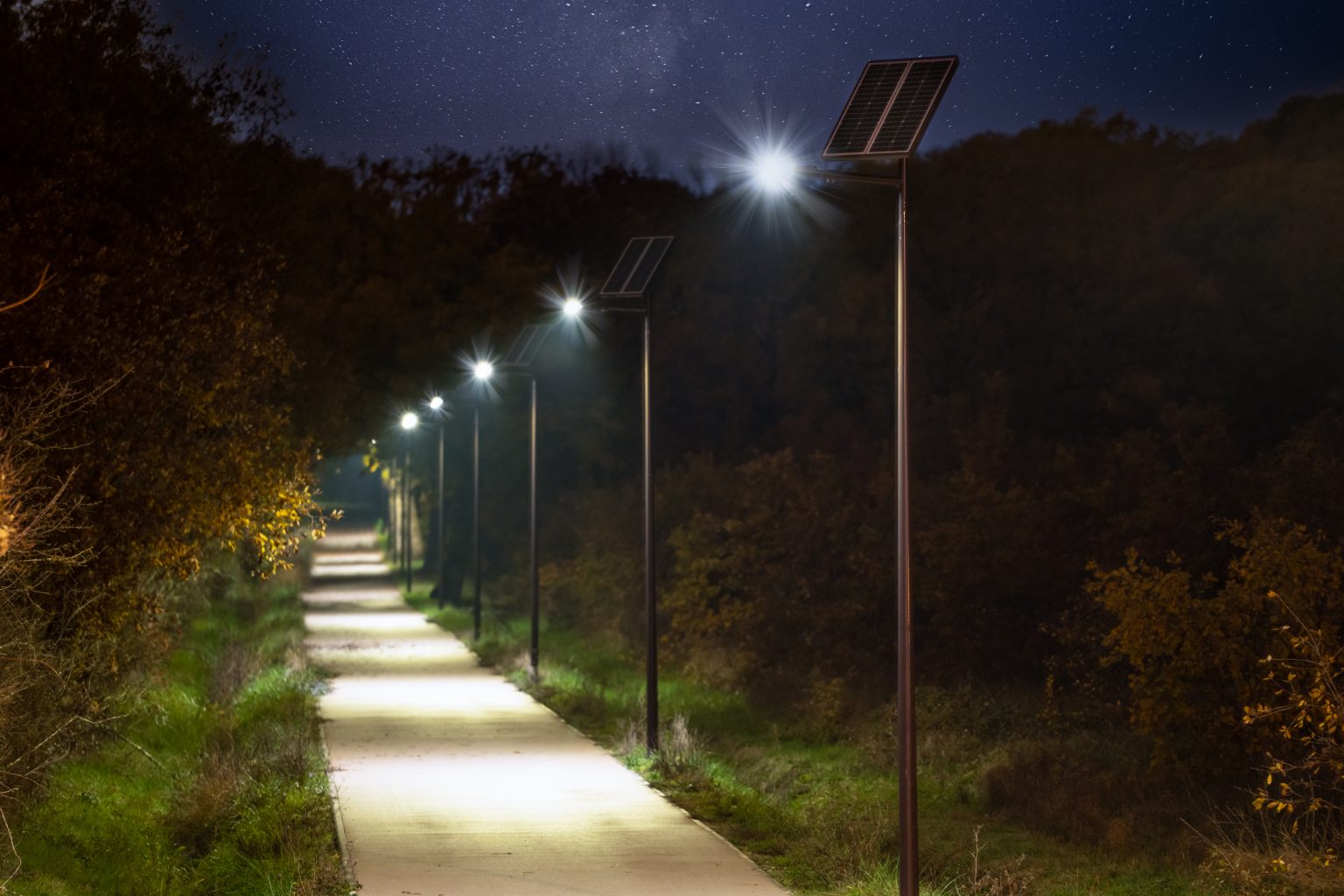
"Darkness breeds crime" is not an exaggeration. Lack of lighting in back streets, alleys, underpasses, parking lots, and green spaces often become hotspots for theft, robbery, harassment, and other security incidents. Adequate nighttime lighting not only increases the exposure risk of potential offenders, creating a psychological deterrent, but also enhances the sense of security among ordinary citizens, encouraging more people to travel and engage in activities at night. This "natural surveillance" effect thus improves community vitality and self-protection capabilities. Solar street lights, due to their flexible deployment, can precisely cover security weaknesses that traditional lighting struggles to reach. For example, solar wall lights can be installed in older residential areas to illuminate building entrances; low-profile landscape lights can be installed along park trails, combining lighting with ambiance; and continuous lighting can be achieved on main roads in urban-rural fringe areas. This precise supplementary lighting strategy of "illuminating where it's dark" significantly reduces opportunities for crime. Public security departments in many areas have reported a significant decrease in related police incidents and a marked increase in resident satisfaction after the installation of solar street lights in key areas.
3. Intelligent Functions Further Enhance Security Efficiency
Modern solar street lights are no longer just "light sources," but also front-end nodes in smart security systems. Many products integrate human body sensors, remote monitoring, emergency alarms, and even broadcast systems. For example, when sensors detect abnormal movement, streetlights can automatically increase their brightness and trigger camera recording; in emergencies, pedestrians can contact the management center via a one-button call device. These intelligent extensions upgrade solar streetlights from passive lighting to proactive security tools, further strengthening nighttime safety.
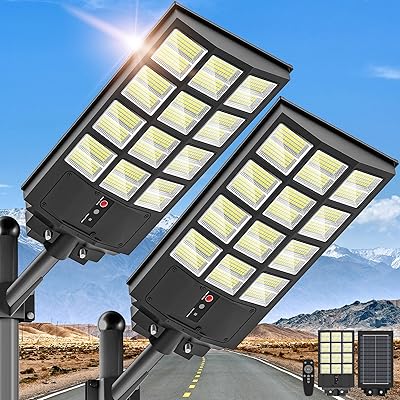
With their green, flexible, and reliable characteristics, solar street lights are reshaping the public lighting landscape. They not only illuminate roads but also enhance safety—preventing traffic accidents by eliminating blind spots and deterring crime by dispelling darkness. In the context of building a safe China and smart cities, promoting solar streetlights is not only a measure for energy transformation but also an important practice for improving people's well-being and building a harmonious society. These self-illuminating streetlights are silently protecting the peace and tranquility of countless households at night.
1. Eliminating blind spots and reducing the risk of nighttime traffic accidents
Extensive traffic data shows that the accident rate at night is much higher than during the day, with insufficient lighting being a major contributing factor. In areas without streetlights or with poor lighting, drivers have limited visibility and find it difficult to identify pedestrians, non-motorized vehicles, obstacles, or road markings in time, easily leading to collisions, being run over, or even running off the road. Solar street lights do not rely on the municipal power grid and can be quickly installed in any location requiring illumination—whether it's a winding rural road, a newly built industrial park, or a mountain trail lacking electricity. Their high-brightness LED light source, combined with a scientifically designed light distribution, provides uniform, glare-free road lighting, significantly improving road visibility. Especially in accident-prone areas such as curves, intersections, and around schools, the installation of solar street lights increases driver reaction time and makes pedestrian silhouettes clearer, effectively reducing accidents caused by blind spots. Pilot programs in multiple locations have shown that the installation of solar street lights has reduced the nighttime traffic accident rate on relevant road sections by an average of over 30%.
2. Enhancing Public Space Safety and Curbing Crime
"Darkness breeds crime" is not an exaggeration. Lack of lighting in back streets, alleys, underpasses, parking lots, and green spaces often become hotspots for theft, robbery, harassment, and other security incidents. Adequate nighttime lighting not only increases the exposure risk of potential offenders, creating a psychological deterrent, but also enhances the sense of security among ordinary citizens, encouraging more people to travel and engage in activities at night. This "natural surveillance" effect thus improves community vitality and self-protection capabilities. Solar street lights, due to their flexible deployment, can precisely cover security weaknesses that traditional lighting struggles to reach. For example, solar wall lights can be installed in older residential areas to illuminate building entrances; low-profile landscape lights can be installed along park trails, combining lighting with ambiance; and continuous lighting can be achieved on main roads in urban-rural fringe areas. This precise supplementary lighting strategy of "illuminating where it's dark" significantly reduces opportunities for crime. Public security departments in many areas have reported a significant decrease in related police incidents and a marked increase in resident satisfaction after the installation of solar street lights in key areas.
3. Intelligent Functions Further Enhance Security Efficiency
Modern solar street lights are no longer just "light sources," but also front-end nodes in smart security systems. Many products integrate human body sensors, remote monitoring, emergency alarms, and even broadcast systems. For example, when sensors detect abnormal movement, streetlights can automatically increase their brightness and trigger camera recording; in emergencies, pedestrians can contact the management center via a one-button call device. These intelligent extensions upgrade solar streetlights from passive lighting to proactive security tools, further strengthening nighttime safety.
With their green, flexible, and reliable characteristics, solar street lights are reshaping the public lighting landscape. They not only illuminate roads but also enhance safety—preventing traffic accidents by eliminating blind spots and deterring crime by dispelling darkness. In the context of building a safe China and smart cities, promoting solar streetlights is not only a measure for energy transformation but also an important practice for improving people's well-being and building a harmonious society. These self-illuminating streetlights are silently protecting the peace and tranquility of countless households at night.