

How do solar street lights demonstrate their strong adaptability in complex geographical environments?
Release Time : 2026-01-19
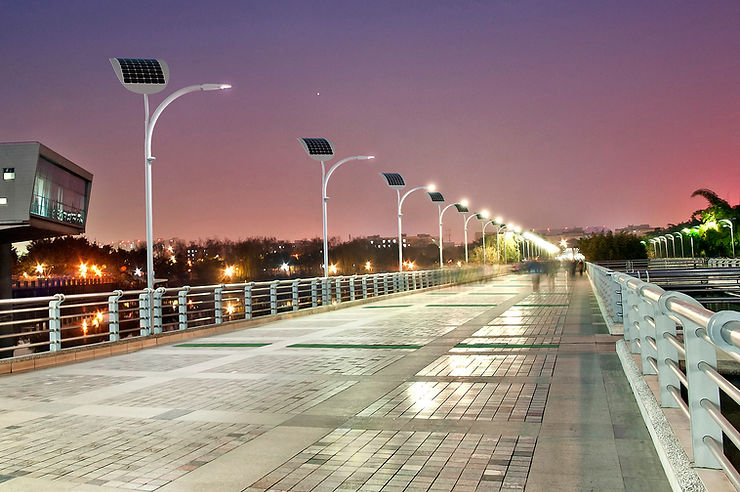
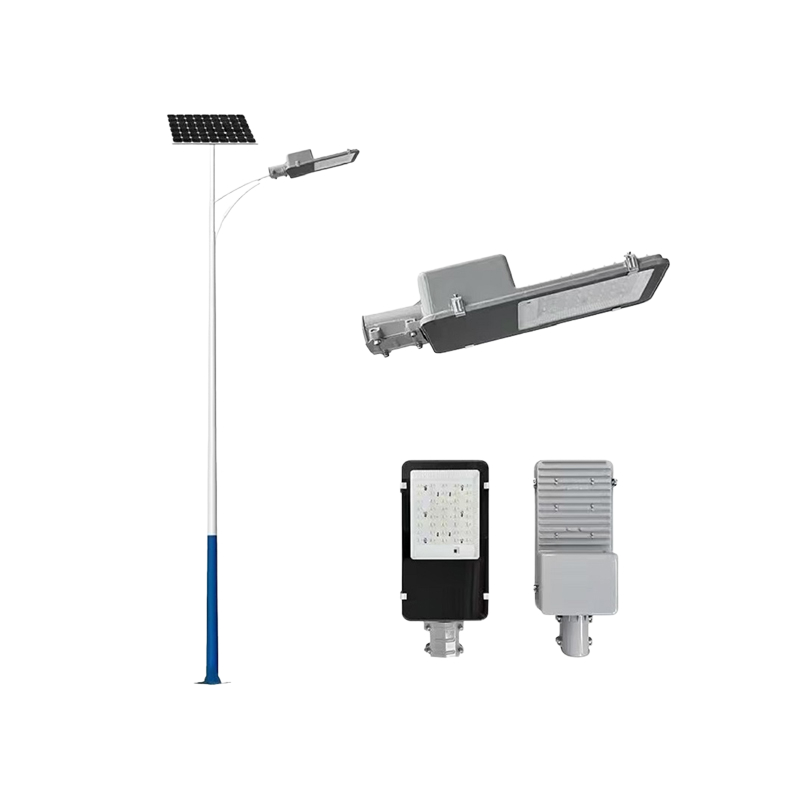
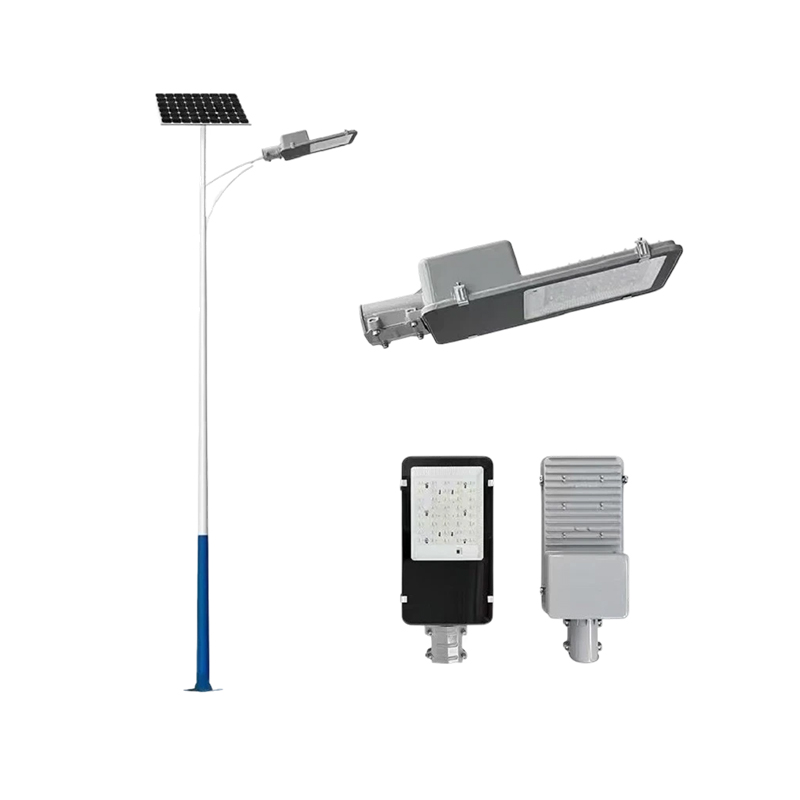
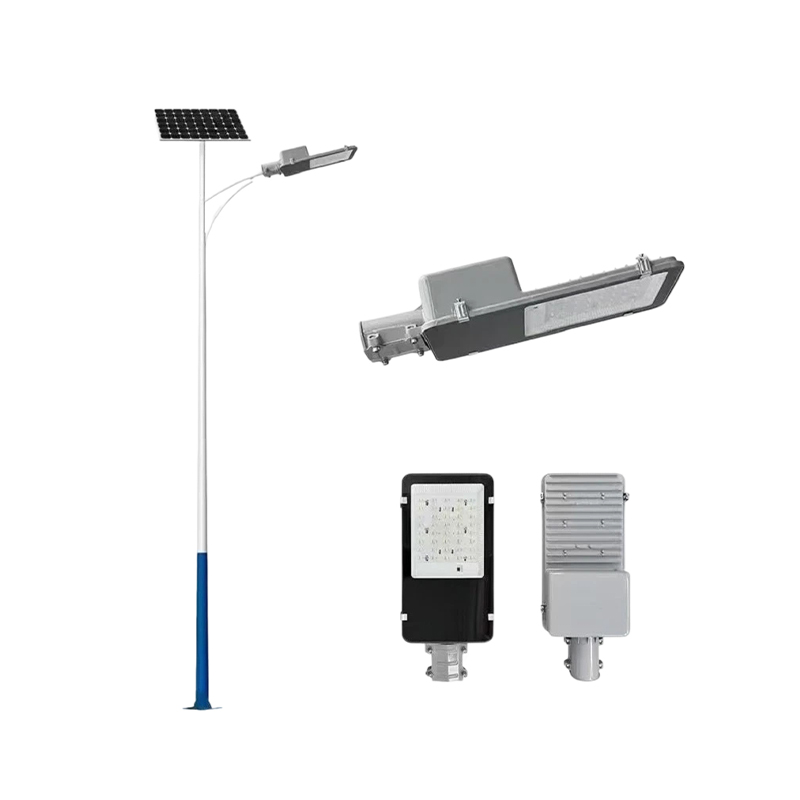
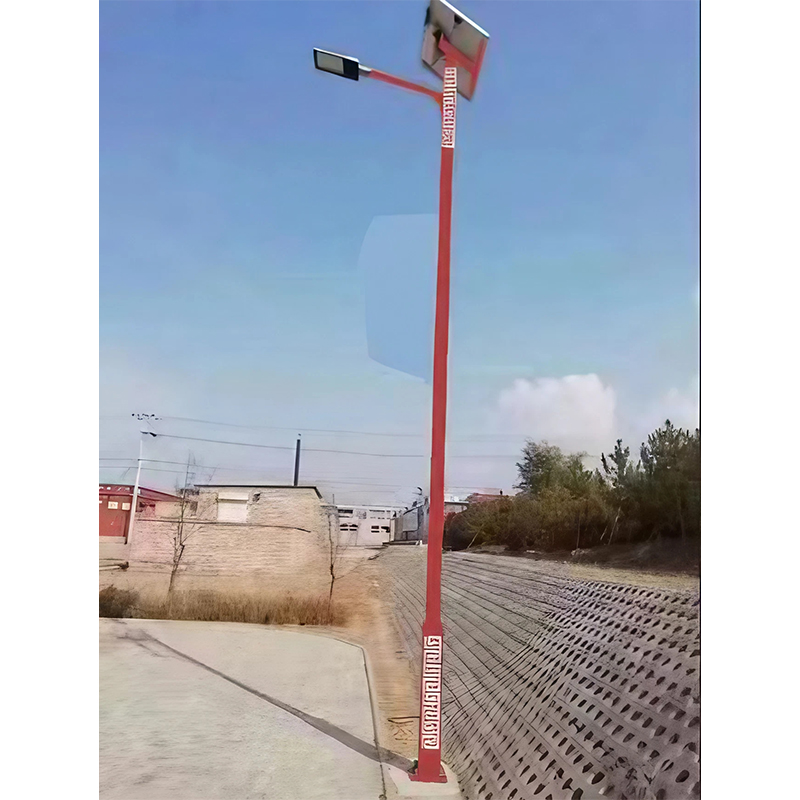
Across the vast land of China, from frigid plateaus to humid islands, from arid deserts to rainy mountainous regions, the diversity of geographical environments presents enormous challenges to traditional power grid infrastructure. Solar street lights, with their independent energy system and modular design, demonstrate exceptional environmental adaptability in complex areas lacking electricity, with weak current, or where wiring is difficult. With a total height of 6 meters, a Q235 steel tapered pole, a 60W LED light source, a 40Ah lithium iron phosphate battery, and a 60W high-efficiency solar panel, solar street lights can stably serve various harsh scenarios, truly achieving "light everywhere, no grid required."
1. Robust Structure Resists Harsh Climate
The pole, as the core support, is made of high-quality Q235 carbon steel, cold-bent into a tapered tube, which not only improves wind resistance but also reduces wind resistance through its streamlined design. The surface is hot-dip galvanized and then sprayed with outdoor-grade anti-rust paint, forming a double anti-corrosion barrier, effectively resisting corrosive environments such as high humidity, salt spray, and acid rain. In coastal areas, this technology ensures the light poles remain rust-free for over 15 years; in the windy and sandy northwest, it withstands long-term wind erosion and temperature stress. The 6-meter height balances lighting coverage with ease of installation, meeting the width requirements of rural roads while facilitating transportation and hoisting.
2. High-Efficiency Energy System Addresses Uneven Sunlight
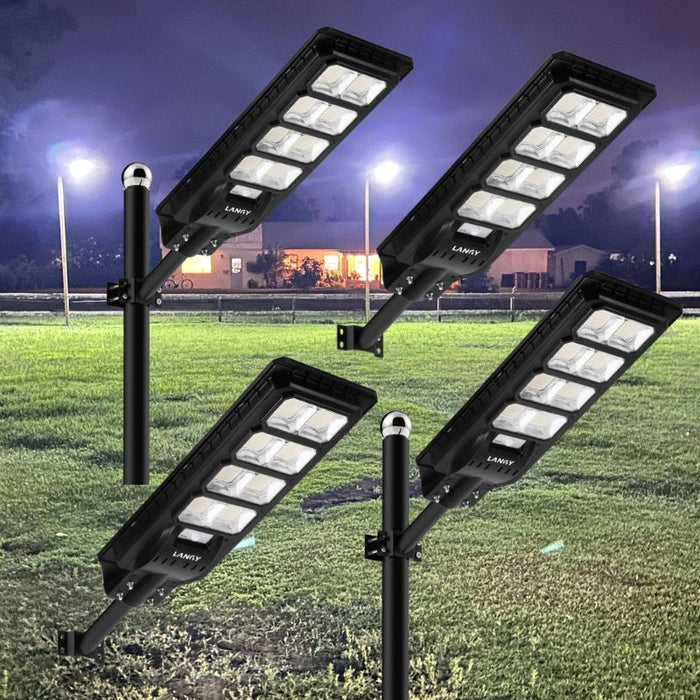
Complex geographical environments often involve varying solar resources: high-altitude areas have strong ultraviolet radiation but short winter days, southern rainy areas experience frequent cloudy days, and northern winters may see snow cover covering photovoltaic panels. To address this, the system uses 60W monocrystalline silicon solar panels with a photoelectric conversion efficiency exceeding 18%, effectively generating electricity even under low-light conditions; paired with 40Ah lithium iron phosphate batteries, which have a wide operating temperature range, a cycle life exceeding 3000 cycles, and excellent high-temperature stability and safety. The intelligent charge and discharge controller automatically adjusts the LED operating time based on the number of consecutive cloudy or rainy days, ensuring basic lighting can be maintained even after 3-5 days of continuous cloudy or rainy weather, significantly improving energy self-sufficiency.
3. Intelligent Control Adapts to Diverse Needs
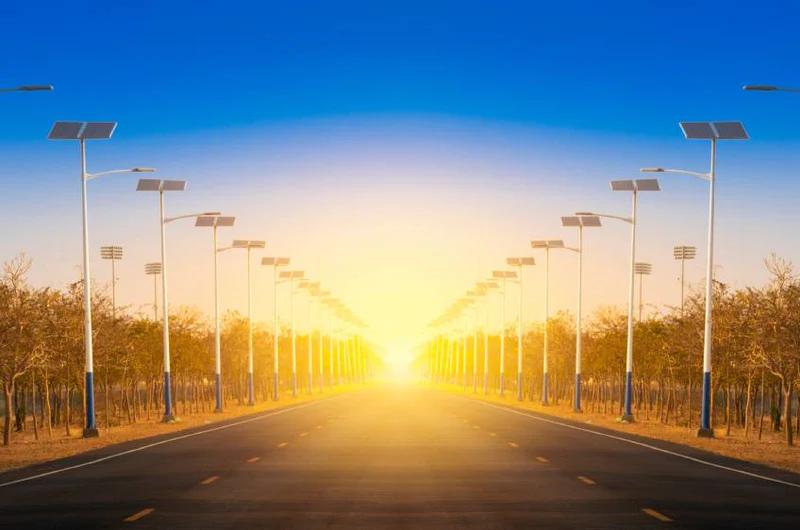
The system employs a dual-mode logic of light control and time control: it automatically lights up at dusk and automatically turns off at dawn, requiring no manual intervention. It also supports remote or local setting of operating hours, flexibly matching the pedestrian activity patterns of different areas. The IP65-rated 60W LED lamp head is not only dustproof and waterproof but also maintains stable output in heavy rain and sandstorms, providing approximately 8000 lumens of high-brightness illumination, effectively covering a road width of 15-20 meters. This "on-demand lighting" strategy ensures safety while avoiding energy waste.
4. Wiring-Free Advantage Overcomes Terrain Limitations
In mountainous areas, valleys, forests, and other areas where the power grid is difficult to cover, traditional streetlights require cutting through mountains and laying cables, resulting in high costs and significant ecological damage. Solar streetlights operate completely independently; each lamp is a system, allowing for flexible placement along mountain roads, riverbanks, and field ridges, eliminating the need for trenches, cables, or transformers. Installation only requires foundation fixing; 2-3 people can complete one pole in half a day, significantly shortening the construction period. For temporary construction sites, post-disaster emergency response, or ecological protection zones, its rapid deployment and zero grid dependence are particularly valuable.
1. Robust Structure Resists Harsh Climate
The pole, as the core support, is made of high-quality Q235 carbon steel, cold-bent into a tapered tube, which not only improves wind resistance but also reduces wind resistance through its streamlined design. The surface is hot-dip galvanized and then sprayed with outdoor-grade anti-rust paint, forming a double anti-corrosion barrier, effectively resisting corrosive environments such as high humidity, salt spray, and acid rain. In coastal areas, this technology ensures the light poles remain rust-free for over 15 years; in the windy and sandy northwest, it withstands long-term wind erosion and temperature stress. The 6-meter height balances lighting coverage with ease of installation, meeting the width requirements of rural roads while facilitating transportation and hoisting.
2. High-Efficiency Energy System Addresses Uneven Sunlight
Complex geographical environments often involve varying solar resources: high-altitude areas have strong ultraviolet radiation but short winter days, southern rainy areas experience frequent cloudy days, and northern winters may see snow cover covering photovoltaic panels. To address this, the system uses 60W monocrystalline silicon solar panels with a photoelectric conversion efficiency exceeding 18%, effectively generating electricity even under low-light conditions; paired with 40Ah lithium iron phosphate batteries, which have a wide operating temperature range, a cycle life exceeding 3000 cycles, and excellent high-temperature stability and safety. The intelligent charge and discharge controller automatically adjusts the LED operating time based on the number of consecutive cloudy or rainy days, ensuring basic lighting can be maintained even after 3-5 days of continuous cloudy or rainy weather, significantly improving energy self-sufficiency.
3. Intelligent Control Adapts to Diverse Needs
The system employs a dual-mode logic of light control and time control: it automatically lights up at dusk and automatically turns off at dawn, requiring no manual intervention. It also supports remote or local setting of operating hours, flexibly matching the pedestrian activity patterns of different areas. The IP65-rated 60W LED lamp head is not only dustproof and waterproof but also maintains stable output in heavy rain and sandstorms, providing approximately 8000 lumens of high-brightness illumination, effectively covering a road width of 15-20 meters. This "on-demand lighting" strategy ensures safety while avoiding energy waste.
4. Wiring-Free Advantage Overcomes Terrain Limitations
In mountainous areas, valleys, forests, and other areas where the power grid is difficult to cover, traditional streetlights require cutting through mountains and laying cables, resulting in high costs and significant ecological damage. Solar streetlights operate completely independently; each lamp is a system, allowing for flexible placement along mountain roads, riverbanks, and field ridges, eliminating the need for trenches, cables, or transformers. Installation only requires foundation fixing; 2-3 people can complete one pole in half a day, significantly shortening the construction period. For temporary construction sites, post-disaster emergency response, or ecological protection zones, its rapid deployment and zero grid dependence are particularly valuable.