


How strong is the rust resistance of hot-dip galvanized and outdoor anti-rust paint for solar street lights?
Release Time : 2026-02-03
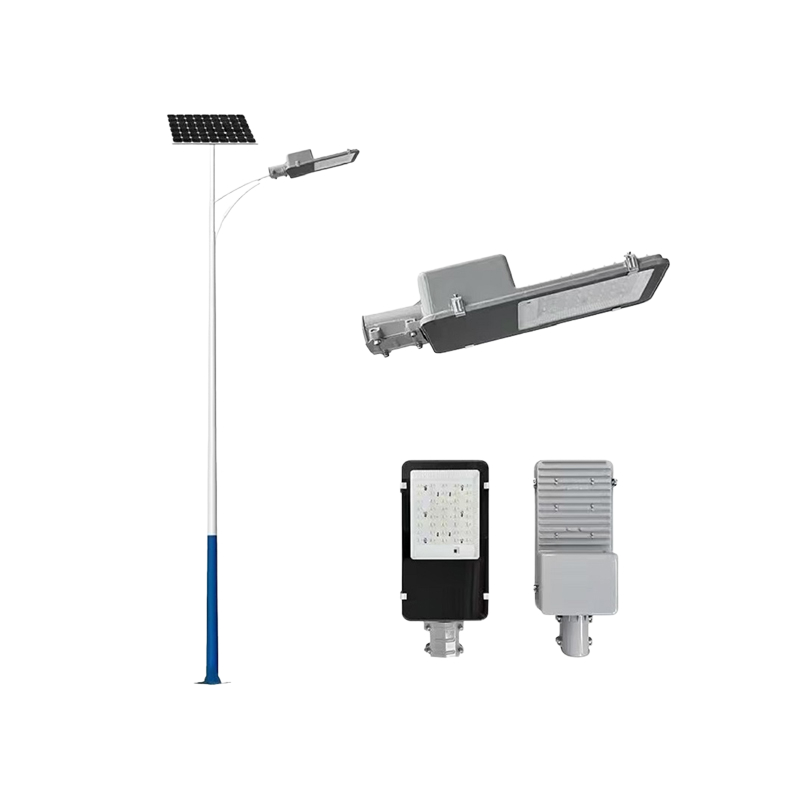
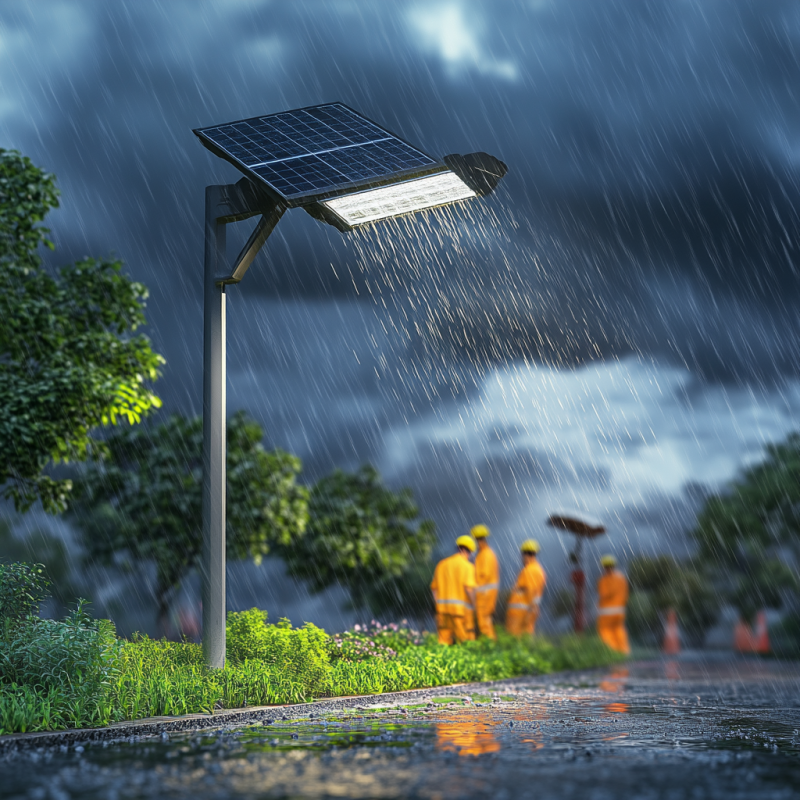
In outdoor lighting equipment, solar street lights are exposed to complex corrosive environments such as sunlight, rain, high humidity, salt spray, industrial atmospheres, and even sandstorms for extended periods. As the core structure supporting the entire system, the light pole must possess excellent corrosion resistance. Once rust occurs, it not only affects aesthetics but also weakens structural strength, shortens service life, and can even pose safety hazards. Therefore, high-quality solar street lights generally employ a dual anti-corrosion system of "hot-dip galvanizing + outdoor anti-rust paint." This combination is not a simple layering but rather constructs a long-lasting, reliable, and environmentally adaptable rust-proof barrier through a triple mechanism of physical barriers, electrochemical protection, and weather-resistant aesthetics. Its protective lifespan can reach 15-25 years, far exceeding that of single anti-corrosion processes.
1. Hot-dip galvanizing: A metallurgically bonded cathodic protection layer
Hot-dip galvanizing involves immersing a rust-removed Q235 carbon steel lamp post in molten zinc at approximately 450°C. This causes a metallurgical reaction between iron and zinc at high temperatures, forming an alloy coating consisting of Gamma, Delta, Zeta, and pure zinc layers from the inside out. This coating is typically 80–120 micrometers thick, atomically bonded to the substrate, exhibiting extremely strong adhesion and resisting peeling. Its greatest advantage lies in its "cathode protection": zinc's standard electrode potential is lower than iron's. When the coating is partially damaged and the steel substrate is exposed, zinc acts as the anode, preferentially corroding and sacrificing itself to protect the steel cathode. This active protection mechanism effectively prevents rust spread even at scratches or cuts, a core advantage unmatched by ordinary paint or electroplating.
2. Outdoor anti-rust paint: A weather-resistant barrier and aesthetic upgrade
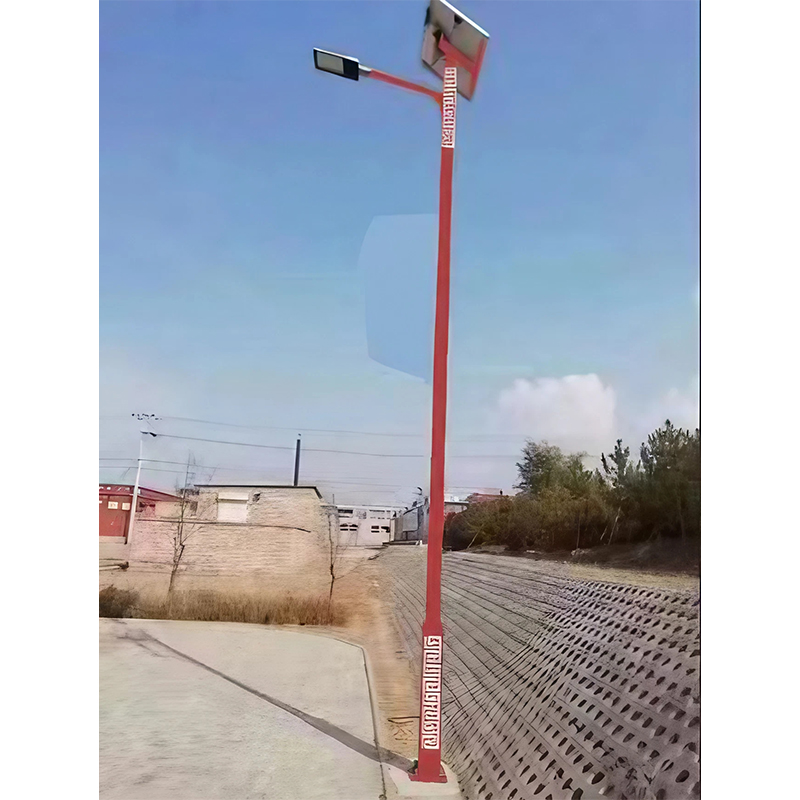
Despite the excellent performance of hot-dip galvanizing, in environments with strong ultraviolet radiation, acid rain, or high salt spray, the pure zinc layer will still slowly oxidize, forming white rust and affecting the appearance. At this point, the outdoor-grade anti-rust paint applied to the outer layer plays a crucial role. This type of paint has a high cross-linking density, excellent UV resistance, and hydrophobicity, effectively isolating the galvanized layer from corrosive media such as moisture, oxygen, and chloride ions. Simultaneously, the rich colors of the paint film enhance the overall aesthetics of the streetlight and conceal uneven crystallization patterns on the galvanized surface. More importantly, the high-quality paint film itself possesses a certain degree of flexibility, allowing for slight deformation with the thermal expansion and contraction of the steel, preventing cracking.
3. Dual Synergy: Long-lasting Protective Effect of 1+1 > 2
Hot-dip galvanizing and anti-rust paint are not isolated entities, but rather form a synergistic system of "substrate sacrificial protection + surface physical isolation." The galvanized layer provides a clean and highly active adhesion substrate for the paint film, significantly improving coating adhesion; while the paint film significantly slows down the consumption rate of the galvanized layer, allowing its cathodic protection capability to be retained for a long time. Experiments show that in C3-C4 level industrial or coastal atmospheric corrosion environments, the lifespan of a single hot-dip galvanized light pole is approximately 10-15 years, while the "galvanizing + paint" composite system can extend its lifespan to over 20 years. Even if the topcoat is accidentally scratched, the underlying galvanized layer continues to provide electrochemical protection, preventing rapid rust spread.
4. Environmental and Sustainability Advantages
While the hot-dip galvanizing process is energy-intensive, zinc resources are 100% recyclable; outdoor powder coatings emit no VOCs, aligning with green manufacturing trends. Compared to ordinary steel poles requiring regular painting and maintenance, the dual anti-corrosion system reduces the carbon footprint throughout its entire lifecycle from the source.
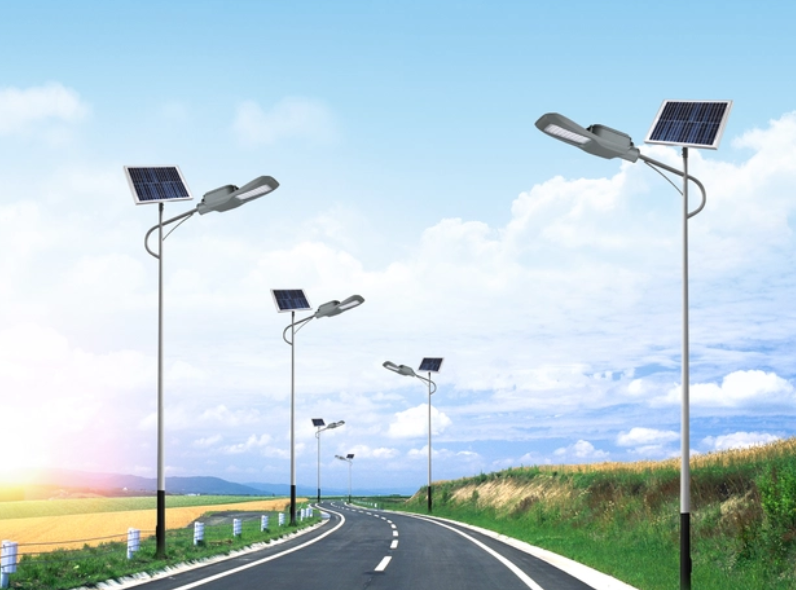
Solar street lights with hot-dip galvanization and outdoor anti-rust paint not only demonstrate rust resistance on the surface but also in their scientific protection logic and time-tested engineering practices. With a steel body resisting the erosion of time and a double armor protecting the mission of illumination, it truly fulfills the green lighting promise of "one-time installation, long-term reliability," becoming a reliable and solid backbone in modern smart city infrastructure.
1. Hot-dip galvanizing: A metallurgically bonded cathodic protection layer
Hot-dip galvanizing involves immersing a rust-removed Q235 carbon steel lamp post in molten zinc at approximately 450°C. This causes a metallurgical reaction between iron and zinc at high temperatures, forming an alloy coating consisting of Gamma, Delta, Zeta, and pure zinc layers from the inside out. This coating is typically 80–120 micrometers thick, atomically bonded to the substrate, exhibiting extremely strong adhesion and resisting peeling. Its greatest advantage lies in its "cathode protection": zinc's standard electrode potential is lower than iron's. When the coating is partially damaged and the steel substrate is exposed, zinc acts as the anode, preferentially corroding and sacrificing itself to protect the steel cathode. This active protection mechanism effectively prevents rust spread even at scratches or cuts, a core advantage unmatched by ordinary paint or electroplating.
2. Outdoor anti-rust paint: A weather-resistant barrier and aesthetic upgrade
Despite the excellent performance of hot-dip galvanizing, in environments with strong ultraviolet radiation, acid rain, or high salt spray, the pure zinc layer will still slowly oxidize, forming white rust and affecting the appearance. At this point, the outdoor-grade anti-rust paint applied to the outer layer plays a crucial role. This type of paint has a high cross-linking density, excellent UV resistance, and hydrophobicity, effectively isolating the galvanized layer from corrosive media such as moisture, oxygen, and chloride ions. Simultaneously, the rich colors of the paint film enhance the overall aesthetics of the streetlight and conceal uneven crystallization patterns on the galvanized surface. More importantly, the high-quality paint film itself possesses a certain degree of flexibility, allowing for slight deformation with the thermal expansion and contraction of the steel, preventing cracking.
3. Dual Synergy: Long-lasting Protective Effect of 1+1 > 2
Hot-dip galvanizing and anti-rust paint are not isolated entities, but rather form a synergistic system of "substrate sacrificial protection + surface physical isolation." The galvanized layer provides a clean and highly active adhesion substrate for the paint film, significantly improving coating adhesion; while the paint film significantly slows down the consumption rate of the galvanized layer, allowing its cathodic protection capability to be retained for a long time. Experiments show that in C3-C4 level industrial or coastal atmospheric corrosion environments, the lifespan of a single hot-dip galvanized light pole is approximately 10-15 years, while the "galvanizing + paint" composite system can extend its lifespan to over 20 years. Even if the topcoat is accidentally scratched, the underlying galvanized layer continues to provide electrochemical protection, preventing rapid rust spread.
4. Environmental and Sustainability Advantages
While the hot-dip galvanizing process is energy-intensive, zinc resources are 100% recyclable; outdoor powder coatings emit no VOCs, aligning with green manufacturing trends. Compared to ordinary steel poles requiring regular painting and maintenance, the dual anti-corrosion system reduces the carbon footprint throughout its entire lifecycle from the source.
Solar street lights with hot-dip galvanization and outdoor anti-rust paint not only demonstrate rust resistance on the surface but also in their scientific protection logic and time-tested engineering practices. With a steel body resisting the erosion of time and a double armor protecting the mission of illumination, it truly fulfills the green lighting promise of "one-time installation, long-term reliability," becoming a reliable and solid backbone in modern smart city infrastructure.