


Constructed from steel tapered tubes, what are the advantages of Solar Street Lights' robustness and durability?
Release Time : 2026-02-02
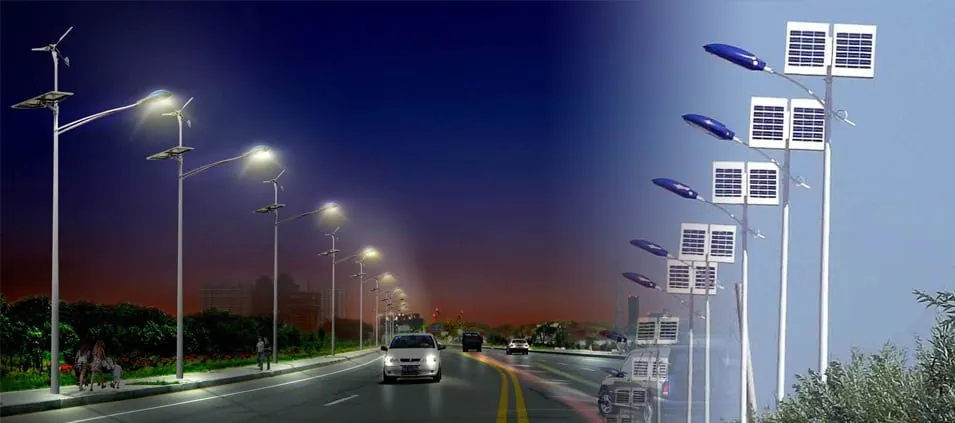
In the wave of green lighting and smart city construction, Solar Street Lights have become the mainstream choice for road, park, rural, and industrial park lighting due to their advantages such as zero wiring, low maintenance, and energy saving. However, facing the complex and ever-changing outdoor environment—strong winds, heavy rain, high temperatures, salt spray, dust, and even human impact—the light pole, as the "backbone" of the entire system, directly determines the service life and reliability of the equipment through its structural strength and durability. The key to Solar Street Lights' stable operation for "ten years without fail" lies in its one-piece formed tapered tube light pole made of Q235 steel, combined with double protection from hot-dip galvanizing and outdoor anti-rust paint. Its robustness and durability are reflected in four dimensions: the material itself, structural design, anti-corrosion system, and system integration.
1. Q235 Steel: An Ideal Balance of High Strength and Good Formability
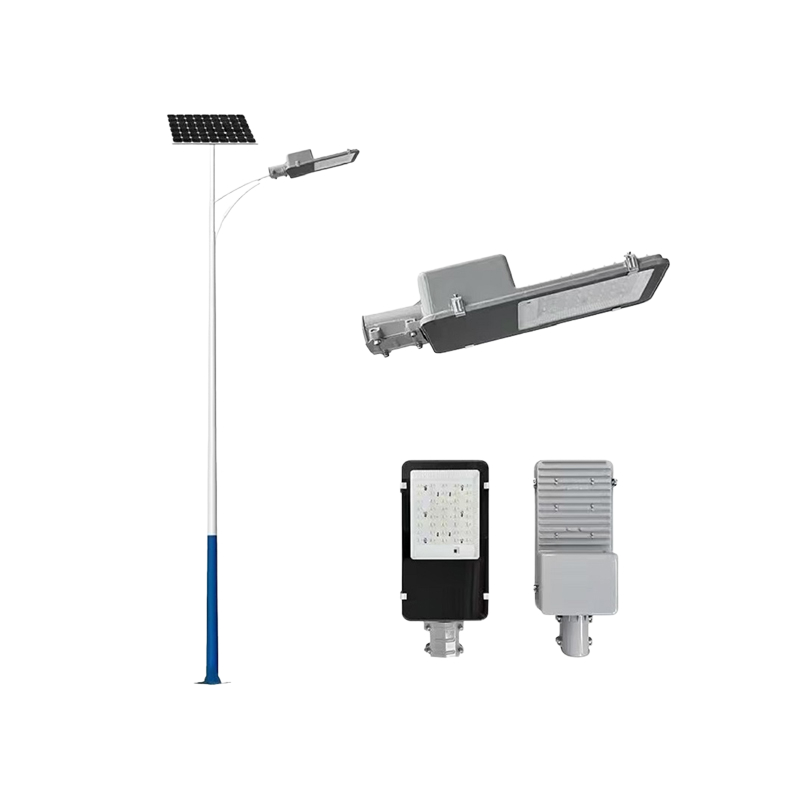
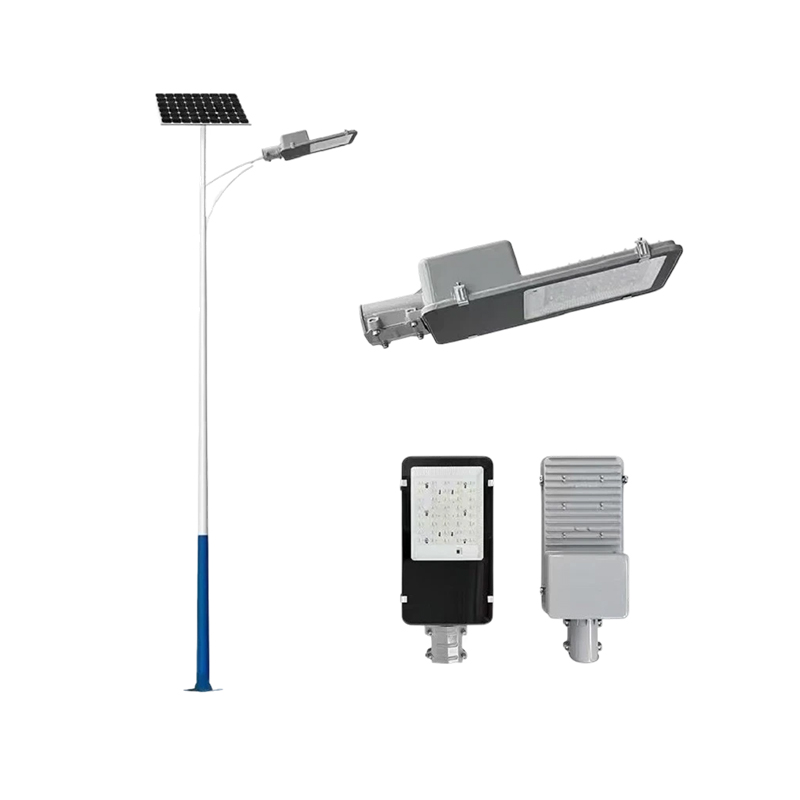
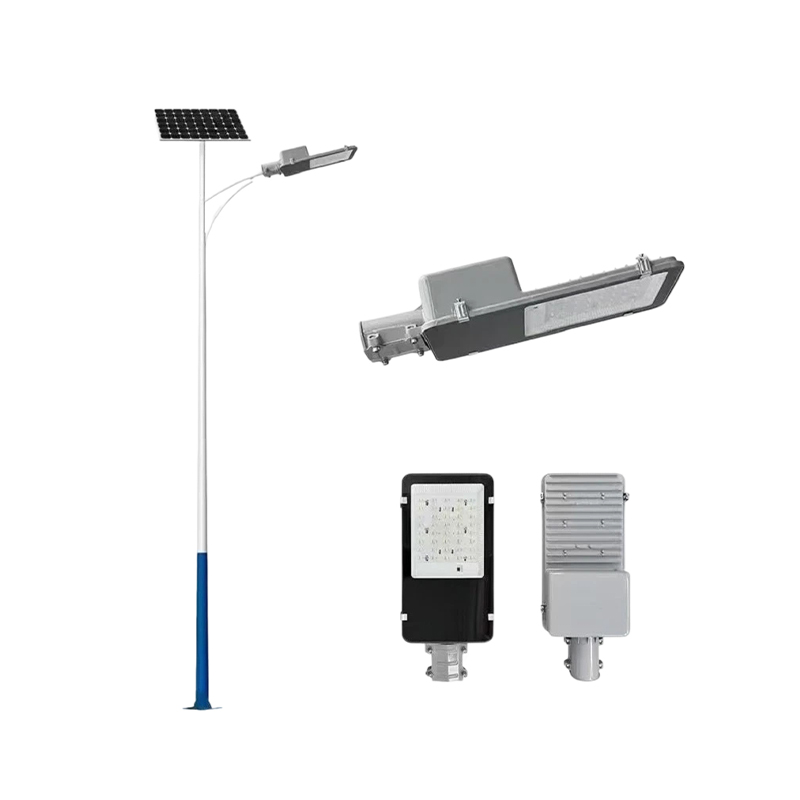
Q235 carbon structural steel is a widely used engineering material in my country, with a yield strength ≥235MPa and a tensile strength of 370–510MPa, possessing both excellent mechanical strength and weldability. When used to manufacture solar street light poles, it can achieve one-time forming of tapered tubes using large rolling machines and automatic welding lines—gradually tapering from approximately 76mm in diameter at the bottom to approximately 48mm at the top, forming a streamlined structure that is thinner at the top and thicker at the bottom. This taper not only conforms to the optimal mechanical distribution but also effectively reduces the wind resistance coefficient. Compared to cast iron or ordinary steel pipes, Q235 tapered tubes have higher bending stiffness at the same wall thickness, capable of withstanding a category 12 typhoon without permanent deformation, ensuring the long-term stable operation of a 60W LED light head and a 60W solar panel at high altitudes.
2. Hot-Dip Galvanizing + Outdoor Anti-Rust Paint: Double Barrier Against Corrosion
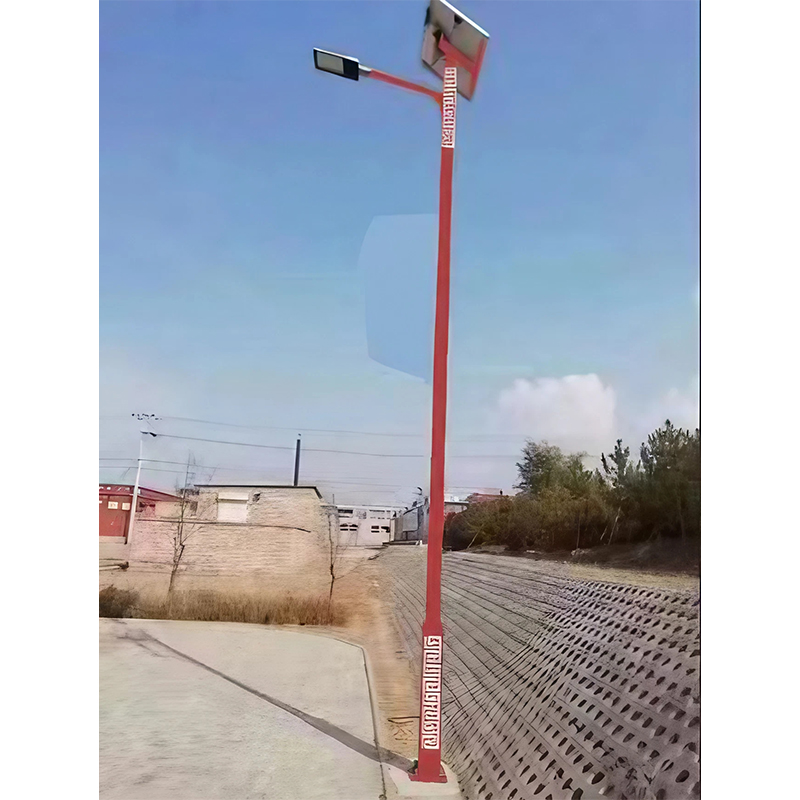
While steel is strong, it is susceptible to corrosion from humid environments, acid rain, and coastal salt spray. To this end, after forming, the light poles undergo acid pickling to remove rust, followed by immersion in molten zinc at approximately 450°C to form a zinc-iron alloy layer with a thickness of 80–100 micrometers. This coating not only physically isolates water and oxygen but also provides cathodic protection—even with localized scratches, zinc preferentially corrodes, protecting the substrate. On top of this, a layer of highly weather-resistant outdoor polyester or fluorocarbon paint is sprayed onto the surface, further enhancing its resistance to ultraviolet radiation and aging, and giving the light pole an aesthetically pleasing color. This dual protection allows the light poles to have a service life of 15–20 years in harsh environments such as industrial areas and coastal regions, far exceeding that of ordinary painted steel pipes.
3. Integrated Structural Design: Reducing Connection Points and Improving Overall Reliability
The tapered tubes utilize seamless welding or integral stamping processes, eliminating exposed connectors such as flanges and bolts. This not only results in a clean and streamlined appearance but also eliminates the structural hazards caused by loose bolts or cracked welds in traditional segmented light poles. The LED light heads, solar panel brackets, and lithium battery compartments are all embedded in the light pole body through precision openings and reinforcing ribs, forming a highly integrated "light pole as chassis" architecture. This design significantly reduces the risk of components falling from heights and simplifies the installation process—only a ground cage foundation is needed for on-site fixation, eliminating the need for high-altitude assembly, thus improving construction safety and efficiency.
4. Collaborating with Core Components to Build a Long-Lasting Operating System
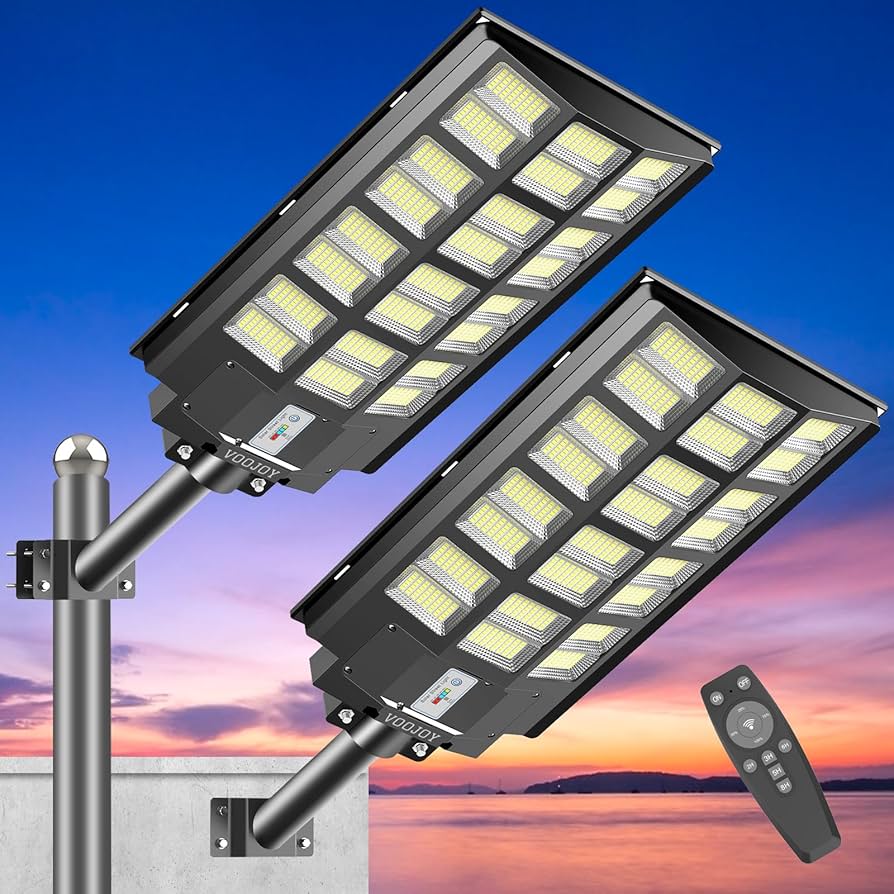
The robust light pole provides a stable platform for the internal core components: the 60W high-efficiency monocrystalline silicon solar panel can capture light energy around the clock to charge the 40Ah lithium iron phosphate battery; this battery has a cycle life of over 2000 cycles, and its capacity retention rate remains above 80% after 5-7 years; the intelligent controller operates in a "automatic lighting at dusk, shutdown after 6 hours of operation" mode to avoid over-discharge. The entire system relies on the robust light pole to achieve weather resistance and stable power supply, ensuring basic lighting needs even during 3-5 consecutive days of cloudy or rainy weather.
The tapered steel tube is not only the physical support of the solar street lights but also the cornerstone of its "robust and durable" promise. From material selection to corrosion protection processes, from structural optimization to system integration, every step demonstrates the engineering design's ultimate pursuit of long-term reliability. Through years of exposure to wind and sun, it stands silently, its steel body protecting every ray of light, truly realizing the green lighting vision of "one-time investment, long-term peace of mind."
1. Q235 Steel: An Ideal Balance of High Strength and Good Formability
Q235 carbon structural steel is a widely used engineering material in my country, with a yield strength ≥235MPa and a tensile strength of 370–510MPa, possessing both excellent mechanical strength and weldability. When used to manufacture solar street light poles, it can achieve one-time forming of tapered tubes using large rolling machines and automatic welding lines—gradually tapering from approximately 76mm in diameter at the bottom to approximately 48mm at the top, forming a streamlined structure that is thinner at the top and thicker at the bottom. This taper not only conforms to the optimal mechanical distribution but also effectively reduces the wind resistance coefficient. Compared to cast iron or ordinary steel pipes, Q235 tapered tubes have higher bending stiffness at the same wall thickness, capable of withstanding a category 12 typhoon without permanent deformation, ensuring the long-term stable operation of a 60W LED light head and a 60W solar panel at high altitudes.
2. Hot-Dip Galvanizing + Outdoor Anti-Rust Paint: Double Barrier Against Corrosion
While steel is strong, it is susceptible to corrosion from humid environments, acid rain, and coastal salt spray. To this end, after forming, the light poles undergo acid pickling to remove rust, followed by immersion in molten zinc at approximately 450°C to form a zinc-iron alloy layer with a thickness of 80–100 micrometers. This coating not only physically isolates water and oxygen but also provides cathodic protection—even with localized scratches, zinc preferentially corrodes, protecting the substrate. On top of this, a layer of highly weather-resistant outdoor polyester or fluorocarbon paint is sprayed onto the surface, further enhancing its resistance to ultraviolet radiation and aging, and giving the light pole an aesthetically pleasing color. This dual protection allows the light poles to have a service life of 15–20 years in harsh environments such as industrial areas and coastal regions, far exceeding that of ordinary painted steel pipes.
3. Integrated Structural Design: Reducing Connection Points and Improving Overall Reliability
The tapered tubes utilize seamless welding or integral stamping processes, eliminating exposed connectors such as flanges and bolts. This not only results in a clean and streamlined appearance but also eliminates the structural hazards caused by loose bolts or cracked welds in traditional segmented light poles. The LED light heads, solar panel brackets, and lithium battery compartments are all embedded in the light pole body through precision openings and reinforcing ribs, forming a highly integrated "light pole as chassis" architecture. This design significantly reduces the risk of components falling from heights and simplifies the installation process—only a ground cage foundation is needed for on-site fixation, eliminating the need for high-altitude assembly, thus improving construction safety and efficiency.
4. Collaborating with Core Components to Build a Long-Lasting Operating System
The robust light pole provides a stable platform for the internal core components: the 60W high-efficiency monocrystalline silicon solar panel can capture light energy around the clock to charge the 40Ah lithium iron phosphate battery; this battery has a cycle life of over 2000 cycles, and its capacity retention rate remains above 80% after 5-7 years; the intelligent controller operates in a "automatic lighting at dusk, shutdown after 6 hours of operation" mode to avoid over-discharge. The entire system relies on the robust light pole to achieve weather resistance and stable power supply, ensuring basic lighting needs even during 3-5 consecutive days of cloudy or rainy weather.
The tapered steel tube is not only the physical support of the solar street lights but also the cornerstone of its "robust and durable" promise. From material selection to corrosion protection processes, from structural optimization to system integration, every step demonstrates the engineering design's ultimate pursuit of long-term reliability. Through years of exposure to wind and sun, it stands silently, its steel body protecting every ray of light, truly realizing the green lighting vision of "one-time investment, long-term peace of mind."