


How do solar street lights make them suitable for remote rural areas or temporary construction sites?
1. Completely Off-Grid Operation: Eliminating Dependence on the Power Grid
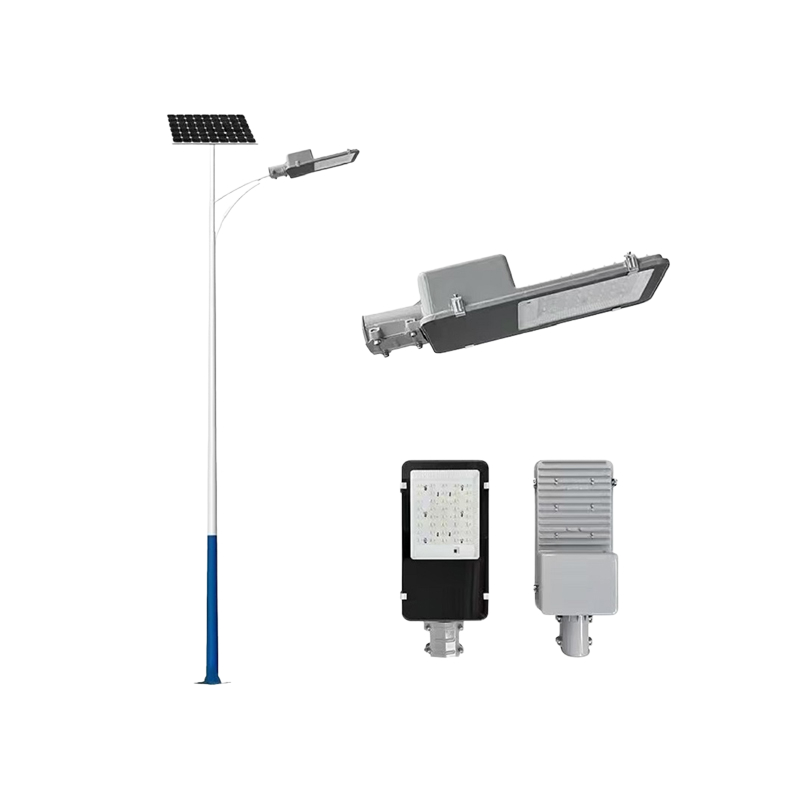
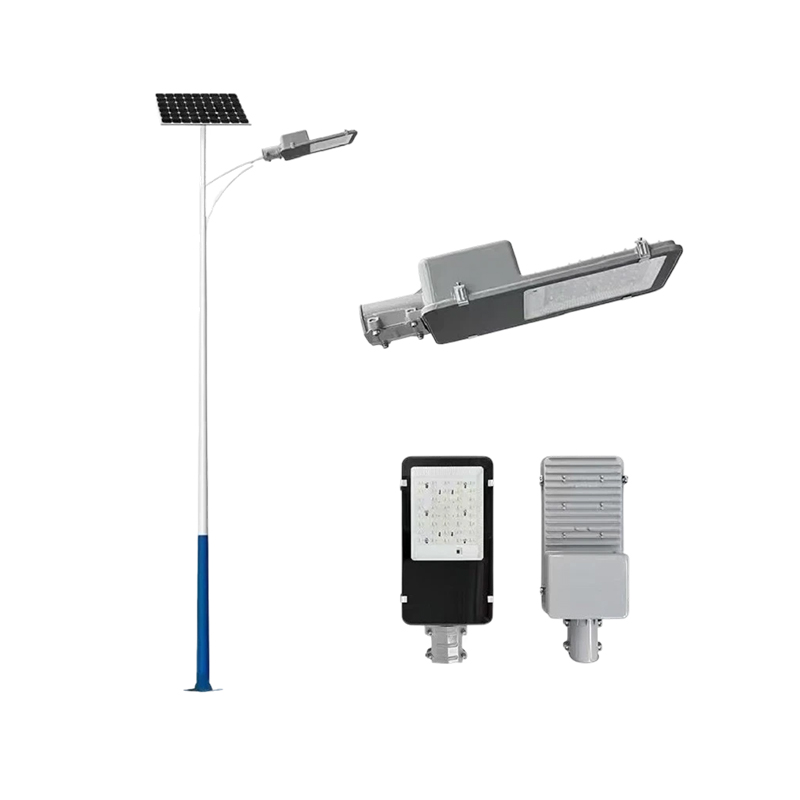
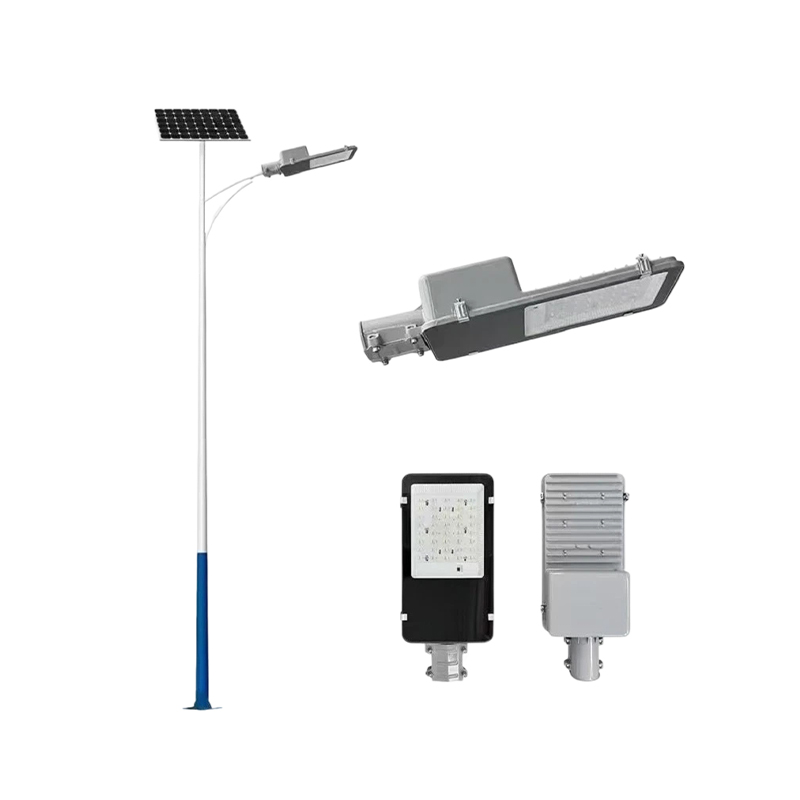
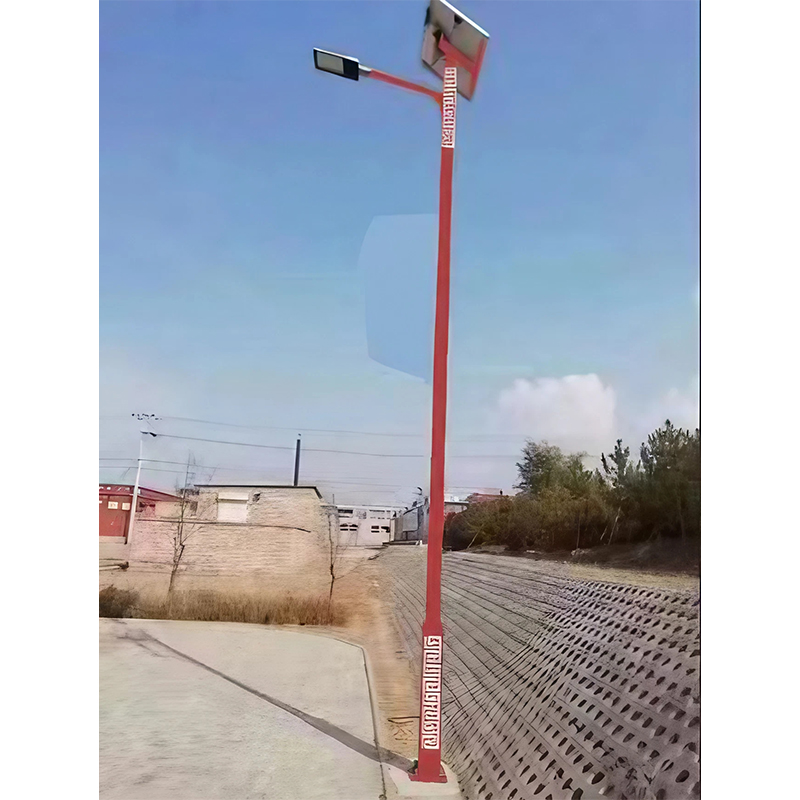
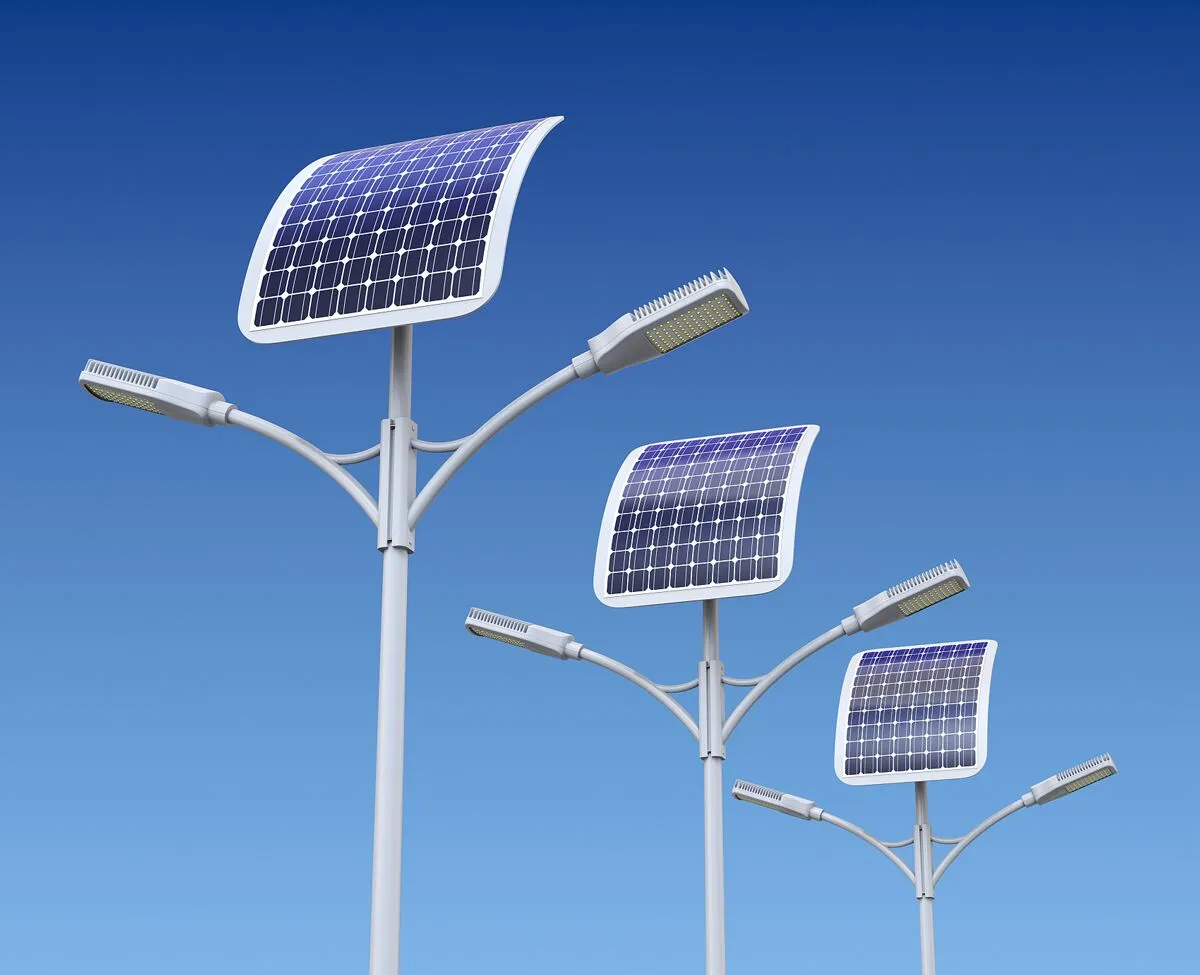
The core advantage of solar street lights lies in their energy self-sufficiency. During the day, the 60W monocrystalline silicon solar panel converts sunlight into electricity, which is stored in the 40Ah lithium iron phosphate battery; at night, the system automatically lights the 60W LED lights, which operate continuously for more than 6 hours. The entire process requires no external power supply, completely avoiding the cost of erecting high-voltage lines in remote areas, which can easily reach tens of thousands of yuan per kilometer. It also avoids the cumbersome and safety hazards of frequent cable disassembly and reassembly at temporary construction sites. Whether in a high-altitude village at 4000 meters or an exploration camp in the heart of the desert, stable lighting can be achieved as long as there is sunlight.
2. Modular and Rapid Installation: Adaptable to Complex Terrain and Short-Term Needs
This street light adopts an integrated or semi-prefabricated structure. The pole, lamp head, battery, and solar panel are pre-installed. On-site installation requires only simple foundation fixing and bolt connections, and 2-3 people can complete the installation within 30 minutes. Compared to traditional street lights that require complex procedures such as digging cable trenches, laying pipelines, and debugging distribution boxes, solar street lights significantly reduce reliance on professional construction teams and heavy machinery. This "plug-and-play" characteristic is particularly crucial for temporary construction areas—the entire system can be disassembled and reused at other locations after the project ends, achieving efficient asset turnover.
3. Low Maintenance and High Reliability: Ideal for Scenarios with Limited Maintenance Resources
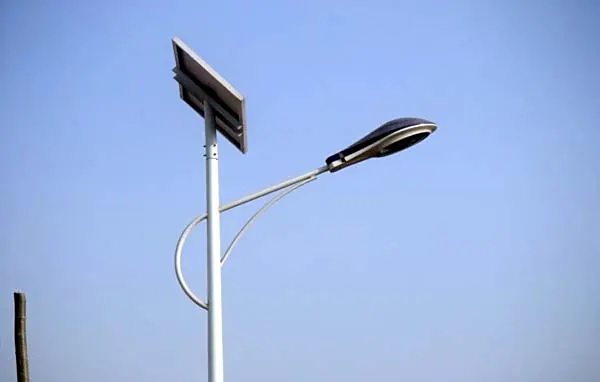
Remote rural areas often lack professional electricians, while temporary construction sites experience high staff turnover. Solar Street Lights features a built-in intelligent controller with fully automatic light-controlled start/stop, overcharge and over-discharge protection, short-circuit protection, and temperature compensation, requiring no manual intervention in daily operations. The lithium iron phosphate battery boasts a lifespan of 5-7 years, is resistant to high and low temperatures and deep cycling, far superior to ordinary lead-acid batteries. The Q235 steel tapered light pole undergoes hot-dip galvanizing and anti-rust paint double corrosion protection, resisting high humidity, salt spray, and wind and sand erosion. The entire system is designed for a lifespan of 8-10 years, truly achieving "one-time installation, worry-free for years," greatly reducing the burden of grassroots maintenance.
4. Flexible Configuration and Expandability: Meeting Diverse Lighting Needs
Solar Street Lights can be flexibly configured for different scenarios. In sunny southern rural areas, a 60W system can support all-night lighting; in high-latitude or rainy areas, battery capacity can be increased or bifacial solar panels can be used to extend battery life. Some models also support human body sensing, remote monitoring, or multi-lamp linkage, making them suitable for main village road lighting as well as key areas such as school playgrounds and health station entrances. Temporary construction sites can have their operating modes set according to work hours, precisely matching power demand and avoiding energy waste.
5. Win-Win for Economy and Sustainability
Although the initial investment is slightly higher than simple mains streetlights, solar street lights have a significantly lower total lifecycle cost—no electricity bills, no cable losses, and no transformer maintenance. For example, a 6-meter streetlight can save over 3,000 yuan in electricity and maintenance costs over 5 years. More importantly, its zero-carbon emission characteristics align with the national "dual-carbon" strategy, improving people's livelihoods while protecting the ecological environment, making it particularly suitable for sensitive areas such as ecological protection zones and water sources.
Solar street lights are not just lighting tools, but also important carriers of energy equity and emergency preparedness. They use the simplest principle—sunlight converted into light—to solve the "darkness dilemma" in areas without electricity. In the process of rural revitalization and infrastructure modernization, this independent, reliable, and green lighting solution is bringing safety, hope, and the possibility of development to countless remote corners.