


How do solar street lights achieve the dual advantages of illumination range and brightness?
Release Time : 2026-02-24
With the continuous development of green energy technologies, solar street lights have become an important component of lighting systems in modern cities, rural areas, and remote regions. Their core lighting component—the LED light source—is gradually replacing traditional high-energy-consuming lighting equipment such as high-pressure sodium lamps and mercury lamps due to its significant advantages in illumination range and brightness. In systems that rely on solar power 24/7, LED light sources not only achieve high energy efficiency but also demonstrate superior performance in lighting quality, coverage, and environmental adaptability, providing reliable protection for nighttime travel and public safety.
1. High Brightness Output, Enhancing Nighttime Visibility
One of the most prominent advantages of LED light sources is their high luminous efficacy and high brightness. Compared to traditional light sources, LEDs can provide higher lumen output at the same power, meaning they are "brighter." Modern solar street lights generally use high-power, high-efficiency LED chips, combined with optimized drive circuits, to achieve high-intensity lighting with low energy consumption. For example, a 60W LED solar street light has the same brightness as a 150W traditional high-pressure sodium lamp, significantly improving nighttime illumination in roads, squares, or parks. This high brightness not only enhances pedestrian and vehicle visibility but also effectively reduces traffic accident rates, especially significant in remote areas without power grid coverage.
2. Precise Light Distribution Design, Expanding Effective Illumination Range
LED light sources are highly directional and easy to control, making them far superior to traditional omnidirectional light sources in terms of illumination range control. Solar street lights are typically equipped with professional optical lenses or reflectors, enabling precise projection of light onto areas requiring illumination, such as the center line of a road, sidewalks, or intersections, avoiding wasted light energy in the sky or green belts. Through scientific light distribution design, LED light sources can achieve uniform light distribution, reducing dark areas and glare, ensuring wider and more reasonable illumination coverage. For example, LED streetlights using batwing-shaped light distribution can create wide and uniform lighting bands both longitudinally and laterally along roads, significantly improving overall lighting quality.
3. Adjustable Color Temperature to Adapt to Different Environmental Needs
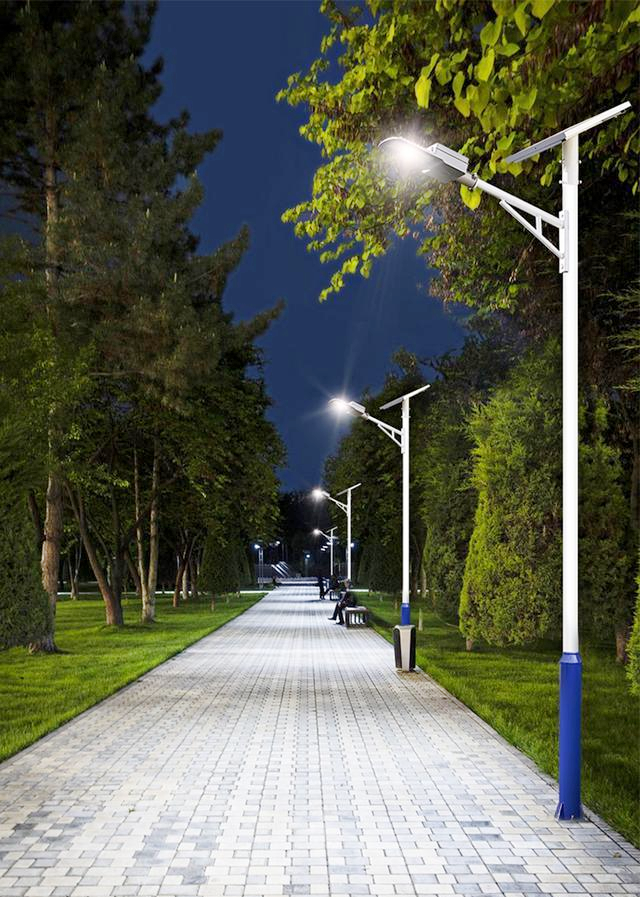
LED light sources support multiple color temperature options. Different color temperatures are suitable for different scenarios: warm white light creates a cozy atmosphere, suitable for residential areas or park paths; cool white light provides higher visual clarity, suitable for main roads or industrial areas. This flexibility allows solar street lights to be customized according to actual environments and usage needs, further optimizing lighting effects. At the same time, high color temperature LED light sources have stronger penetration at night, especially in foggy or rainy weather, effectively improving visibility.
4. Long Lifespan and Light Decay Control for Continuous Brightness Output
Traditional light sources experience rapid brightness decay during use, often decreasing by more than 30% after one year. High-quality LED light sources, however, have a lifespan of 50,000 to 100,000 hours and exhibit slow light decay, maintaining a high brightness level even after long-term use. Solar street lights use low-light-decay LED chips and are equipped with a good heat dissipation structure, effectively slowing down the light decay process and ensuring stable lighting effects for 10 years or even longer. This "lasting brightness" characteristic greatly reduces maintenance frequency and replacement costs, making them particularly suitable for installation in areas with inconvenient transportation or difficult maintenance.
5. Intelligent Control, Optimizing Brightness and Lighting Time
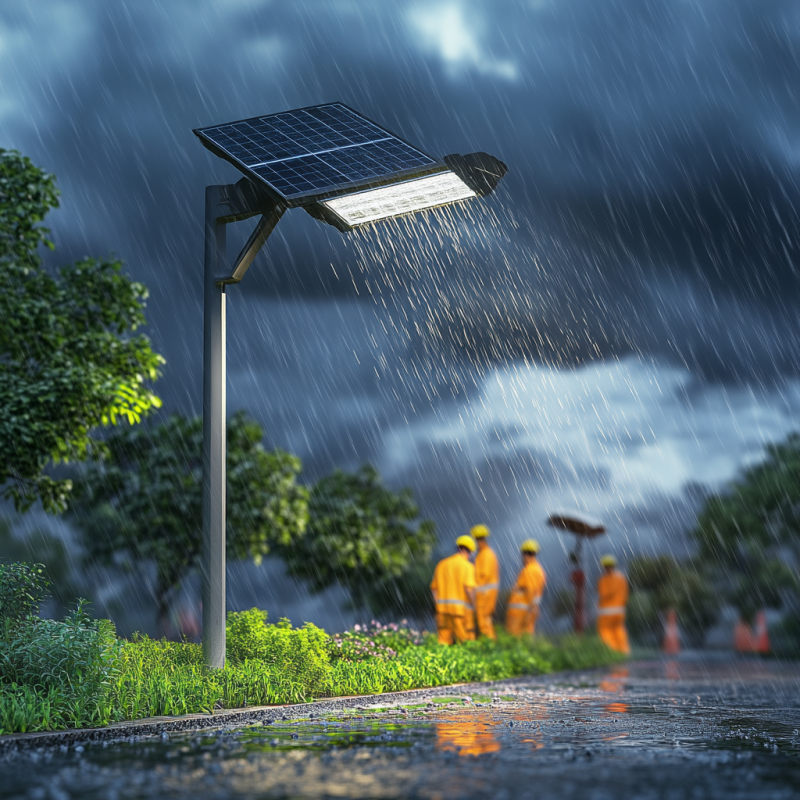
Modern solar street lights generally integrate light sensors and time control systems to achieve intelligent lighting management. LED light sources can achieve stepless dimming; for example, they can automatically reduce brightness to 50% when there is less traffic at night, saving energy and reducing light pollution. When pedestrians or vehicles pass by, sensors instantly restore full brightness, balancing energy saving and safety. This flexible brightness adjustment capability allows the lighting range and brightness to dynamically adapt to actual needs, achieving a smart "on-demand lighting" mode.
6. Green and Environmentally Friendly, Contributing to Sustainable Development
LED light sources do not contain harmful substances such as mercury and lead, and have minimal environmental impact after disposal. At the same time, their low power consumption characteristics are perfectly matched with solar power systems, maximizing the use of clean energy and reducing carbon emissions. Under the "dual carbon" goal, LED solar street lights are not only lighting tools but also important carriers for building green and low-carbon cities.
In summary, solar street lights' LED light sources offer numerous advantages in terms of brightness and illumination range, including high luminous efficacy, precise light distribution, flexible color temperature, long lifespan, and intelligent control. These advantages not only improve lighting quality and coverage but also achieve efficient energy use and environmental sustainability. With continuous technological advancements, LED light sources will play an even more crucial role in future lighting systems, illuminating safer, smarter, and greener nights.
1. High Brightness Output, Enhancing Nighttime Visibility
One of the most prominent advantages of LED light sources is their high luminous efficacy and high brightness. Compared to traditional light sources, LEDs can provide higher lumen output at the same power, meaning they are "brighter." Modern solar street lights generally use high-power, high-efficiency LED chips, combined with optimized drive circuits, to achieve high-intensity lighting with low energy consumption. For example, a 60W LED solar street light has the same brightness as a 150W traditional high-pressure sodium lamp, significantly improving nighttime illumination in roads, squares, or parks. This high brightness not only enhances pedestrian and vehicle visibility but also effectively reduces traffic accident rates, especially significant in remote areas without power grid coverage.
2. Precise Light Distribution Design, Expanding Effective Illumination Range
LED light sources are highly directional and easy to control, making them far superior to traditional omnidirectional light sources in terms of illumination range control. Solar street lights are typically equipped with professional optical lenses or reflectors, enabling precise projection of light onto areas requiring illumination, such as the center line of a road, sidewalks, or intersections, avoiding wasted light energy in the sky or green belts. Through scientific light distribution design, LED light sources can achieve uniform light distribution, reducing dark areas and glare, ensuring wider and more reasonable illumination coverage. For example, LED streetlights using batwing-shaped light distribution can create wide and uniform lighting bands both longitudinally and laterally along roads, significantly improving overall lighting quality.
3. Adjustable Color Temperature to Adapt to Different Environmental Needs
LED light sources support multiple color temperature options. Different color temperatures are suitable for different scenarios: warm white light creates a cozy atmosphere, suitable for residential areas or park paths; cool white light provides higher visual clarity, suitable for main roads or industrial areas. This flexibility allows solar street lights to be customized according to actual environments and usage needs, further optimizing lighting effects. At the same time, high color temperature LED light sources have stronger penetration at night, especially in foggy or rainy weather, effectively improving visibility.
4. Long Lifespan and Light Decay Control for Continuous Brightness Output
Traditional light sources experience rapid brightness decay during use, often decreasing by more than 30% after one year. High-quality LED light sources, however, have a lifespan of 50,000 to 100,000 hours and exhibit slow light decay, maintaining a high brightness level even after long-term use. Solar street lights use low-light-decay LED chips and are equipped with a good heat dissipation structure, effectively slowing down the light decay process and ensuring stable lighting effects for 10 years or even longer. This "lasting brightness" characteristic greatly reduces maintenance frequency and replacement costs, making them particularly suitable for installation in areas with inconvenient transportation or difficult maintenance.
5. Intelligent Control, Optimizing Brightness and Lighting Time
Modern solar street lights generally integrate light sensors and time control systems to achieve intelligent lighting management. LED light sources can achieve stepless dimming; for example, they can automatically reduce brightness to 50% when there is less traffic at night, saving energy and reducing light pollution. When pedestrians or vehicles pass by, sensors instantly restore full brightness, balancing energy saving and safety. This flexible brightness adjustment capability allows the lighting range and brightness to dynamically adapt to actual needs, achieving a smart "on-demand lighting" mode.
6. Green and Environmentally Friendly, Contributing to Sustainable Development
LED light sources do not contain harmful substances such as mercury and lead, and have minimal environmental impact after disposal. At the same time, their low power consumption characteristics are perfectly matched with solar power systems, maximizing the use of clean energy and reducing carbon emissions. Under the "dual carbon" goal, LED solar street lights are not only lighting tools but also important carriers for building green and low-carbon cities.
In summary, solar street lights' LED light sources offer numerous advantages in terms of brightness and illumination range, including high luminous efficacy, precise light distribution, flexible color temperature, long lifespan, and intelligent control. These advantages not only improve lighting quality and coverage but also achieve efficient energy use and environmental sustainability. With continuous technological advancements, LED light sources will play an even more crucial role in future lighting systems, illuminating safer, smarter, and greener nights.