


How do solar street lights adapt to the unique needs of polar regions?
Release Time : 2026-03-17
Near the Arctic and Antarctic Circles, a unique natural phenomenon exists: during the polar day, the sun never sets, and during the polar night, darkness stretches endlessly. These extreme lighting conditions pose a severe challenge to traditional solar street lights that rely on "light-controlled switches" and "solar charging." However, with advancements in intelligent control algorithms, efficient energy storage technologies, and adaptive hardware design, solar street lights have been able to perfectly adapt to the unique needs of polar regions through a series of innovative strategies, becoming indispensable guardians of light for polar research stations, border outposts, and high-latitude communities.
1. Intelligent Logic Reconstruction: Breaking Free from the Time-Based Law of "Light-Control Dependence"
The core logic of traditional solar street lights is "lights on at night, lights off at dawn," relying on photoresistors to detect ambient brightness. In polar regions, this logic would result in streetlights remaining off all night; and in the early stages of the polar night, if the batteries are not fully charged, the streetlights may quickly deplete their power due to premature activation.
The primary change to adapt to polar needs is the reconstruction of the control logic. The intelligent controller no longer relies solely on real-time light intensity but incorporates high-precision GPS positioning and an astronomical calendar algorithm. The system automatically calculates the daily sunrise and sunset times based on latitude and longitude, and even during the polar day, it can force lighting to operate during designated "nighttime hours" to meet the needs of manual monitoring or traffic guidance. Conversely, during long-distance polar nights, the system can switch to "energy-saving mode," dynamically adjusting the lighting duration or brightness based on remaining battery power to ensure uninterrupted power throughout the long darkness. This shift from "passive perception" to "active planning" is the core of polar adaptability.
2. Doubling Energy Storage Capacity: An Energy Bank for Winter Energy Storage
Polar nights mean weeks or even months without access to effective energy from solar panels. To survive this period of darkness, the massive amounts of electricity accumulated during the polar day are essential. Therefore, polar-specific streetlights employ a "large panel, small light, ultra-large energy storage" configuration strategy.
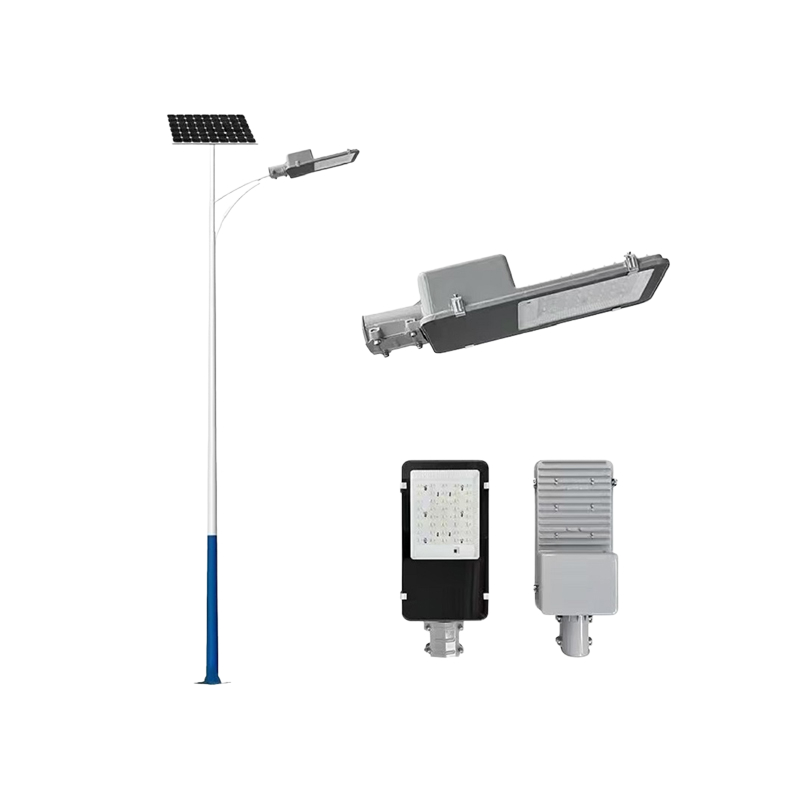
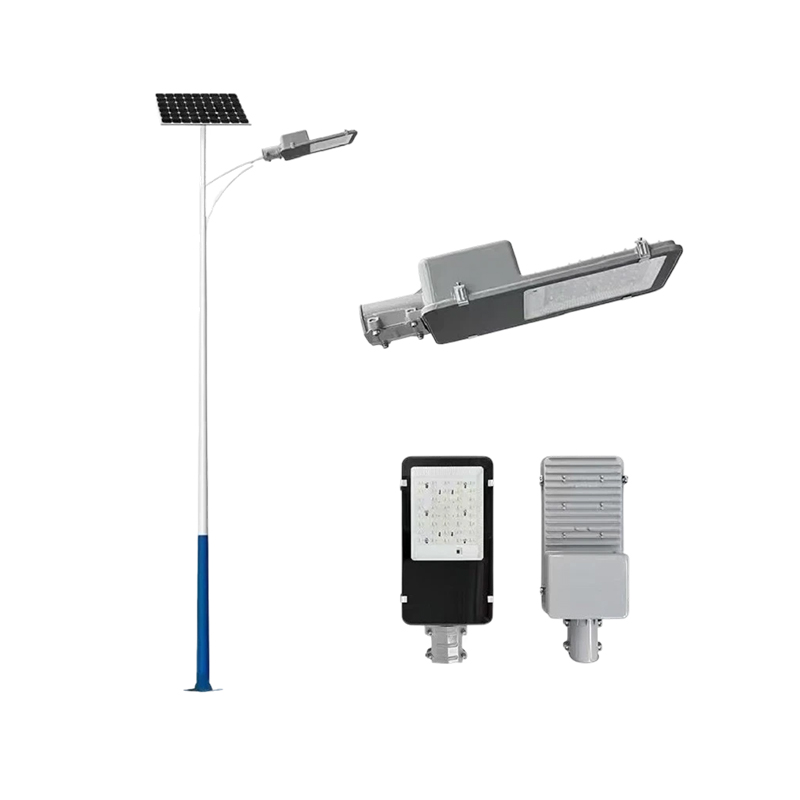
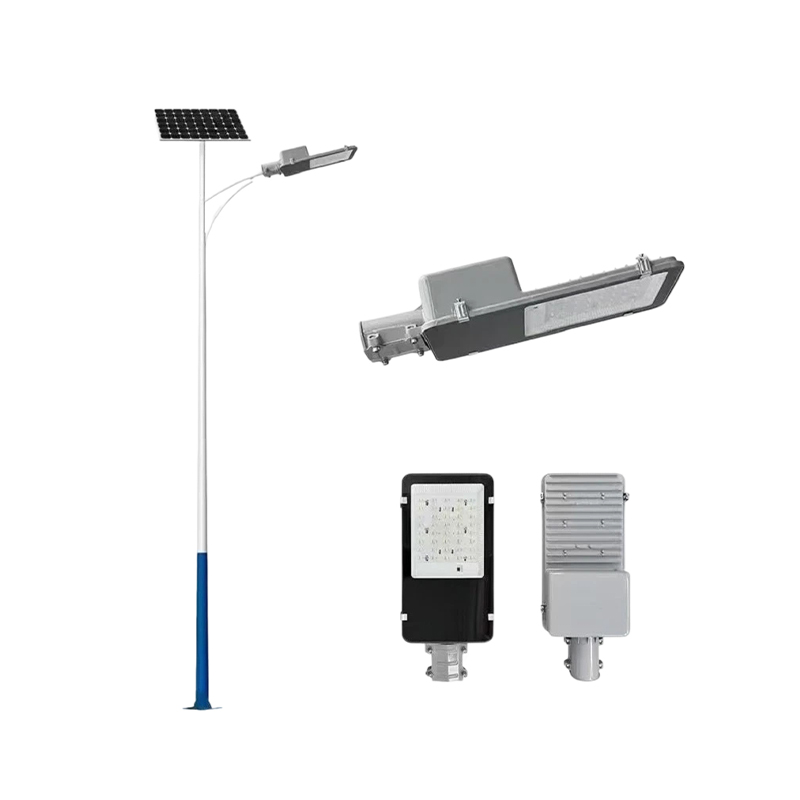
The power configuration of the solar panels is often 2-3 times that of conventional areas, maximizing energy collection by utilizing the uninterrupted 24-hour sunlight of the polar day. Meanwhile, the energy storage unit has been upgraded from ordinary lead-acid or small lithium batteries to high-capacity lithium iron phosphate battery packs, and even adopts a modular parallel design, increasing the energy storage capacity several times over. During the months of polar day, the system not only meets the needs of lighting that night, but also stores all excess energy in an "energy bank." This cross-seasonal energy dispatch capability ensures that the streetlights have enough "reserves" to sustain basic operation for several months when the polar night arrives.
3. Wide Temperature Range Hardware Adaptation: A Physical Defense Against Extreme Cold and Strong Winds
Polar and high-latitude regions not only have unique lighting conditions, but also extreme low temperatures and strong winds and blizzards. Ordinary lithium batteries experience reduced activity at low temperatures, resulting in a sharp decrease in capacity or even failure to discharge; ordinary steel is prone to becoming brittle and breaking in extreme cold.
Polar streetlights have undergone a comprehensive hardware upgrade. The battery compartment adopts a double-layer vacuum insulation design and has a built-in self-heating system. Utilizing the waste heat generated by the battery operation or specialized heating elements, the cell temperature is maintained within the optimal operating range, ensuring normal charging and discharging even in extreme cold. The pole body is constructed from low-temperature resistant special steel, and the surface coating has undergone UV and freeze-thaw resistance tests to prevent paint peeling. The LED light source uses low-temperature resistant chips, and the driver power supply has wide-temperature start-up capability. Furthermore, the pole structure has been optimized for hydrodynamics to reduce wind resistance and ensure it remains standing even in blizzards.
4. Remote Operation and Redundancy Design: Self-Repair Capability in Uninhabited Areas
Polar regions are sparsely populated, resulting in extremely high maintenance costs. Manual repair is extremely difficult in the event of a malfunction. Therefore, polar streetlights must possess a high degree of intelligence and redundancy. The system integrates satellite communication or long-distance LoRa modules, enabling real-time transmission of battery status, charging efficiency, and fault codes to a control center thousands of miles away. Before the polar night, managers can remotely adjust operating strategies, such as further reducing brightness to extend battery life. Simultaneously, key components employ redundant designs, such as dual charging inputs and backup battery switching. When the main system detects an anomaly, it can automatically switch to backup mode, prioritizing core functions.
In conclusion, solar street lights have successfully overcome the physical limitations of polar days and nights by incorporating intelligent control using astronomical algorithms, constructing a large-scale energy storage system that spans seasons, applying hardware resistant to extreme cold and wide temperature ranges, and implementing remote redundant operation and maintenance. They are no longer simply lighting tools, but rather a testament to human wisdom in utilizing clean energy in Earth's extreme environments, proving that even in the longest nights or the brightest days, the light of technology can shine consistently.
1. Intelligent Logic Reconstruction: Breaking Free from the Time-Based Law of "Light-Control Dependence"
The core logic of traditional solar street lights is "lights on at night, lights off at dawn," relying on photoresistors to detect ambient brightness. In polar regions, this logic would result in streetlights remaining off all night; and in the early stages of the polar night, if the batteries are not fully charged, the streetlights may quickly deplete their power due to premature activation.
The primary change to adapt to polar needs is the reconstruction of the control logic. The intelligent controller no longer relies solely on real-time light intensity but incorporates high-precision GPS positioning and an astronomical calendar algorithm. The system automatically calculates the daily sunrise and sunset times based on latitude and longitude, and even during the polar day, it can force lighting to operate during designated "nighttime hours" to meet the needs of manual monitoring or traffic guidance. Conversely, during long-distance polar nights, the system can switch to "energy-saving mode," dynamically adjusting the lighting duration or brightness based on remaining battery power to ensure uninterrupted power throughout the long darkness. This shift from "passive perception" to "active planning" is the core of polar adaptability.
2. Doubling Energy Storage Capacity: An Energy Bank for Winter Energy Storage
Polar nights mean weeks or even months without access to effective energy from solar panels. To survive this period of darkness, the massive amounts of electricity accumulated during the polar day are essential. Therefore, polar-specific streetlights employ a "large panel, small light, ultra-large energy storage" configuration strategy.
The power configuration of the solar panels is often 2-3 times that of conventional areas, maximizing energy collection by utilizing the uninterrupted 24-hour sunlight of the polar day. Meanwhile, the energy storage unit has been upgraded from ordinary lead-acid or small lithium batteries to high-capacity lithium iron phosphate battery packs, and even adopts a modular parallel design, increasing the energy storage capacity several times over. During the months of polar day, the system not only meets the needs of lighting that night, but also stores all excess energy in an "energy bank." This cross-seasonal energy dispatch capability ensures that the streetlights have enough "reserves" to sustain basic operation for several months when the polar night arrives.
3. Wide Temperature Range Hardware Adaptation: A Physical Defense Against Extreme Cold and Strong Winds
Polar and high-latitude regions not only have unique lighting conditions, but also extreme low temperatures and strong winds and blizzards. Ordinary lithium batteries experience reduced activity at low temperatures, resulting in a sharp decrease in capacity or even failure to discharge; ordinary steel is prone to becoming brittle and breaking in extreme cold.
Polar streetlights have undergone a comprehensive hardware upgrade. The battery compartment adopts a double-layer vacuum insulation design and has a built-in self-heating system. Utilizing the waste heat generated by the battery operation or specialized heating elements, the cell temperature is maintained within the optimal operating range, ensuring normal charging and discharging even in extreme cold. The pole body is constructed from low-temperature resistant special steel, and the surface coating has undergone UV and freeze-thaw resistance tests to prevent paint peeling. The LED light source uses low-temperature resistant chips, and the driver power supply has wide-temperature start-up capability. Furthermore, the pole structure has been optimized for hydrodynamics to reduce wind resistance and ensure it remains standing even in blizzards.
4. Remote Operation and Redundancy Design: Self-Repair Capability in Uninhabited Areas
Polar regions are sparsely populated, resulting in extremely high maintenance costs. Manual repair is extremely difficult in the event of a malfunction. Therefore, polar streetlights must possess a high degree of intelligence and redundancy. The system integrates satellite communication or long-distance LoRa modules, enabling real-time transmission of battery status, charging efficiency, and fault codes to a control center thousands of miles away. Before the polar night, managers can remotely adjust operating strategies, such as further reducing brightness to extend battery life. Simultaneously, key components employ redundant designs, such as dual charging inputs and backup battery switching. When the main system detects an anomaly, it can automatically switch to backup mode, prioritizing core functions.
In conclusion, solar street lights have successfully overcome the physical limitations of polar days and nights by incorporating intelligent control using astronomical algorithms, constructing a large-scale energy storage system that spans seasons, applying hardware resistant to extreme cold and wide temperature ranges, and implementing remote redundant operation and maintenance. They are no longer simply lighting tools, but rather a testament to human wisdom in utilizing clean energy in Earth's extreme environments, proving that even in the longest nights or the brightest days, the light of technology can shine consistently.