


How can modular design facilitate the installation, maintenance, and replacement of solar street lights?
Release Time : 2026-04-08
In modern urban infrastructure construction, solar street lights, with their advantages of energy saving, environmental friendliness, low maintenance costs, and independent power supply, have gradually become an important choice for lighting roads, communities, parks, and remote areas. However, when used outdoors for extended periods, solar street lights are affected by wind, rain, dust, and changes in light intensity, making maintenance and replacement crucial. To improve ease of use, modular design has become a significant trend in the development of solar street lights. By making functional units such as light poles, lamp heads, solar panels, batteries, and controllers independent and standardized, it achieves efficient and convenient installation, maintenance, and replacement.
1. Modular Design Improves Installation Efficiency
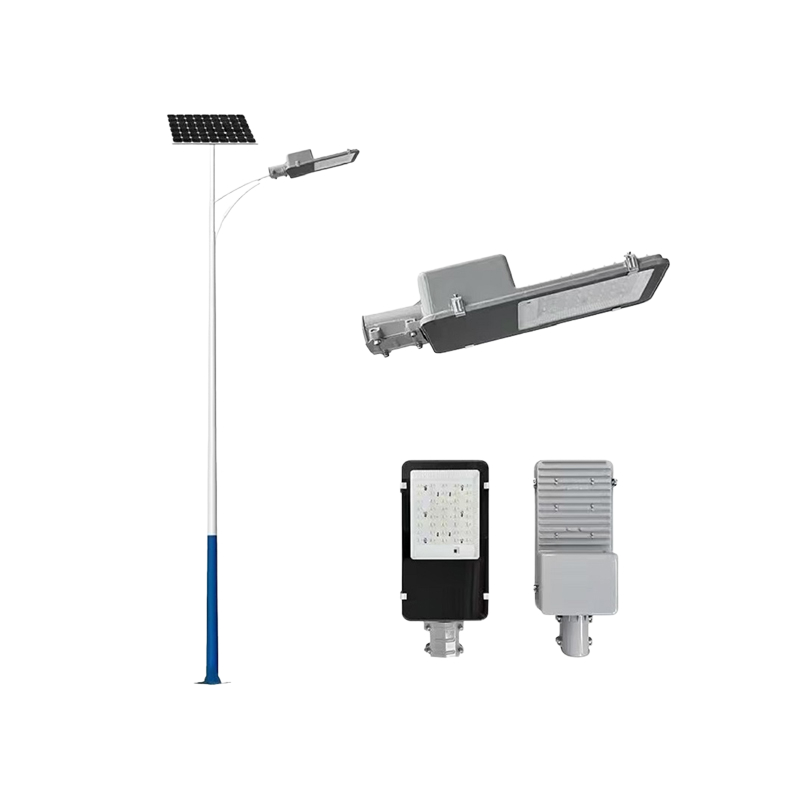
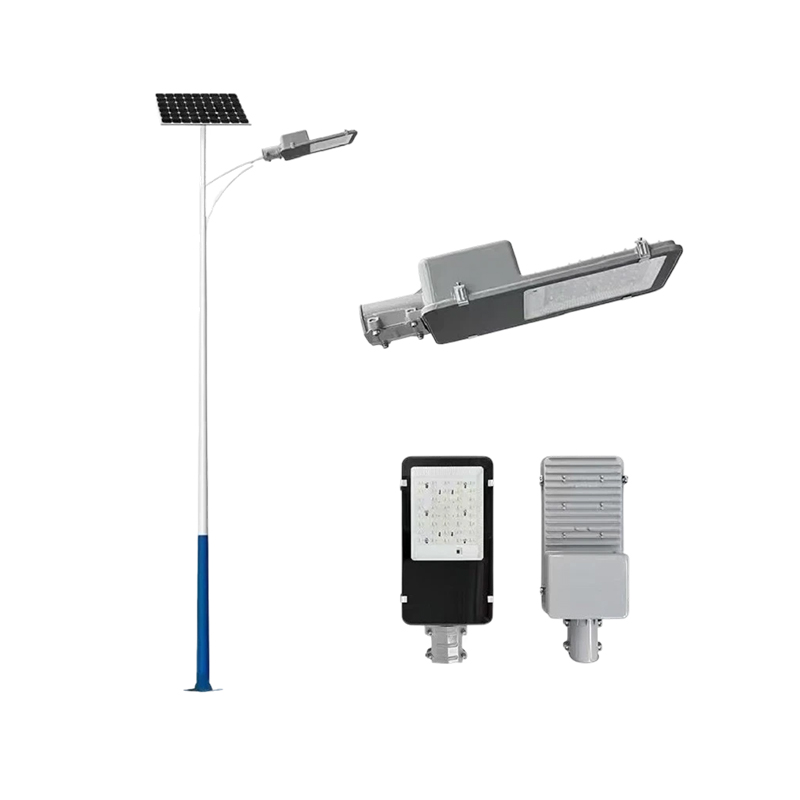
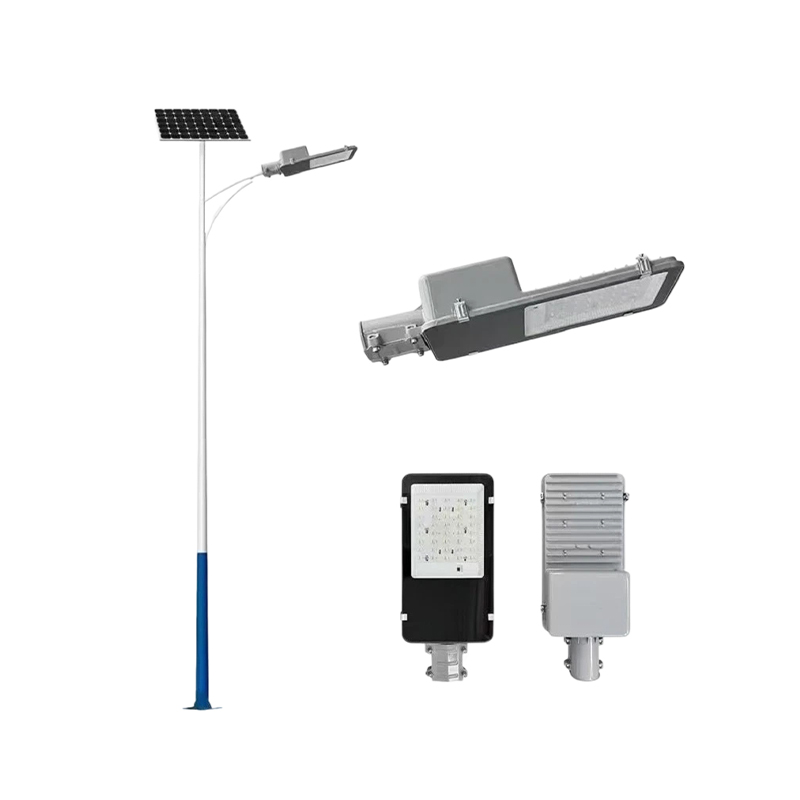
Traditional solar street lights typically have a single, integrated structure, requiring professional personnel to assemble or weld multiple components during installation, resulting in a long timeframe and high construction difficulty. Modular design designs core components such as light poles, lamp heads, solar panels, and battery boxes as independent modules, enabling rapid assembly through standardized interfaces and fasteners. Construction workers only need to install and fix the modules in sequence, eliminating the need for complex wiring connections or welding operations, significantly reducing installation time. For example, the lamp head module can be directly connected to the top of the lamp post, the solar panel module is fixed by a pre-set bracket, and the battery module is installed inside the lamp post or in the base housing via a plug-in interface, thus achieving rapid assembly and reducing construction costs and labor input.

2. Convenient Maintenance and Troubleshooting
Over long-term use, outdoor solar street lights may experience problems such as LED light source damage, battery performance degradation, controller malfunction, or decreased solar panel efficiency. The modular design, through functional unit separation, makes maintenance and troubleshooting more intuitive and convenient. For example, when the LED lamp head malfunctions, only the lamp head module needs to be disassembled, without removing the entire lamp post or solar panel. The battery module can also be removed separately for testing or replacement, reducing maintenance time and construction difficulty. Furthermore, modular interfaces typically use standardized electrical connections and waterproof designs, eliminating concerns about wiring damage or leakage risks for maintenance personnel, thus improving overall safety.
3. Rapid Replacement and Upgrade Capabilities
The modular design not only facilitates maintenance but also provides convenience for upgrading and replacing solar street lights. With continuous improvements in light source technology, battery energy density, and controller functionality, upgrading traditional integrated streetlights is often costly and complex. Modular streetlights, however, only require replacing individual modules to achieve performance upgrades. For example, replacing the module with a high-power LED lamp head increases brightness; replacing it with a larger-capacity lithium iron phosphate battery extends nighttime operation; and upgrading the solar panel module improves energy conversion efficiency. This flexible replacement method not only reduces costs but also extends the overall lifespan of the streetlight.
4. Standardization and Compatibility Advantages
Modular design typically uses standardized interfaces and dimensions, ensuring good compatibility between modules from different manufacturers or models. This means that in urban road lighting projects, light poles and supports can be planned uniformly, while lamp heads, batteries, and solar panel modules can be freely combined according to needs, achieving functional customization. This standardized compatibility also helps reduce inventory pressure; maintenance units only need to stock key modules to handle various repair or replacement needs.

5. Comprehensive Value and Application Significance
Through modular design, solar street lights achieve end-to-end optimization, including convenient installation, efficient maintenance, rapid replacement, and flexible upgrades. For city managers and construction companies, this not only saves on installation and maintenance costs but also significantly improves operational efficiency. For residents, it ensures the stability and safety of nighttime street lighting. With the continuous development of light source, battery, and intelligent control technologies, the application prospects of modular solar street lights will become even broader, providing reliable technical support for urban intelligent lighting and green infrastructure construction.
In summary, the modular design, by making the functional units of solar street lights—such as the lamp head, pole, solar panel, and battery—independent and standardized, makes installation, maintenance, and replacement efficient and convenient. This design not only improves construction efficiency and operational safety but also supports flexible upgrades and customized applications, providing a solid guarantee for the sustainable development of modern urban lighting systems.
1. Modular Design Improves Installation Efficiency
Traditional solar street lights typically have a single, integrated structure, requiring professional personnel to assemble or weld multiple components during installation, resulting in a long timeframe and high construction difficulty. Modular design designs core components such as light poles, lamp heads, solar panels, and battery boxes as independent modules, enabling rapid assembly through standardized interfaces and fasteners. Construction workers only need to install and fix the modules in sequence, eliminating the need for complex wiring connections or welding operations, significantly reducing installation time. For example, the lamp head module can be directly connected to the top of the lamp post, the solar panel module is fixed by a pre-set bracket, and the battery module is installed inside the lamp post or in the base housing via a plug-in interface, thus achieving rapid assembly and reducing construction costs and labor input.
2. Convenient Maintenance and Troubleshooting
Over long-term use, outdoor solar street lights may experience problems such as LED light source damage, battery performance degradation, controller malfunction, or decreased solar panel efficiency. The modular design, through functional unit separation, makes maintenance and troubleshooting more intuitive and convenient. For example, when the LED lamp head malfunctions, only the lamp head module needs to be disassembled, without removing the entire lamp post or solar panel. The battery module can also be removed separately for testing or replacement, reducing maintenance time and construction difficulty. Furthermore, modular interfaces typically use standardized electrical connections and waterproof designs, eliminating concerns about wiring damage or leakage risks for maintenance personnel, thus improving overall safety.
3. Rapid Replacement and Upgrade Capabilities
The modular design not only facilitates maintenance but also provides convenience for upgrading and replacing solar street lights. With continuous improvements in light source technology, battery energy density, and controller functionality, upgrading traditional integrated streetlights is often costly and complex. Modular streetlights, however, only require replacing individual modules to achieve performance upgrades. For example, replacing the module with a high-power LED lamp head increases brightness; replacing it with a larger-capacity lithium iron phosphate battery extends nighttime operation; and upgrading the solar panel module improves energy conversion efficiency. This flexible replacement method not only reduces costs but also extends the overall lifespan of the streetlight.
4. Standardization and Compatibility Advantages
Modular design typically uses standardized interfaces and dimensions, ensuring good compatibility between modules from different manufacturers or models. This means that in urban road lighting projects, light poles and supports can be planned uniformly, while lamp heads, batteries, and solar panel modules can be freely combined according to needs, achieving functional customization. This standardized compatibility also helps reduce inventory pressure; maintenance units only need to stock key modules to handle various repair or replacement needs.
5. Comprehensive Value and Application Significance
Through modular design, solar street lights achieve end-to-end optimization, including convenient installation, efficient maintenance, rapid replacement, and flexible upgrades. For city managers and construction companies, this not only saves on installation and maintenance costs but also significantly improves operational efficiency. For residents, it ensures the stability and safety of nighttime street lighting. With the continuous development of light source, battery, and intelligent control technologies, the application prospects of modular solar street lights will become even broader, providing reliable technical support for urban intelligent lighting and green infrastructure construction.
In summary, the modular design, by making the functional units of solar street lights—such as the lamp head, pole, solar panel, and battery—independent and standardized, makes installation, maintenance, and replacement efficient and convenient. This design not only improves construction efficiency and operational safety but also supports flexible upgrades and customized applications, providing a solid guarantee for the sustainable development of modern urban lighting systems.