


How accurate are the automatic start-up and shutdown times of solar street lights after dark?
Release Time : 2026-04-07
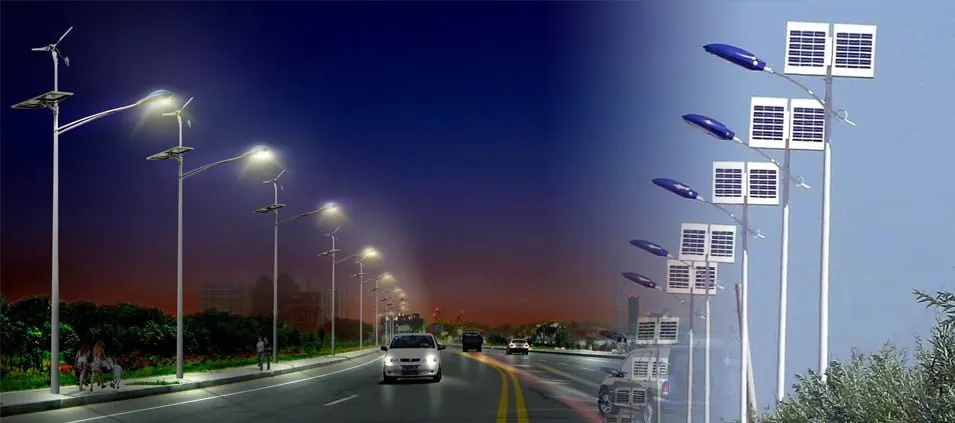
Solar street lights are widely used in modern urban roads, parks, and remote rural lighting systems due to their energy-saving, environmentally friendly, and independent power supply advantages. Compared to traditional mains-powered lights, solar street lights achieve autonomous operation through photovoltaic power generation and storage, especially relying on intelligent light control and timer control to achieve automatic start-up after dark and shutdown after a set operating time. This function not only ensures the accuracy and safety of lighting but also improves energy efficiency.
1. Light Control Sensor Enables Automatic Start-up After Dark
The core of automatic start-up for solar street lights lies in the light control sensor. Typically, the light control system uses high-sensitivity photosensitive elements or photodiodes to determine the sunset time based on changes in ambient light intensity. When the ambient light intensity is below a set threshold, the sensor triggers the controller to start the LED light group, automatically illuminating the streetlights. Modern light control sensors are characterized by strong anti-interference capabilities, fast response speed, and high accuracy, avoiding false triggering or delayed start-up caused by cloudy days, fog, or localized light source interference. Meanwhile, through multi-point light sensing design, the light control system can more accurately reflect the surrounding ambient light conditions, ensuring the timeliness and safety of nighttime lighting.
2. Timed Control for Rated Working Time Management
In addition to automatic start-up at dusk, solar street lights are typically equipped with timed control functions to ensure automatic shutdown after the rated working time is reached at night. Timed control is managed through a microprocessor or programmable controller, and the working duration can be set according to geographical location, seasonal changes, and actual usage needs. For example, in areas with long summer days, the controller can extend the lighting time, while in areas with shorter winter days, it can be appropriately shortened. Timed control works in conjunction with the light control system to ensure that streetlights illuminate precisely at dusk and shut off energy-efficiently after meeting lighting requirements, thereby avoiding energy waste.
3. Intelligent Algorithms and Energy Management
To ensure the accuracy of automatic start-up and timed shutdown, modern solar street light control systems often integrate intelligent algorithms. These algorithms can dynamically adjust based on historical light data, weather forecasts, and remaining battery capacity. For example, when continuous rain leads to insufficient battery power, the control system can adjust the lighting time or brightness to extend battery life. Intelligent algorithms can also optimize light control thresholds and timing strategies to achieve the best match between light intensity and operating time, thus ensuring reliable all-weather operation.
4. Environmental Adaptability Design
Solar street lights are often installed outdoors, facing environmental influences such as wind, rain, dust, and temperature changes. High-precision light control and timing control require hardware and software to adapt to environmental changes in tandem. For example, photosensitive elements need to be dustproof, waterproof, and low-temperature resistant to prevent sensor malfunction due to environmental factors; the controller needs to have temperature compensation functions to ensure the accuracy of light determination under different seasons and climates. Through this environmental adaptability design, street lights can maintain the accuracy of automatic activation and timed shutdown under various outdoor conditions.
5. Comprehensive Advantages and Application Value
Through the synergistic optimization of light control sensors, timing control, intelligent algorithms, and environmental adaptability design, solar street lights can automatically start at dusk and accurately shut off after the set operating time. This not only ensures safe road lighting at night but also significantly improves energy efficiency and reduces maintenance and operating costs. For lighting systems in urban roads, public places, and remote rural areas, precise automatic control enhances system reliability and ease of use, meeting the needs of modern intelligent lighting and green city construction.
In summary, Solar Street Lights, through highly sensitive light control sensors, timed control functions, intelligent algorithm adjustment, and environmentally adaptable design, achieves high-precision control by automatically starting up at dusk and shutting off after a set time. This precision not only ensures the reliability and safety of nighttime lighting but also maximizes energy savings, providing crucial support for sustainable lighting in both urban and rural areas.
1. Light Control Sensor Enables Automatic Start-up After Dark
The core of automatic start-up for solar street lights lies in the light control sensor. Typically, the light control system uses high-sensitivity photosensitive elements or photodiodes to determine the sunset time based on changes in ambient light intensity. When the ambient light intensity is below a set threshold, the sensor triggers the controller to start the LED light group, automatically illuminating the streetlights. Modern light control sensors are characterized by strong anti-interference capabilities, fast response speed, and high accuracy, avoiding false triggering or delayed start-up caused by cloudy days, fog, or localized light source interference. Meanwhile, through multi-point light sensing design, the light control system can more accurately reflect the surrounding ambient light conditions, ensuring the timeliness and safety of nighttime lighting.
2. Timed Control for Rated Working Time Management
In addition to automatic start-up at dusk, solar street lights are typically equipped with timed control functions to ensure automatic shutdown after the rated working time is reached at night. Timed control is managed through a microprocessor or programmable controller, and the working duration can be set according to geographical location, seasonal changes, and actual usage needs. For example, in areas with long summer days, the controller can extend the lighting time, while in areas with shorter winter days, it can be appropriately shortened. Timed control works in conjunction with the light control system to ensure that streetlights illuminate precisely at dusk and shut off energy-efficiently after meeting lighting requirements, thereby avoiding energy waste.
3. Intelligent Algorithms and Energy Management
To ensure the accuracy of automatic start-up and timed shutdown, modern solar street light control systems often integrate intelligent algorithms. These algorithms can dynamically adjust based on historical light data, weather forecasts, and remaining battery capacity. For example, when continuous rain leads to insufficient battery power, the control system can adjust the lighting time or brightness to extend battery life. Intelligent algorithms can also optimize light control thresholds and timing strategies to achieve the best match between light intensity and operating time, thus ensuring reliable all-weather operation.
4. Environmental Adaptability Design
Solar street lights are often installed outdoors, facing environmental influences such as wind, rain, dust, and temperature changes. High-precision light control and timing control require hardware and software to adapt to environmental changes in tandem. For example, photosensitive elements need to be dustproof, waterproof, and low-temperature resistant to prevent sensor malfunction due to environmental factors; the controller needs to have temperature compensation functions to ensure the accuracy of light determination under different seasons and climates. Through this environmental adaptability design, street lights can maintain the accuracy of automatic activation and timed shutdown under various outdoor conditions.
5. Comprehensive Advantages and Application Value
Through the synergistic optimization of light control sensors, timing control, intelligent algorithms, and environmental adaptability design, solar street lights can automatically start at dusk and accurately shut off after the set operating time. This not only ensures safe road lighting at night but also significantly improves energy efficiency and reduces maintenance and operating costs. For lighting systems in urban roads, public places, and remote rural areas, precise automatic control enhances system reliability and ease of use, meeting the needs of modern intelligent lighting and green city construction.
In summary, Solar Street Lights, through highly sensitive light control sensors, timed control functions, intelligent algorithm adjustment, and environmentally adaptable design, achieves high-precision control by automatically starting up at dusk and shutting off after a set time. This precision not only ensures the reliability and safety of nighttime lighting but also maximizes energy savings, providing crucial support for sustainable lighting in both urban and rural areas.