


How to Balance Lighting Brightness Needs with Overall Energy Consumption Control in Solar Street Lighting?
Release Time : 2026-05-28
With the increasing promotion of green and low-carbon concepts, solar street lights, with their advantages of clean energy supply, convenient installation, and low operating costs, have gradually become an important part of road lighting construction. Whether in urban roads, rural highways, industrial parks, or scenic areas, solar street lights play a vital role. However, in practical applications, there is always a balance between lighting brightness and energy consumption control. Excessive pursuit of lighting brightness will increase battery burden and energy consumption; while overemphasizing energy conservation may lead to insufficient lighting, affecting road safety and user experience.
1. Scientifically Configure Light Source Power to Meet Actual Lighting Needs
3. Introduce Intelligent Control Systems for Dynamic Dimming
Traditional streetlights typically operate with a fixed brightness mode, while intelligent solar street lights can automatically adjust the lighting intensity according to environmental changes. For example, they maintain higher brightness during the first half of the night when traffic and pedestrian flow are high, and automatically reduce power during the second half of the night. When pedestrians or vehicles are detected, they quickly restore normal lighting. Through the combined application of light-sensing control, time-based control, and human body sensing technology, on-demand lighting can be achieved, significantly reducing ineffective energy consumption while ensuring nighttime traffic safety.
4. Enhance Energy Storage System Management to Reduce Energy Waste
Energy storage systems are crucial for the stable operation of solar street lights. Lithium iron phosphate batteries are widely used in solar lighting systems due to their long lifespan, high safety, and excellent cycle performance. To achieve a balance between brightness and energy consumption, an intelligent battery management system is needed to monitor charging, discharging, and remaining power in real time. The system can automatically adjust output power based on the battery's energy storage status, ensuring basic lighting needs are met while avoiding over-discharge, thereby extending battery life and improving energy efficiency.

5. Improve Solar Power Generation Efficiency to Enhance Energy Supply Capacity
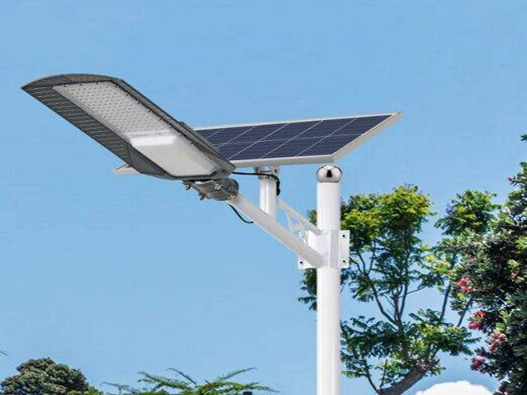
Energy conservation is not only about reducing energy consumption but also about improving energy acquisition capabilities. High-efficiency solar panels can capture more electricity within a limited installation area, providing sufficient power for nighttime lighting. Optimizing the installation angle of solar panels, improving photovoltaic conversion efficiency, and reducing line losses can enhance the overall energy supply level of the system. Simultaneously, rationally matching the capacity relationship between solar panels, batteries, and LED lights also helps achieve energy supply and demand balance and avoid resource waste.
6. Establish an Intelligent Operation and Maintenance System for Long-Term Energy-Saving Operation
With the development of IoT technology, more and more solar street lights are being equipped with remote monitoring capabilities. Managers can view the real-time operating status of the lights, battery levels, power generation efficiency, and fault information, and optimize operating strategies based on data analysis. Through an intelligent operation and maintenance system, problems in energy utilization can be identified promptly, abnormal power consumption can be reduced, and the overall energy-saving level and operational reliability of the system can be further improved.
In summary, the construction of a green and energy-saving lighting system for solar street lights requires comprehensive optimization from multiple aspects, including light source configuration, light distribution design, intelligent control, energy storage management, power generation efficiency, and intelligent operation and maintenance. Only by maximizing energy utilization efficiency while meeting the needs of road lighting can a true balance be achieved between lighting effects and energy consumption control, providing a more efficient and environmentally friendly lighting solution for green and low-carbon city construction and sustainable development.
1. Scientifically Configure Light Source Power to Meet Actual Lighting Needs
The lighting effect of solar street lights is mainly determined by the LED light source, and the choice of light source power directly affects the system's energy consumption level. During the design process, a reasonable configuration should be made based on road grade, road width, pedestrian and vehicle traffic, and the usage environment. For example, urban main roads require higher illuminance, while community roads and rural roads can use lower power configurations. By scientifically calculating lighting needs and avoiding blindly using high-power lamps, not only can actual lighting requirements be met, but energy consumption can also be effectively reduced, improving the overall operating efficiency of the system.
2. Optimize Optical Light Distribution Design to Improve Light Energy Utilization
Besides light source power, light energy utilization efficiency is also a crucial factor affecting energy saving. If the light distribution of the luminaire is unreasonable, some light will illuminate ineffective areas, resulting in energy waste. Therefore, modern solar street lights typically employ professional optical lenses and directional light distribution technology to ensure more uniform light coverage of the target road area. By optimizing the beam angle and illumination range, higher lighting effects can be achieved under the same power conditions, thereby reducing additional energy consumption and achieving simultaneous improvement in energy saving and lighting quality.
3. Introduce Intelligent Control Systems for Dynamic Dimming
Traditional streetlights typically operate with a fixed brightness mode, while intelligent solar street lights can automatically adjust the lighting intensity according to environmental changes. For example, they maintain higher brightness during the first half of the night when traffic and pedestrian flow are high, and automatically reduce power during the second half of the night. When pedestrians or vehicles are detected, they quickly restore normal lighting. Through the combined application of light-sensing control, time-based control, and human body sensing technology, on-demand lighting can be achieved, significantly reducing ineffective energy consumption while ensuring nighttime traffic safety.
4. Enhance Energy Storage System Management to Reduce Energy Waste
Energy storage systems are crucial for the stable operation of solar street lights. Lithium iron phosphate batteries are widely used in solar lighting systems due to their long lifespan, high safety, and excellent cycle performance. To achieve a balance between brightness and energy consumption, an intelligent battery management system is needed to monitor charging, discharging, and remaining power in real time. The system can automatically adjust output power based on the battery's energy storage status, ensuring basic lighting needs are met while avoiding over-discharge, thereby extending battery life and improving energy efficiency.
5. Improve Solar Power Generation Efficiency to Enhance Energy Supply Capacity
Energy conservation is not only about reducing energy consumption but also about improving energy acquisition capabilities. High-efficiency solar panels can capture more electricity within a limited installation area, providing sufficient power for nighttime lighting. Optimizing the installation angle of solar panels, improving photovoltaic conversion efficiency, and reducing line losses can enhance the overall energy supply level of the system. Simultaneously, rationally matching the capacity relationship between solar panels, batteries, and LED lights also helps achieve energy supply and demand balance and avoid resource waste.
6. Establish an Intelligent Operation and Maintenance System for Long-Term Energy-Saving Operation
With the development of IoT technology, more and more solar street lights are being equipped with remote monitoring capabilities. Managers can view the real-time operating status of the lights, battery levels, power generation efficiency, and fault information, and optimize operating strategies based on data analysis. Through an intelligent operation and maintenance system, problems in energy utilization can be identified promptly, abnormal power consumption can be reduced, and the overall energy-saving level and operational reliability of the system can be further improved.
In summary, the construction of a green and energy-saving lighting system for solar street lights requires comprehensive optimization from multiple aspects, including light source configuration, light distribution design, intelligent control, energy storage management, power generation efficiency, and intelligent operation and maintenance. Only by maximizing energy utilization efficiency while meeting the needs of road lighting can a true balance be achieved between lighting effects and energy consumption control, providing a more efficient and environmentally friendly lighting solution for green and low-carbon city construction and sustainable development.