
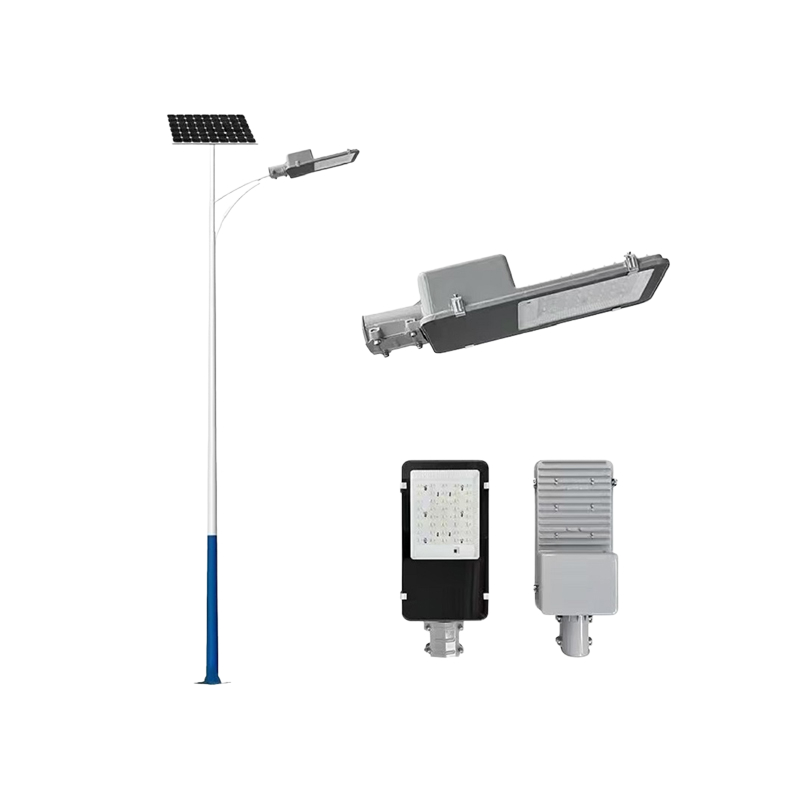
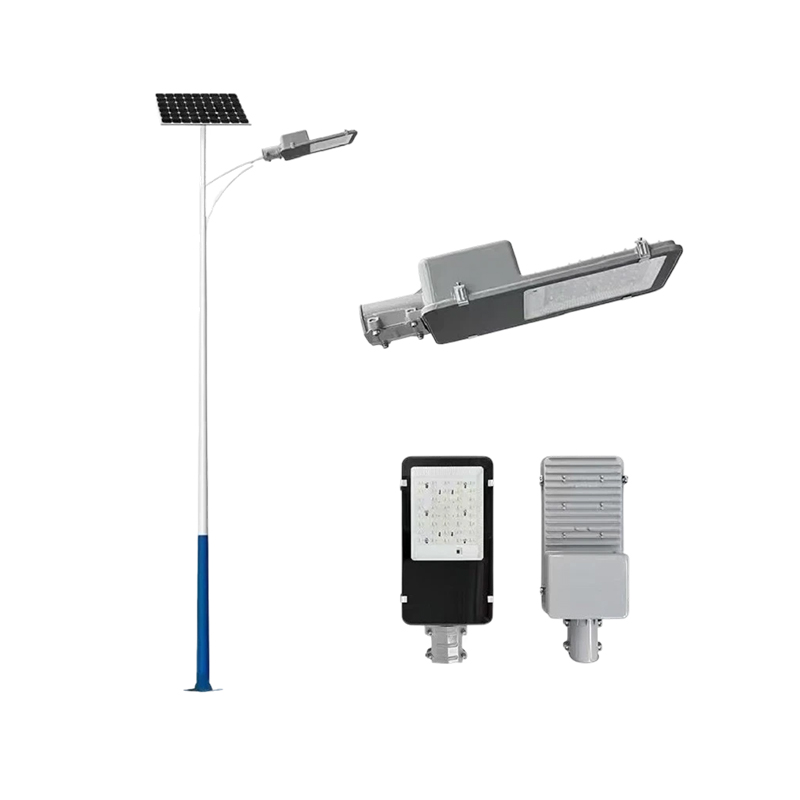
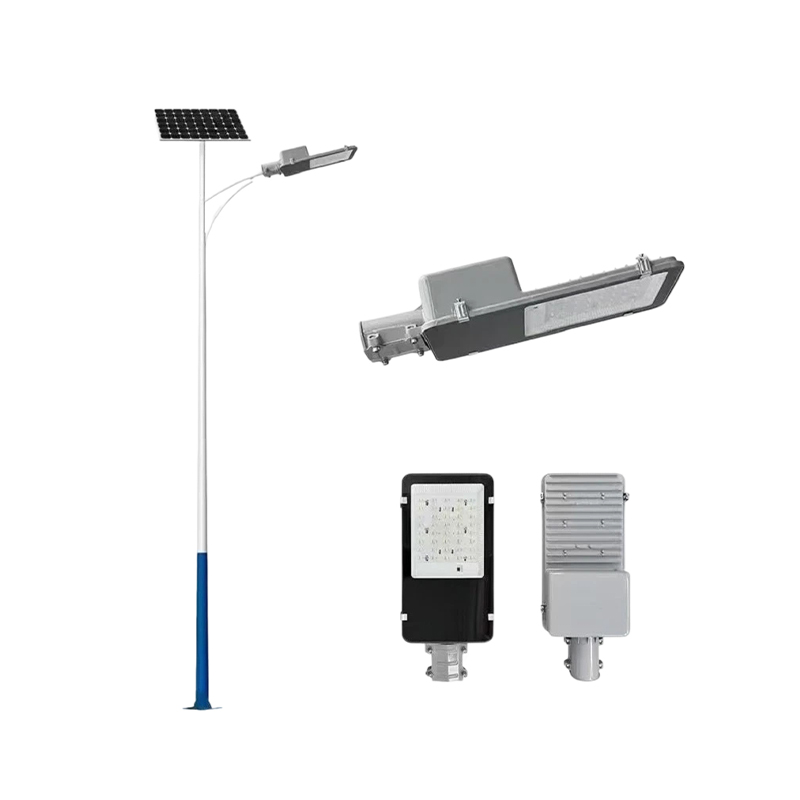
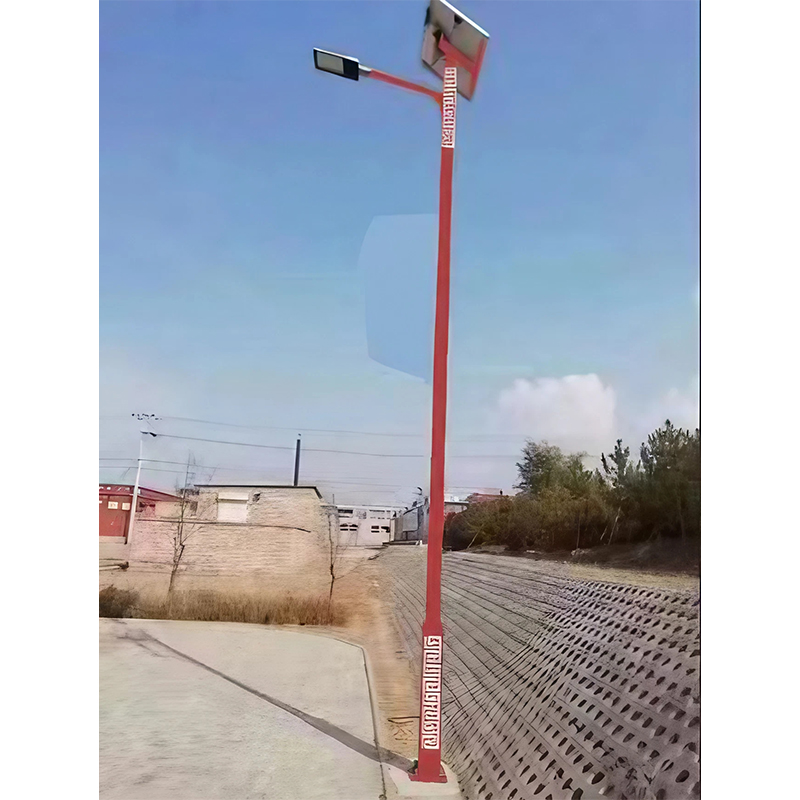


Solar street lights, with their superior wind resistance, stand firmly against gales on the streets
Release Time : 2025-12-02
In typhoon-prone coastal areas, high-wind zones, or open plains, traditional lighting fixtures are often damaged or even collapse due to extreme weather, causing not only property loss but also safety hazards. The new generation of solar street lights, with their integrated structure, low center of gravity, and scientifically designed mechanics, are redefining the reliability of outdoor lighting with their superior wind resistance. They require no external power grid and can remain steadfast even in gale-force winds of up to level 12, becoming the most reliable guardians of the night in wind and rain.
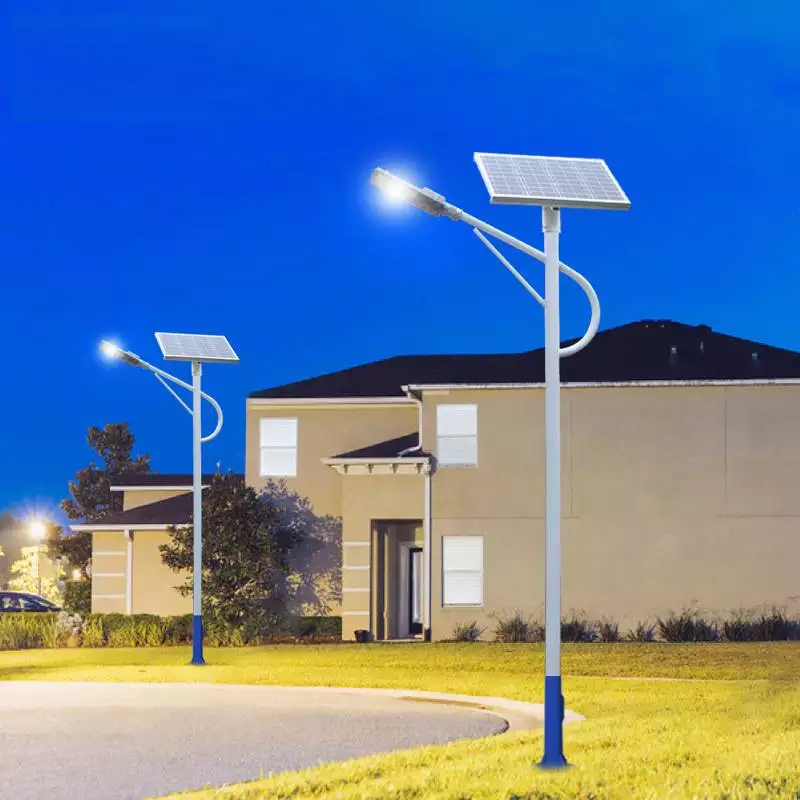
I. Why is wind resistance crucial for solar street lights?
Solar street lights are typically installed along roadsides, at the edges of squares, or in open rural areas. These areas often lack shelter and are directly exposed to natural wind forces. Especially in the southeastern coastal areas, typhoons during the summer and autumn seasons can bring instantaneous wind speeds exceeding 40 meters per second; while in the northwestern Gobi Desert or the Qinghai-Tibet Plateau, strong winds are commonplace year-round. Inadequate street light structural design can lead to minor issues like torn photovoltaic panels and deformed lamp arms, or even complete lamp collapse, endangering pedestrian and vehicle safety.
More importantly, solar street lights integrate photovoltaic modules, batteries, controllers, and LED light sources, resulting in a heavy load at the top. If wind resistance is insufficient, they are highly susceptible to instability, becoming top-heavy. Therefore, wind-resistant design is not an optional extra, but a fundamental safety requirement.
II. Structural Optimization: A Complete Wind-Resistant System from Pole to Foundation
Modern high-wind-resistant solar street lights utilize multi-dimensional innovation to build a complete wind-resistant system:
1. High-Strength Pole and Streamlined Design
The poles are generally made of Q345B or higher strength hot-dip galvanized steel with a wall thickness of 3.5–5.0 mm, far exceeding the standards for ordinary street lights. Simultaneously, the pole body adopts a tapered or biomimetic streamlined design, effectively reducing the drag coefficient. Some high-end products also feature airflow channels in the pole body to guide airflow smoothly and avoid vortex-induced vibration.

2. Low Center of Gravity + Compact Integrated Layout
Traditional split-type solar street lights have the battery box externally mounted in the middle of the light pole, easily becoming a wind load concentration point. The new integrated design embeds the lithium battery and controller entirely within the bottom of the light pole or inside the light head, significantly lowering the overall center of gravity. The photovoltaic panels also use small-sized, high-efficiency monocrystalline silicon modules to reduce the windward area, while strengthening the frame and back panel rigidity improves torsional resistance.
3. Scientific Weight Distribution and Deep Foundation
The light pole base uses a widened flange, coupled with a concrete foundation 1.2–1.8 meters deep, with pre-embedded anchor bolts and reinforcing cages. In typhoon areas, additional counterweights or helical pile technology are used, increasing the overall overturning moment of the light by more than three times.
III. Connection and Fixing: Details Determine Wind Resistance Success
Even the most robust main structure can fail if the connections are weak. Therefore, strengthening key nodes is crucial:
Photovoltaic panel brackets: Made of aerospace-grade aluminum alloy or stainless steel, secured with multi-point locking and anti-loosening nuts to ensure they do not loosen or deform under strong wind vibrations;
Lamp arm and lamp head connection: Utilizes thickened adapter flanges and high-strength bolts, with some designs incorporating triangular support structures to form a stable mechanical triangle;
Cable sealing: All wiring holes are equipped with waterproof and windproof rubber rings to prevent strong winds from entering and causing internal components to become damp or resonate.
It is worth mentioning that many manufacturers have introduced finite element analysis (FEA) to simulate wind loads on the entire lamp during the design phase, accurately identifying stress concentration areas and optimizing the structure to achieve "maximum wind resistance with minimal materials."

IV. Future Trends: Intelligent Sensing and Adaptive Wind Resistance
With the development of IoT technology, the next generation of solar street lights is moving towards an era of "active wind resistance." For example:
Integrated wind speed sensors automatically adjust the photovoltaic panel angle to minimize windwardness when an instantaneous wind speed exceeds a threshold;
A structural health monitoring system assesses the stress state of the light poles in real time, providing early warnings of potential risks;
The use of shape memory alloys or flexible connectors allows for slight swaying in strong winds to dissipate energy, automatically resetting after the wind stops.
These innovations allow solar street lights to move from "passive resistance" to "active adaptation," further enhancing their survivability in extreme climates.
On stormy nights, it is these rigorously tested and wind-resistant solar street lights that safeguard the light with their steel bodies. They do not rely on the power grid, but rather on their own structural strength to firmly root themselves in the earth, fearless of gales and the passage of time. This is not only a victory for engineering technology, but also the simplest yet most powerful interpretation of the word "reliable"—because true light never goes out in the storm.
I. Why is wind resistance crucial for solar street lights?
Solar street lights are typically installed along roadsides, at the edges of squares, or in open rural areas. These areas often lack shelter and are directly exposed to natural wind forces. Especially in the southeastern coastal areas, typhoons during the summer and autumn seasons can bring instantaneous wind speeds exceeding 40 meters per second; while in the northwestern Gobi Desert or the Qinghai-Tibet Plateau, strong winds are commonplace year-round. Inadequate street light structural design can lead to minor issues like torn photovoltaic panels and deformed lamp arms, or even complete lamp collapse, endangering pedestrian and vehicle safety.
More importantly, solar street lights integrate photovoltaic modules, batteries, controllers, and LED light sources, resulting in a heavy load at the top. If wind resistance is insufficient, they are highly susceptible to instability, becoming top-heavy. Therefore, wind-resistant design is not an optional extra, but a fundamental safety requirement.
II. Structural Optimization: A Complete Wind-Resistant System from Pole to Foundation
Modern high-wind-resistant solar street lights utilize multi-dimensional innovation to build a complete wind-resistant system:
1. High-Strength Pole and Streamlined Design
The poles are generally made of Q345B or higher strength hot-dip galvanized steel with a wall thickness of 3.5–5.0 mm, far exceeding the standards for ordinary street lights. Simultaneously, the pole body adopts a tapered or biomimetic streamlined design, effectively reducing the drag coefficient. Some high-end products also feature airflow channels in the pole body to guide airflow smoothly and avoid vortex-induced vibration.
2. Low Center of Gravity + Compact Integrated Layout
Traditional split-type solar street lights have the battery box externally mounted in the middle of the light pole, easily becoming a wind load concentration point. The new integrated design embeds the lithium battery and controller entirely within the bottom of the light pole or inside the light head, significantly lowering the overall center of gravity. The photovoltaic panels also use small-sized, high-efficiency monocrystalline silicon modules to reduce the windward area, while strengthening the frame and back panel rigidity improves torsional resistance.
3. Scientific Weight Distribution and Deep Foundation
The light pole base uses a widened flange, coupled with a concrete foundation 1.2–1.8 meters deep, with pre-embedded anchor bolts and reinforcing cages. In typhoon areas, additional counterweights or helical pile technology are used, increasing the overall overturning moment of the light by more than three times.
III. Connection and Fixing: Details Determine Wind Resistance Success
Even the most robust main structure can fail if the connections are weak. Therefore, strengthening key nodes is crucial:
Photovoltaic panel brackets: Made of aerospace-grade aluminum alloy or stainless steel, secured with multi-point locking and anti-loosening nuts to ensure they do not loosen or deform under strong wind vibrations;
Lamp arm and lamp head connection: Utilizes thickened adapter flanges and high-strength bolts, with some designs incorporating triangular support structures to form a stable mechanical triangle;
Cable sealing: All wiring holes are equipped with waterproof and windproof rubber rings to prevent strong winds from entering and causing internal components to become damp or resonate.
It is worth mentioning that many manufacturers have introduced finite element analysis (FEA) to simulate wind loads on the entire lamp during the design phase, accurately identifying stress concentration areas and optimizing the structure to achieve "maximum wind resistance with minimal materials."
IV. Future Trends: Intelligent Sensing and Adaptive Wind Resistance
With the development of IoT technology, the next generation of solar street lights is moving towards an era of "active wind resistance." For example:
Integrated wind speed sensors automatically adjust the photovoltaic panel angle to minimize windwardness when an instantaneous wind speed exceeds a threshold;
A structural health monitoring system assesses the stress state of the light poles in real time, providing early warnings of potential risks;
The use of shape memory alloys or flexible connectors allows for slight swaying in strong winds to dissipate energy, automatically resetting after the wind stops.
These innovations allow solar street lights to move from "passive resistance" to "active adaptation," further enhancing their survivability in extreme climates.
On stormy nights, it is these rigorously tested and wind-resistant solar street lights that safeguard the light with their steel bodies. They do not rely on the power grid, but rather on their own structural strength to firmly root themselves in the earth, fearless of gales and the passage of time. This is not only a victory for engineering technology, but also the simplest yet most powerful interpretation of the word "reliable"—because true light never goes out in the storm.