


How do solar street lights illuminate rural paths and warm villagers' journeys home?
Release Time : 2025-12-01
In the vast countryside of China, winding paths connect fields, courtyards, and village entrances. Once upon a time, after nightfall, these roads were shrouded in darkness, forcing villagers to rely on flashlights or the faint moonlight, which was not only inconvenient but also posed safety hazards. Now, quietly erected solar street lights are dispelling the silence of the night with their silent glow, paving a safe, bright, and warm path home for villagers. They are not connected to the power grid and consume no electricity; relying solely on sunlight, they provide day and night illumination, becoming a gentle yet steadfast bright spot in rural revitalization.

1. Illuminating "Electric-Free Corners" Without a Power Grid
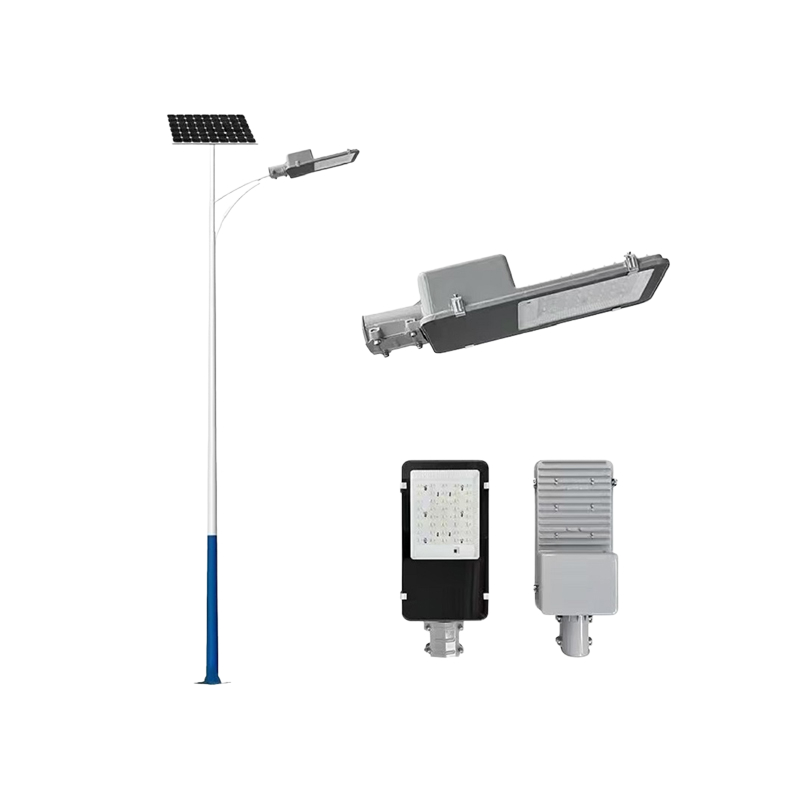
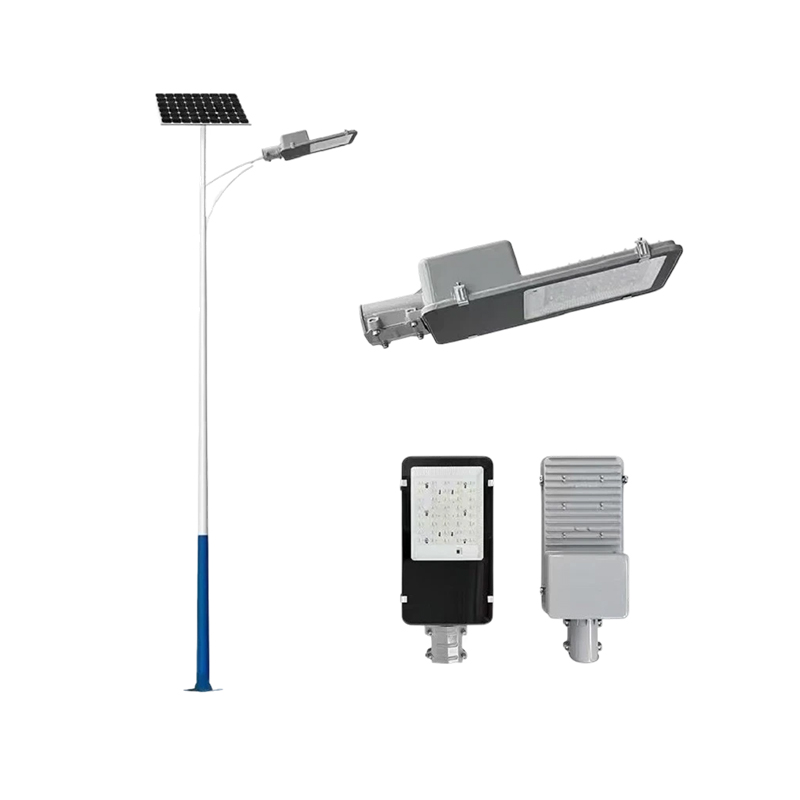
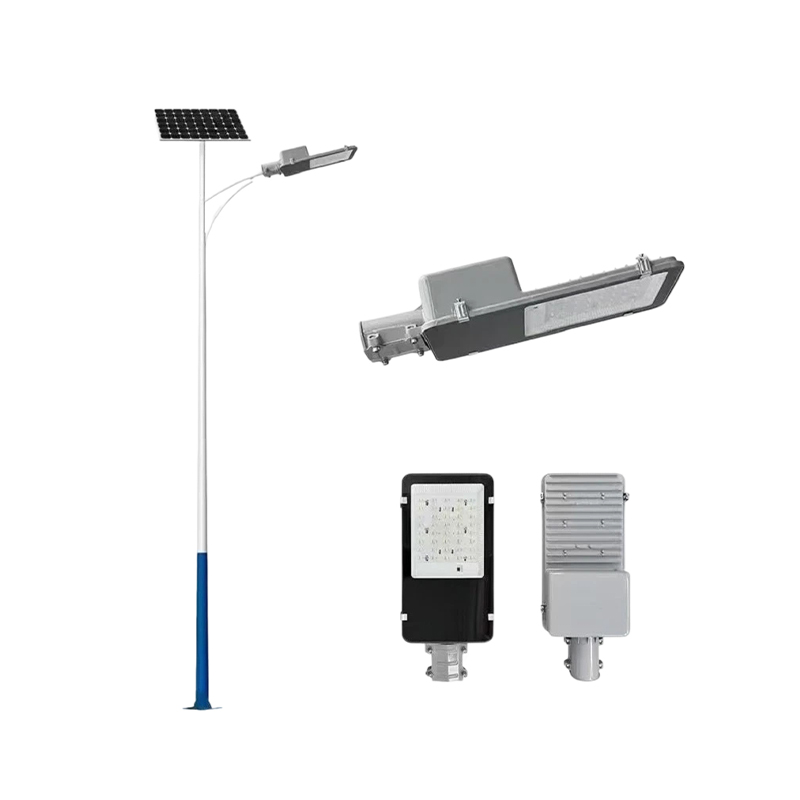
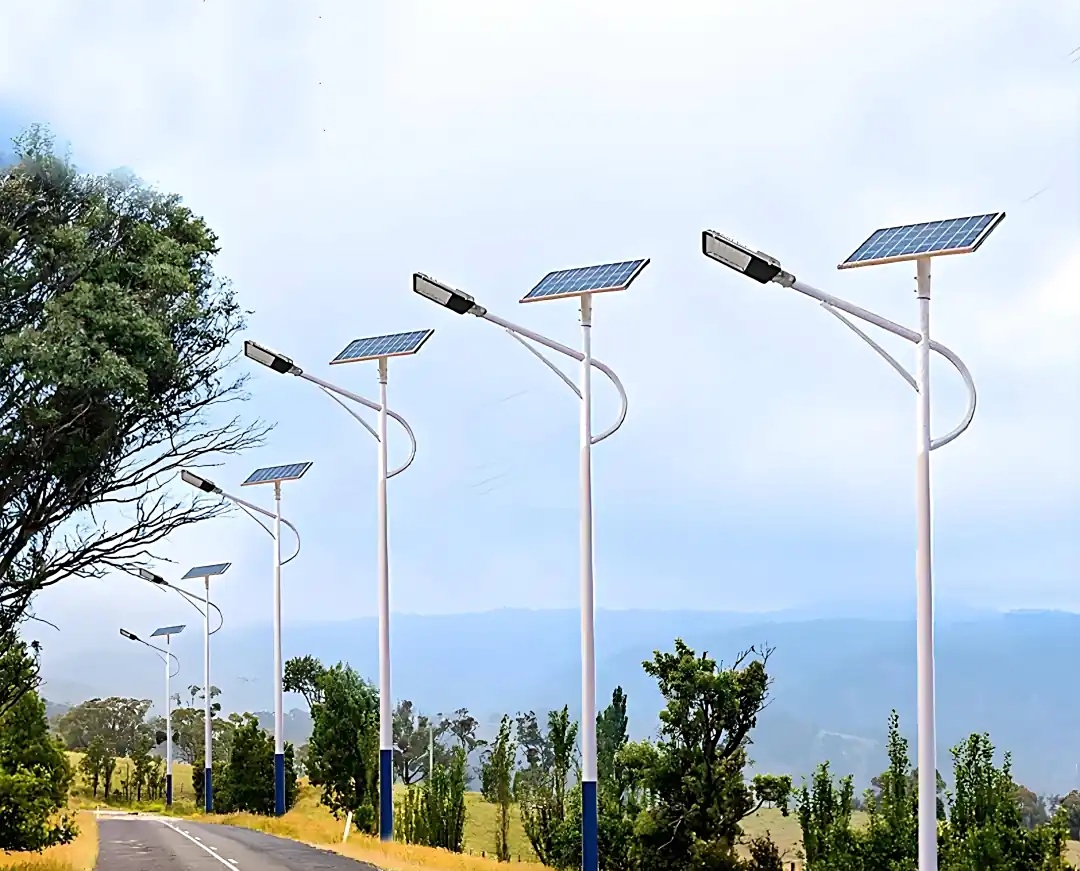
Many remote villages are located in mountainous areas, plateaus, or lakeside regions, where laying power grids is costly and difficult. Some villages have long been without electricity. Traditional municipal streetlights are almost impossible to install in such areas. The emergence of solar street lights has completely broken this deadlock—they come equipped with photovoltaic panels, batteries, and LED light sources, forming an independent micro-energy system, truly realizing "installing light wherever it's needed."
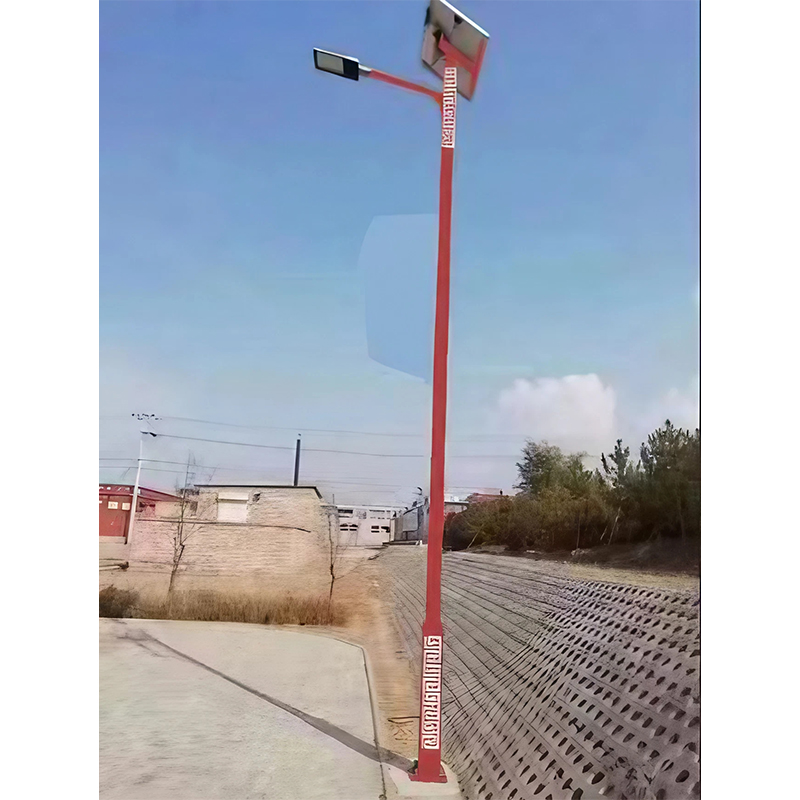
The installation process is also extremely simple: no need to dig trenches or lay cables; simply lay a foundation along the roadside, erect a light pole, and a single light can be deployed in just a few hours. This "plug-and-play" characteristic has allowed solar street lights to rapidly spread in infrastructure-deficient areas such as the central and western regions and the southwestern border regions. One light illuminates ten meters of road; hundreds of lights form a safe line. Villagers can finally take a peaceful walk after dinner, children no longer run in the dark after school, and the elderly feel more secure when using the toilet at night.
2. Zero Electricity Costs, Long-Term Protection of Rural Finances
For many villages with underdeveloped collective economies, electricity costs are a significant burden. Even if traditional streetlights can be installed, they often become mere decorations due to "unaffordable usage," even leading to the embarrassing situation of "only turning on during inspections." Solar street lights rely entirely on clean energy, charging during the day and discharging at night, resulting in virtually zero electricity costs throughout their entire lifespan.
For example, a 60W LED solar street light consumes approximately 0.6 kWh per day, entirely powered by a 100W photovoltaic panel on top. In areas with more than 4 hours of sunshine per year, coupled with a high-efficiency lithium battery energy storage system, it can provide stable lighting 365 days a year. This means that a single light can save the village collective thousands of yuan in electricity costs over its 10-year lifespan. This money could be used for a new well, a cultural performance, or assistance for a family in need. Solar street lights not only save money but also ensure resources are used effectively.

3. Intelligent Control: Light "Understands" Villagers' Needs
Modern solar street lights are no longer simply "on when it's dark, off when it's light." By integrating photosensitive sensors, infrared human body sensors, and even remote IoT modules, they are becoming increasingly "intelligent."
In village roads with low pedestrian traffic, streetlights can be set to a low-brightness, constant-on mode, ensuring basic illumination while extending battery life. When someone approaches, the lights automatically brighten to full brightness and gradually dim after the person leaves – this "on-demand lighting" mode saves over 50% on energy. On main roads or squares, a timed + light-controlled dual-mode strategy can be used to ensure constant brightness during peak nighttime hours.
More advanced systems can remotely monitor the status of each light via a mobile app or village-level management platform: Is the battery sufficient? Is there a malfunction? Is the lighting duration reasonable? In case of any abnormality, the system automatically alarms, allowing maintenance personnel to pinpoint the problem accurately, avoiding "blind repairs" and significantly reducing maintenance costs. The warmth of technology is quietly integrating into rural daily life through these beams of intelligent light.
4. Green and Low-Carbon, Protecting Green Mountains and Clear Waters
Solar streetlights are not just lighting tools, but also practitioners of ecological civilization. Each light can reduce carbon emissions by approximately 200 kilograms annually, equivalent to planting 10 trees. In today's emphasis on "dual carbon" goals, the thousands of solar streetlights illuminating villages form an invisible yet tangible green power grid.
More importantly, they allow villagers to personally experience the convenience and value of clean energy. Children reading under the lights ask, "Does this light come from the sun?" The elderly smile and say, "Yes, it's a gift from God, free and pollution-free." This subtle environmental education resonates more deeply than any propaganda slogan. A green lifestyle is taking root and flourishing in rural China, starting with a single streetlight.
5. Illuminating More Than Just Roads, It Illuminates Hearts
In the Nujiang Grand Canyon of Yunnan, Lisu villagers danced their first "foot-stepping dance" under the solar streetlights in front of their homes; on the loess slopes of Dingxi, Gansu, returning youths used streetlights to illuminate a newly built e-commerce service station; in a Miao village in Guizhou, the "nighttime meeting corner" under the streetlights became a new venue for villagers to discuss village affairs… Solar streetlights bring far more than just physical light.
It has narrowed the perceived gap between urban and rural areas, enhancing villagers' sense of gain and happiness; it has improved nighttime safety and reduced accidents; it has extended the "active hours" of rural areas, promoting social and economic activities. A lamp is a bridge, connecting modern civilization with rural warmth; a beam of light is a promise, demonstrating the original intention of sharing the fruits of development with all.
Solar street lights, without roaring transformers or crisscrossing power lines, only silent photovoltaic panels absorbing sunlight during the day and gentle LEDs casting a soft glow at night. They are unassuming yet enduring; inexpensive yet precious. In the great tide of rural revitalization, it may be just a small link, but in the simplest way, it fulfills the solemn promise of "the people's yearning for a better life." When night falls again, those rural paths illuminated by solar street lights not only lead to homes, but also to hope, dignity, and the future.
1. Illuminating "Electric-Free Corners" Without a Power Grid
Many remote villages are located in mountainous areas, plateaus, or lakeside regions, where laying power grids is costly and difficult. Some villages have long been without electricity. Traditional municipal streetlights are almost impossible to install in such areas. The emergence of solar street lights has completely broken this deadlock—they come equipped with photovoltaic panels, batteries, and LED light sources, forming an independent micro-energy system, truly realizing "installing light wherever it's needed."
The installation process is also extremely simple: no need to dig trenches or lay cables; simply lay a foundation along the roadside, erect a light pole, and a single light can be deployed in just a few hours. This "plug-and-play" characteristic has allowed solar street lights to rapidly spread in infrastructure-deficient areas such as the central and western regions and the southwestern border regions. One light illuminates ten meters of road; hundreds of lights form a safe line. Villagers can finally take a peaceful walk after dinner, children no longer run in the dark after school, and the elderly feel more secure when using the toilet at night.
2. Zero Electricity Costs, Long-Term Protection of Rural Finances
For many villages with underdeveloped collective economies, electricity costs are a significant burden. Even if traditional streetlights can be installed, they often become mere decorations due to "unaffordable usage," even leading to the embarrassing situation of "only turning on during inspections." Solar street lights rely entirely on clean energy, charging during the day and discharging at night, resulting in virtually zero electricity costs throughout their entire lifespan.
For example, a 60W LED solar street light consumes approximately 0.6 kWh per day, entirely powered by a 100W photovoltaic panel on top. In areas with more than 4 hours of sunshine per year, coupled with a high-efficiency lithium battery energy storage system, it can provide stable lighting 365 days a year. This means that a single light can save the village collective thousands of yuan in electricity costs over its 10-year lifespan. This money could be used for a new well, a cultural performance, or assistance for a family in need. Solar street lights not only save money but also ensure resources are used effectively.
3. Intelligent Control: Light "Understands" Villagers' Needs
Modern solar street lights are no longer simply "on when it's dark, off when it's light." By integrating photosensitive sensors, infrared human body sensors, and even remote IoT modules, they are becoming increasingly "intelligent."
In village roads with low pedestrian traffic, streetlights can be set to a low-brightness, constant-on mode, ensuring basic illumination while extending battery life. When someone approaches, the lights automatically brighten to full brightness and gradually dim after the person leaves – this "on-demand lighting" mode saves over 50% on energy. On main roads or squares, a timed + light-controlled dual-mode strategy can be used to ensure constant brightness during peak nighttime hours.
More advanced systems can remotely monitor the status of each light via a mobile app or village-level management platform: Is the battery sufficient? Is there a malfunction? Is the lighting duration reasonable? In case of any abnormality, the system automatically alarms, allowing maintenance personnel to pinpoint the problem accurately, avoiding "blind repairs" and significantly reducing maintenance costs. The warmth of technology is quietly integrating into rural daily life through these beams of intelligent light.
4. Green and Low-Carbon, Protecting Green Mountains and Clear Waters
Solar streetlights are not just lighting tools, but also practitioners of ecological civilization. Each light can reduce carbon emissions by approximately 200 kilograms annually, equivalent to planting 10 trees. In today's emphasis on "dual carbon" goals, the thousands of solar streetlights illuminating villages form an invisible yet tangible green power grid.
More importantly, they allow villagers to personally experience the convenience and value of clean energy. Children reading under the lights ask, "Does this light come from the sun?" The elderly smile and say, "Yes, it's a gift from God, free and pollution-free." This subtle environmental education resonates more deeply than any propaganda slogan. A green lifestyle is taking root and flourishing in rural China, starting with a single streetlight.
5. Illuminating More Than Just Roads, It Illuminates Hearts
In the Nujiang Grand Canyon of Yunnan, Lisu villagers danced their first "foot-stepping dance" under the solar streetlights in front of their homes; on the loess slopes of Dingxi, Gansu, returning youths used streetlights to illuminate a newly built e-commerce service station; in a Miao village in Guizhou, the "nighttime meeting corner" under the streetlights became a new venue for villagers to discuss village affairs… Solar streetlights bring far more than just physical light.
It has narrowed the perceived gap between urban and rural areas, enhancing villagers' sense of gain and happiness; it has improved nighttime safety and reduced accidents; it has extended the "active hours" of rural areas, promoting social and economic activities. A lamp is a bridge, connecting modern civilization with rural warmth; a beam of light is a promise, demonstrating the original intention of sharing the fruits of development with all.
Solar street lights, without roaring transformers or crisscrossing power lines, only silent photovoltaic panels absorbing sunlight during the day and gentle LEDs casting a soft glow at night. They are unassuming yet enduring; inexpensive yet precious. In the great tide of rural revitalization, it may be just a small link, but in the simplest way, it fulfills the solemn promise of "the people's yearning for a better life." When night falls again, those rural paths illuminated by solar street lights not only lead to homes, but also to hope, dignity, and the future.