


How are solar street lights, with their zero electricity cost and no wiring required, reshaping the economic model of urban fringe lighting?
Release Time : 2025-12-09
In traditional municipal lighting systems, the construction of a single street light not only involves huge upfront investments in poles, cables, and transformers, but also incurs continuous electricity bills and complex underground pipeline maintenance. Especially in "urban fringe" areas such as urban-rural fringe areas, rural roads, park trails, and mountain highways, high grid connection costs, difficult construction, and slow operation and maintenance response result in many public spaces remaining in "lighting blind spots" for extended periods. The emergence of solar street lights, with their core advantages of "zero electricity cost and no wiring required," is quietly reshaping the lighting economic logic of these areas, driving the transformation of public infrastructure towards green, intelligent, and inclusive development.

1. Disruptive Cost Structure: From "Heavy Assets" to "Light Deployment"
In the overall cost of traditional municipal street lights, cable laying and power capacity expansion often account for more than 40% of the total investment. Taking a 5-kilometer rural road as an example, if powered by 220V municipal electricity, trenches would need to be dug, armored cables laid, and distribution boxes installed, with the electricity infrastructure costs alone potentially exceeding 300,000 yuan. Solar street lights, however, use an independent power supply system, requiring no external grid connection and completely eliminating the need for cabling and civil engineering.
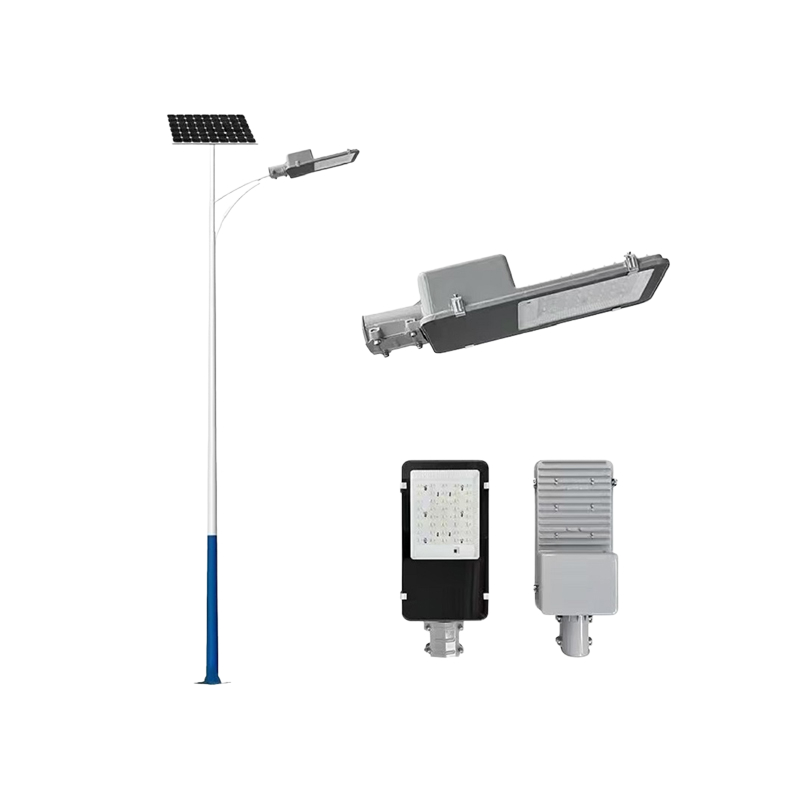
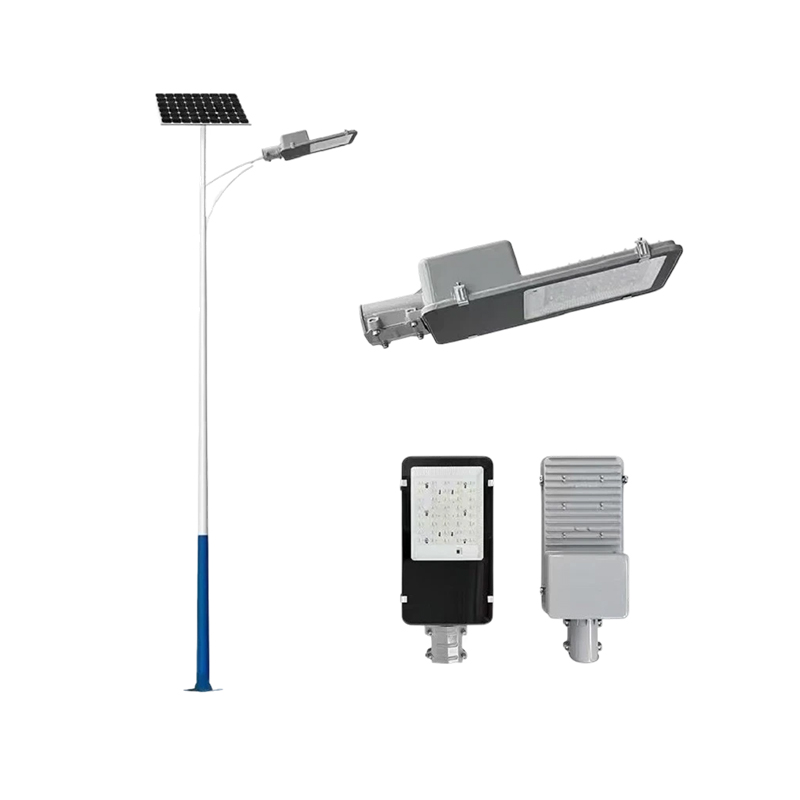
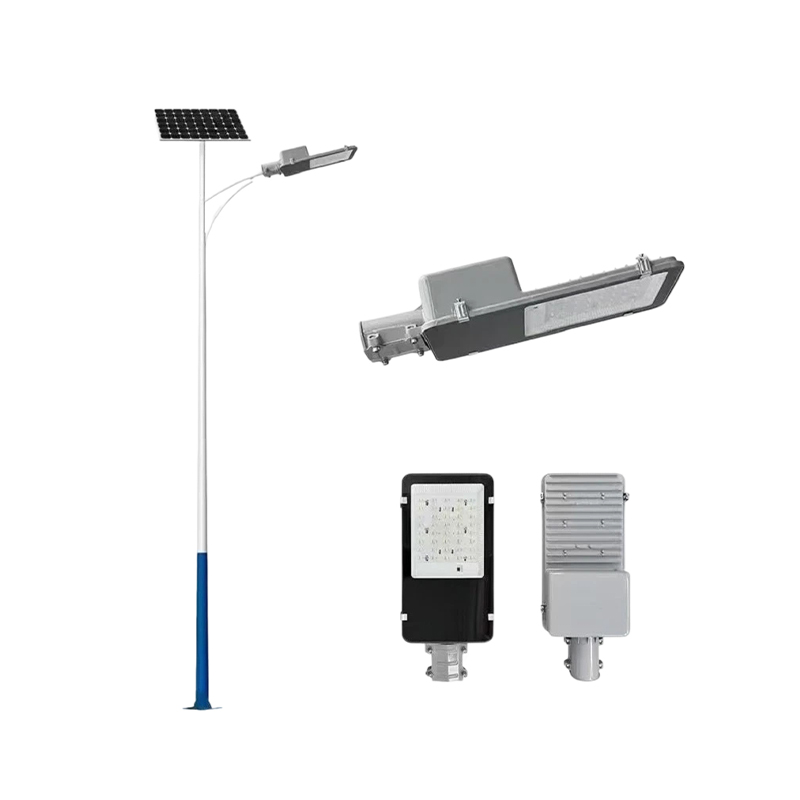
Light Pole: One-piece formed tapered tube of Q235 steel, hot-dip galvanized + outdoor anti-rust paint, strong wind pressure resistance, corrosion resistance, and a lifespan exceeding 15 years;
LED Light Head: 60W high-efficiency light source, luminous efficacy ≥130 lm/W, IP65 waterproof, meeting the basic illuminance requirements of main roads;
Energy Storage System: 40Ah lithium iron phosphate battery, cycle life exceeding 2000 cycles, lifespan 5-7 years;
Photovoltaic Module: 60W monocrystalline silicon solar panel, conversion efficiency >18%, average daily power generation of approximately 240Wh on sunny days;
Intelligent Control: Light-controlled automatic start/stop, supports 6-hour adjustable working mode.
The entire system is factory-integrated, requiring only foundation pouring and hoisting on-site. Installation time for a single lamp is no more than 2 hours. While the initial investment is slightly higher than ordinary municipal streetlights, the total lifecycle cost is significantly lower—no electricity bills, no line losses, no transformer maintenance, the price difference can be recovered within 5 years, and over 60% of total expenditure can be saved over a 10-year lifespan.

2. Energy Self-Sufficiency: Solving the "No Electricity Available" Dilemma
In remote mountainous areas, islands, desert highways, and other areas not covered by the power grid, traditional lighting is almost impossible. Solar streetlights, with their distributed energy characteristics, truly achieve "light wherever there is sunshine." Even after 3-5 consecutive days of cloudy or rainy weather, a 40Ah lithium iron phosphate battery can still guarantee 6 hours/day of basic lighting. Some high-end models also support dual power backup or remote power monitoring, further enhancing reliability.
This "on-site energy utilization" model not only solves the lighting problem but also becomes a breakthrough in the modernization of rural infrastructure. A single lamp illuminates not only the road but also the possibility of safe nighttime travel, security and crime prevention, and expanded economic activities.
3. Intelligent Operation and Maintenance: From "Reactive Emergency Repair" to "Proactive Management"
Traditional street light malfunctions often rely on public reports or inspections for detection, resulting in delayed responses. Solar street lights, however, typically integrate IoT modules, enabling remote monitoring of battery voltage, light intensity, operating time, and fault status. Maintenance personnel can view the lighting rate of the entire road via a mobile app, accurately pinpointing fault locations and transforming "blanket inspections" into "targeted repairs," reducing labor costs by over 50%.
Furthermore, intelligent dimming strategies extend system lifespan. For example, automatic power reduction during low-traffic nighttime hours meets basic safety requirements while minimizing deep battery discharge and slowing aging. This "on-demand energy supply" concept optimizes the allocation of limited solar energy resources.
4. Environmental and Social Benefits: Multiple Values Beyond Economics
The promotion of solar street lights brings significant positive environmental externalities. Assuming an annual power generation of 200 kWh per light, 1000 lights can reduce carbon emissions by approximately 150 tons annually, equivalent to planting 8000 trees. Meanwhile, it eliminates the risk of cable theft and enhances the security of public assets.
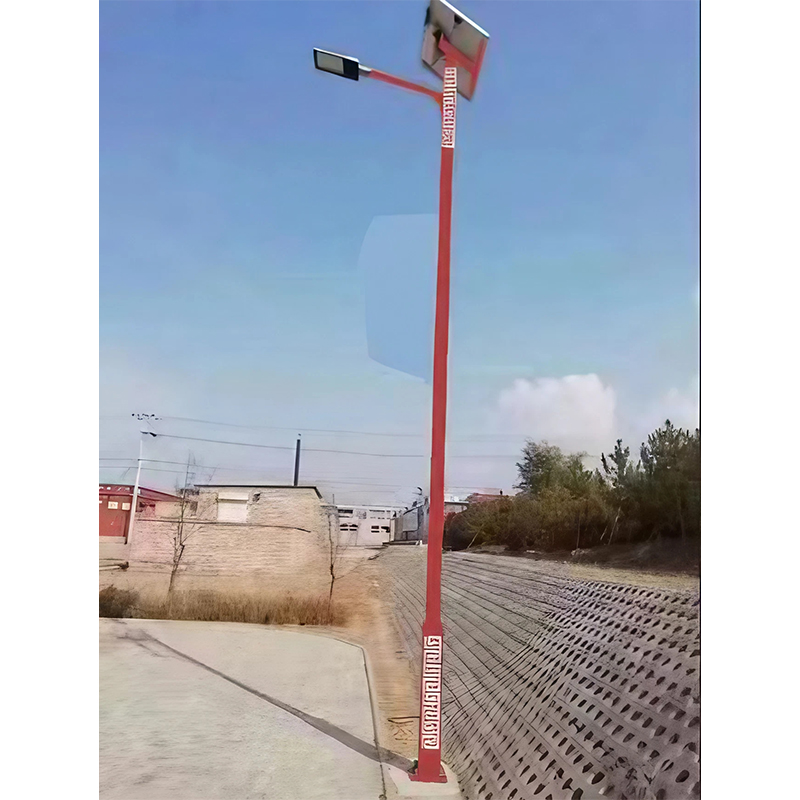
Under the rural revitalization strategy, solar street lights have become a symbol of "lighting up people's hearts." Villagers don't need to bear electricity costs; the government can benefit long-term from a one-time investment, truly achieving "co-construction, co-governance, and shared benefits." Many regions have integrated solar street lights with village bulletin boards, security cameras, and emergency broadcasting systems to create multifunctional smart poles, improving grassroots governance efficiency.
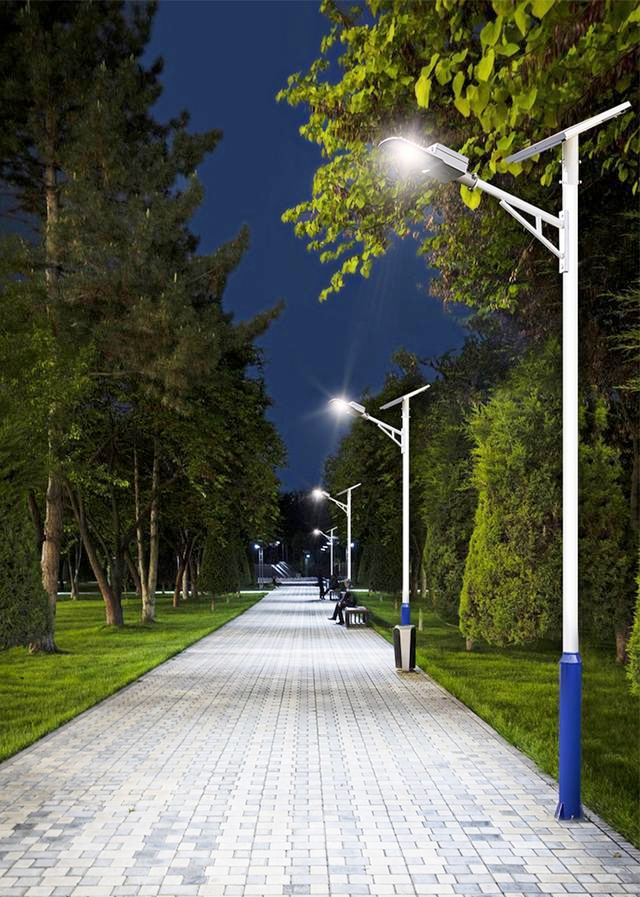
Solar street lights are far more than a simple "photovoltaic + LED" patchwork; they are a system solution that redefines the economic model of public lighting. It breaks the shackles of operating costs with "zero electricity costs," overcomes geographical barriers with "no wiring," and improves management efficiency with "intelligent" technology, ultimately weaving a green, reliable, and inclusive network of light on the outskirts of cities. As solar street lights illuminate rural roads, they illuminate not only the path beneath our feet but also a path to a sustainable future—a path where energy freedom, digital governance, and people's well-being are quietly merging.
1. Disruptive Cost Structure: From "Heavy Assets" to "Light Deployment"
In the overall cost of traditional municipal street lights, cable laying and power capacity expansion often account for more than 40% of the total investment. Taking a 5-kilometer rural road as an example, if powered by 220V municipal electricity, trenches would need to be dug, armored cables laid, and distribution boxes installed, with the electricity infrastructure costs alone potentially exceeding 300,000 yuan. Solar street lights, however, use an independent power supply system, requiring no external grid connection and completely eliminating the need for cabling and civil engineering.
Light Pole: One-piece formed tapered tube of Q235 steel, hot-dip galvanized + outdoor anti-rust paint, strong wind pressure resistance, corrosion resistance, and a lifespan exceeding 15 years;
LED Light Head: 60W high-efficiency light source, luminous efficacy ≥130 lm/W, IP65 waterproof, meeting the basic illuminance requirements of main roads;
Energy Storage System: 40Ah lithium iron phosphate battery, cycle life exceeding 2000 cycles, lifespan 5-7 years;
Photovoltaic Module: 60W monocrystalline silicon solar panel, conversion efficiency >18%, average daily power generation of approximately 240Wh on sunny days;
Intelligent Control: Light-controlled automatic start/stop, supports 6-hour adjustable working mode.
The entire system is factory-integrated, requiring only foundation pouring and hoisting on-site. Installation time for a single lamp is no more than 2 hours. While the initial investment is slightly higher than ordinary municipal streetlights, the total lifecycle cost is significantly lower—no electricity bills, no line losses, no transformer maintenance, the price difference can be recovered within 5 years, and over 60% of total expenditure can be saved over a 10-year lifespan.
2. Energy Self-Sufficiency: Solving the "No Electricity Available" Dilemma
In remote mountainous areas, islands, desert highways, and other areas not covered by the power grid, traditional lighting is almost impossible. Solar streetlights, with their distributed energy characteristics, truly achieve "light wherever there is sunshine." Even after 3-5 consecutive days of cloudy or rainy weather, a 40Ah lithium iron phosphate battery can still guarantee 6 hours/day of basic lighting. Some high-end models also support dual power backup or remote power monitoring, further enhancing reliability.
This "on-site energy utilization" model not only solves the lighting problem but also becomes a breakthrough in the modernization of rural infrastructure. A single lamp illuminates not only the road but also the possibility of safe nighttime travel, security and crime prevention, and expanded economic activities.
3. Intelligent Operation and Maintenance: From "Reactive Emergency Repair" to "Proactive Management"
Traditional street light malfunctions often rely on public reports or inspections for detection, resulting in delayed responses. Solar street lights, however, typically integrate IoT modules, enabling remote monitoring of battery voltage, light intensity, operating time, and fault status. Maintenance personnel can view the lighting rate of the entire road via a mobile app, accurately pinpointing fault locations and transforming "blanket inspections" into "targeted repairs," reducing labor costs by over 50%.
Furthermore, intelligent dimming strategies extend system lifespan. For example, automatic power reduction during low-traffic nighttime hours meets basic safety requirements while minimizing deep battery discharge and slowing aging. This "on-demand energy supply" concept optimizes the allocation of limited solar energy resources.
4. Environmental and Social Benefits: Multiple Values Beyond Economics
The promotion of solar street lights brings significant positive environmental externalities. Assuming an annual power generation of 200 kWh per light, 1000 lights can reduce carbon emissions by approximately 150 tons annually, equivalent to planting 8000 trees. Meanwhile, it eliminates the risk of cable theft and enhances the security of public assets.
Under the rural revitalization strategy, solar street lights have become a symbol of "lighting up people's hearts." Villagers don't need to bear electricity costs; the government can benefit long-term from a one-time investment, truly achieving "co-construction, co-governance, and shared benefits." Many regions have integrated solar street lights with village bulletin boards, security cameras, and emergency broadcasting systems to create multifunctional smart poles, improving grassroots governance efficiency.
Solar street lights are far more than a simple "photovoltaic + LED" patchwork; they are a system solution that redefines the economic model of public lighting. It breaks the shackles of operating costs with "zero electricity costs," overcomes geographical barriers with "no wiring," and improves management efficiency with "intelligent" technology, ultimately weaving a green, reliable, and inclusive network of light on the outskirts of cities. As solar street lights illuminate rural roads, they illuminate not only the path beneath our feet but also a path to a sustainable future—a path where energy freedom, digital governance, and people's well-being are quietly merging.