


How can solar street lights become the only viable lighting solution in areas without grid coverage?
Release Time : 2025-12-08
In the vast rural areas, mountains, islands, desert highways, border outposts, and disaster relief settlements around the world, large populations live in "power blind spots" that are unreachable by the power grid. These areas are difficult to connect to the traditional grid power system due to geographical isolation, high economic costs, or weak infrastructure. The lack of nighttime lighting not only limits residents' basic safety but also hinders education, healthcare, transportation, and economic development. Solar street lights, with their core advantages of energy self-sufficiency, flexible deployment, and simple operation and maintenance, have become the only realistic, reliable, and sustainable lighting solution for areas without grid coverage.
1. The Economic and Engineering Challenges of Grid Extension
Establishing a power grid in remote areas faces three insurmountable obstacles:
First is the high cost. According to the International Energy Agency, in areas with a population density of less than 10 people per square kilometer, the unit cost of electricity supply for grid extension can be 5–10 times higher than in urban areas. Laying several kilometers of cable, installing transformers, and maintaining lines can easily require an investment of hundreds of thousands of yuan, while only a few dozen households may benefit, resulting in an extremely low return on investment.
Secondly, there are construction challenges. Topography such as high mountains, deep valleys, swamps, wetlands, and permafrost zones make trenching and pole erection nearly impossible; tropical rainforests or deserts face the risk of equipment corrosion from extreme weather.
Finally, there are maintenance challenges. In the event of a line failure, maintenance personnel must travel long distances, resulting in long response times and high failure rates, making "power restoration difficult, and maintaining power even more difficult."
As a result, approximately 760 million people worldwide still lack access to electricity, the vast majority of whom are concentrated in sub-Saharan Africa, South Asia, and remote rural areas. For them, waiting for grid coverage seems a distant prospect, while solar street lights offer a "leapfrog" solution.
2. Energy Self-Sufficiency: Where there is sunshine, there is light
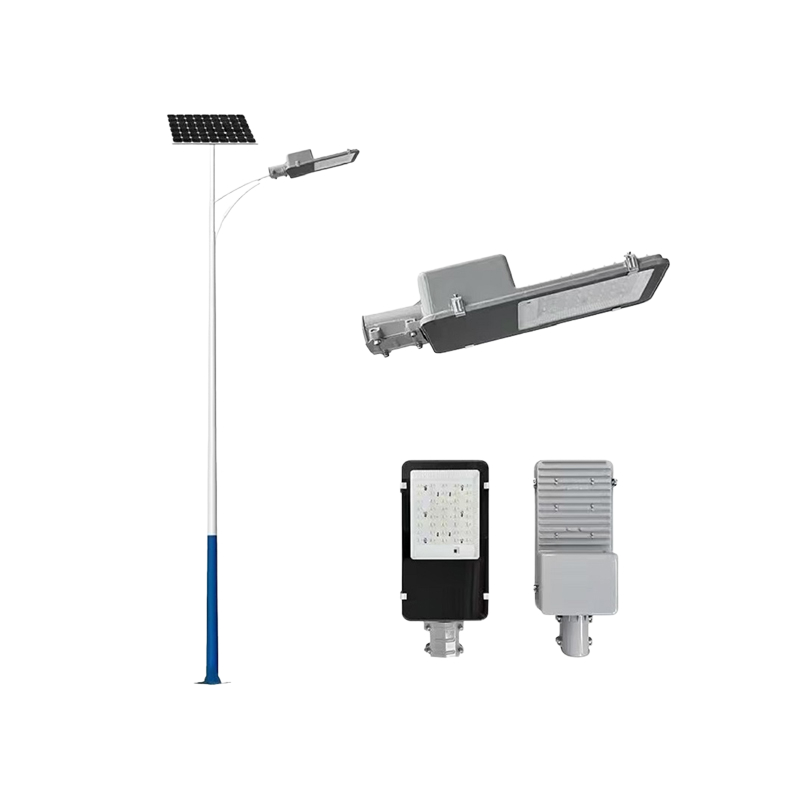
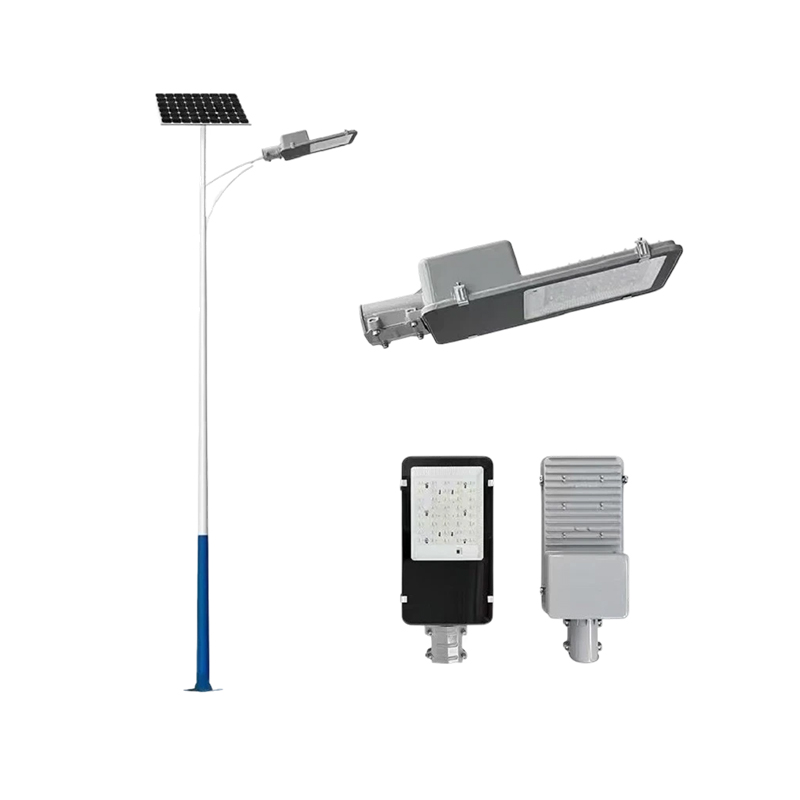
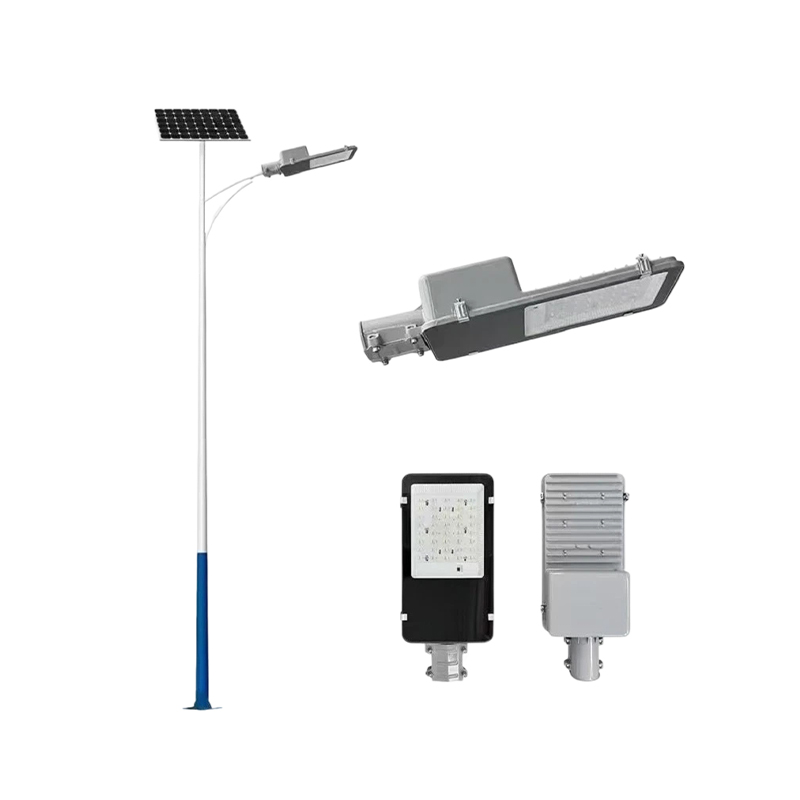
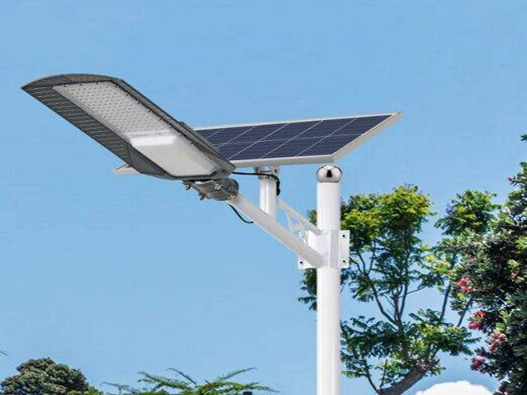
The essence of solar street lights is an independent microgrid system, composed of photovoltaic panels, energy storage batteries, LED light sources, and intelligent controllers, completely independent of external power input. Its operating logic is extremely simple: During the day, a 60W high-efficiency monocrystalline silicon solar panel converts sunlight into electricity, which is stored in a 40Ah lithium iron phosphate battery; at night, a light control sensor automatically activates a 60W LED light head, providing stable lighting according to a preset mode.
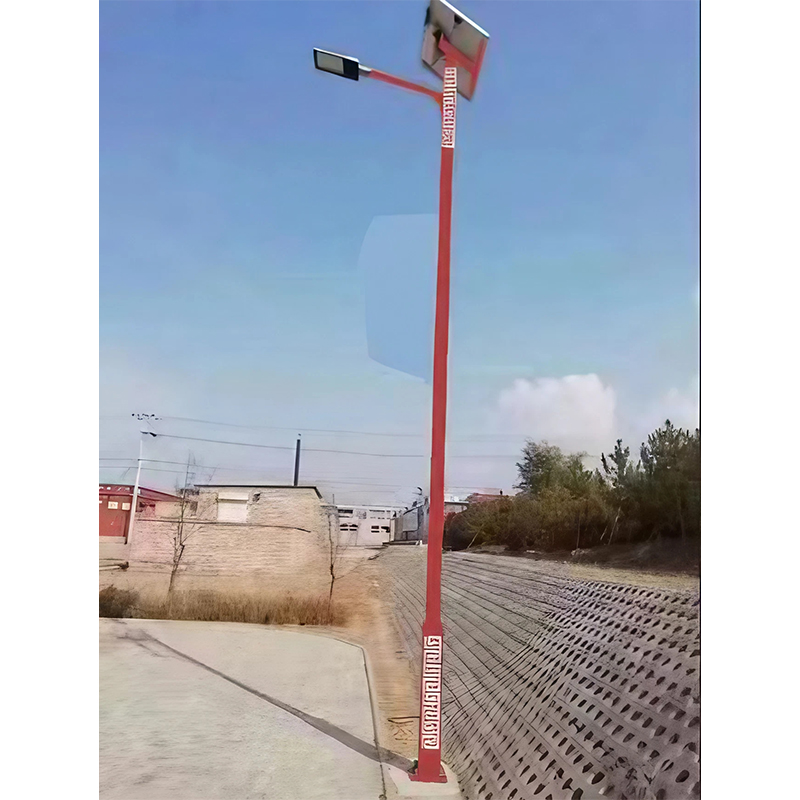
This mode completely bypasses the power grid bottleneck. Taking a 10-kilometer mountain village road as an example, if using municipal power, high-voltage lines would need to be erected across several mountain ridges, costing over one million yuan; while deploying 50 solar street lights requires a total investment of less than 300,000 yuan, and installation can be completed within 3 days. More importantly, as long as there is sunshine, the system can operate continuously—even after 3-5 consecutive days of cloudy or rainy weather, the high-quality lithium iron phosphate batteries can still guarantee basic lighting, truly achieving "on-site energy use."

3. Robust and Reliable: Designed for Harsh Environments
Areas without power grids often present extreme natural conditions, requiring solar street lights to possess exceptional adaptability:
Pole: Constructed from a single piece of Q235 carbon structural steel in a tapered tube, hot-dip galvanized and coated with outdoor-grade anti-rust paint, resistant to wind pressure up to level 12, salt spray, and UV radiation, with a lifespan exceeding 15 years;
Light Source: IP65-rated sealed LED modules, dustproof and waterproof, capable of stable operation in environments ranging from -30℃ to +50℃;
Battery: Lithium iron phosphate cells, with a cycle life exceeding 2000 cycles, no memory effect, and safety far superior to lead-acid or ternary lithium batteries, retaining over 80% of its capacity even at -20℃;
Controller: Integrated with multiple protections against overcharge, over-discharge, reverse connection, and short circuit. Some models support MPPT (Maximum Power Point Tracking), improving low-light charging efficiency by over 15%.
This "military-grade" reliability allows it to serve for extended periods in typhoon-prone islands, high-altitude, oxygen-deficient plateaus, and dust-ridden Gobi deserts, truly becoming "install-and-forget" infrastructure.
4. Social Value: Multiple Benefits Beyond Lighting
Solar street lights bring more than just illumination; they offer development opportunities:
Enhanced Safety: Reduces nighttime falls, traffic accidents, and crime, especially ensuring the safety of women and children.
Economic Activation: Extends the operating hours of small shops, promoting the nighttime economy, including night markets, logistics, and rural tourism.
Educational Improvement: Students can study under streetlights, compensating for the lack of electricity in homes.
Digital Access: The new generation of smart streetlights integrates 4G/5G micro base stations, WiFi hotspots, and surveillance cameras, becoming the "nerve endings" of rural digital infrastructure.
Emergency Support: In disasters such as earthquakes and floods, solar street lights can be quickly deployed as emergency lighting without relying on external power sources.
In Rwanda, Africa, the government's "solar street lights program" has illuminated thousands of villages, resulting in a 40% decrease in nighttime crime. In Liangshan, Sichuan, China, solar street lights have illuminated the "cliff village" trails of the Yi ethnic minority, ending the villagers' history of climbing vine ladders in the dark. These examples demonstrate that a single light can change the fate of a community.
5. Sustainability and Inclusivity: True Green Equity
Compared to diesel generators, solar street lights have zero emissions, zero fuel costs, and zero maintenance complexity. Their total lifecycle carbon footprint is only one-third that of municipal streetlights. Furthermore, the absence of electricity costs allows impoverished communities to use them long-term, avoiding the embarrassment of being able to install them but not afford to maintain them.
In addition, the modular design supports future upgrades—when the battery ages, only the energy storage unit needs to be replaced; when technology advances, a smart control module can be added. This "evolvable" characteristic ensures the long-term effectiveness of the initial investment.
In vast lands without grid coverage, solar street lights are not just lighting tools, but also symbols of hope, fulcrums of development, and carriers of equity. It solves the most complex infrastructure problems using the simplest physical principle—the photovoltaic effect. As the sun sets, solar streetlights automatically illuminate, lighting not only the road beneath our feet but also the path to modern civilization, safety, and dignity. In this sense, solar streetlights are not just a technological solution but also a form of humanistic care—ensuring that no inch of land is forgotten by the darkness.
1. The Economic and Engineering Challenges of Grid Extension
Establishing a power grid in remote areas faces three insurmountable obstacles:
First is the high cost. According to the International Energy Agency, in areas with a population density of less than 10 people per square kilometer, the unit cost of electricity supply for grid extension can be 5–10 times higher than in urban areas. Laying several kilometers of cable, installing transformers, and maintaining lines can easily require an investment of hundreds of thousands of yuan, while only a few dozen households may benefit, resulting in an extremely low return on investment.
Secondly, there are construction challenges. Topography such as high mountains, deep valleys, swamps, wetlands, and permafrost zones make trenching and pole erection nearly impossible; tropical rainforests or deserts face the risk of equipment corrosion from extreme weather.
Finally, there are maintenance challenges. In the event of a line failure, maintenance personnel must travel long distances, resulting in long response times and high failure rates, making "power restoration difficult, and maintaining power even more difficult."
As a result, approximately 760 million people worldwide still lack access to electricity, the vast majority of whom are concentrated in sub-Saharan Africa, South Asia, and remote rural areas. For them, waiting for grid coverage seems a distant prospect, while solar street lights offer a "leapfrog" solution.
2. Energy Self-Sufficiency: Where there is sunshine, there is light
The essence of solar street lights is an independent microgrid system, composed of photovoltaic panels, energy storage batteries, LED light sources, and intelligent controllers, completely independent of external power input. Its operating logic is extremely simple: During the day, a 60W high-efficiency monocrystalline silicon solar panel converts sunlight into electricity, which is stored in a 40Ah lithium iron phosphate battery; at night, a light control sensor automatically activates a 60W LED light head, providing stable lighting according to a preset mode.
This mode completely bypasses the power grid bottleneck. Taking a 10-kilometer mountain village road as an example, if using municipal power, high-voltage lines would need to be erected across several mountain ridges, costing over one million yuan; while deploying 50 solar street lights requires a total investment of less than 300,000 yuan, and installation can be completed within 3 days. More importantly, as long as there is sunshine, the system can operate continuously—even after 3-5 consecutive days of cloudy or rainy weather, the high-quality lithium iron phosphate batteries can still guarantee basic lighting, truly achieving "on-site energy use."
3. Robust and Reliable: Designed for Harsh Environments
Areas without power grids often present extreme natural conditions, requiring solar street lights to possess exceptional adaptability:
Pole: Constructed from a single piece of Q235 carbon structural steel in a tapered tube, hot-dip galvanized and coated with outdoor-grade anti-rust paint, resistant to wind pressure up to level 12, salt spray, and UV radiation, with a lifespan exceeding 15 years;
Light Source: IP65-rated sealed LED modules, dustproof and waterproof, capable of stable operation in environments ranging from -30℃ to +50℃;
Battery: Lithium iron phosphate cells, with a cycle life exceeding 2000 cycles, no memory effect, and safety far superior to lead-acid or ternary lithium batteries, retaining over 80% of its capacity even at -20℃;
Controller: Integrated with multiple protections against overcharge, over-discharge, reverse connection, and short circuit. Some models support MPPT (Maximum Power Point Tracking), improving low-light charging efficiency by over 15%.
This "military-grade" reliability allows it to serve for extended periods in typhoon-prone islands, high-altitude, oxygen-deficient plateaus, and dust-ridden Gobi deserts, truly becoming "install-and-forget" infrastructure.
4. Social Value: Multiple Benefits Beyond Lighting
Solar street lights bring more than just illumination; they offer development opportunities:
Enhanced Safety: Reduces nighttime falls, traffic accidents, and crime, especially ensuring the safety of women and children.
Economic Activation: Extends the operating hours of small shops, promoting the nighttime economy, including night markets, logistics, and rural tourism.
Educational Improvement: Students can study under streetlights, compensating for the lack of electricity in homes.
Digital Access: The new generation of smart streetlights integrates 4G/5G micro base stations, WiFi hotspots, and surveillance cameras, becoming the "nerve endings" of rural digital infrastructure.
Emergency Support: In disasters such as earthquakes and floods, solar street lights can be quickly deployed as emergency lighting without relying on external power sources.
In Rwanda, Africa, the government's "solar street lights program" has illuminated thousands of villages, resulting in a 40% decrease in nighttime crime. In Liangshan, Sichuan, China, solar street lights have illuminated the "cliff village" trails of the Yi ethnic minority, ending the villagers' history of climbing vine ladders in the dark. These examples demonstrate that a single light can change the fate of a community.
5. Sustainability and Inclusivity: True Green Equity
Compared to diesel generators, solar street lights have zero emissions, zero fuel costs, and zero maintenance complexity. Their total lifecycle carbon footprint is only one-third that of municipal streetlights. Furthermore, the absence of electricity costs allows impoverished communities to use them long-term, avoiding the embarrassment of being able to install them but not afford to maintain them.
In addition, the modular design supports future upgrades—when the battery ages, only the energy storage unit needs to be replaced; when technology advances, a smart control module can be added. This "evolvable" characteristic ensures the long-term effectiveness of the initial investment.
In vast lands without grid coverage, solar street lights are not just lighting tools, but also symbols of hope, fulcrums of development, and carriers of equity. It solves the most complex infrastructure problems using the simplest physical principle—the photovoltaic effect. As the sun sets, solar streetlights automatically illuminate, lighting not only the road beneath our feet but also the path to modern civilization, safety, and dignity. In this sense, solar streetlights are not just a technological solution but also a form of humanistic care—ensuring that no inch of land is forgotten by the darkness.