


How do solar street lights reduce the impact of construction on traffic and the environment?
Release Time : 2025-12-16
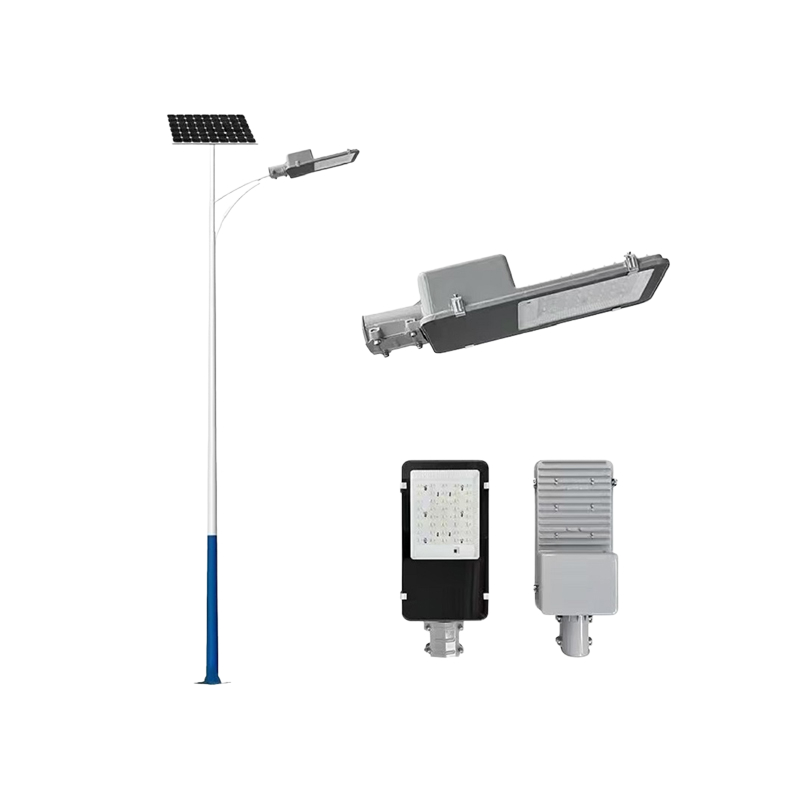
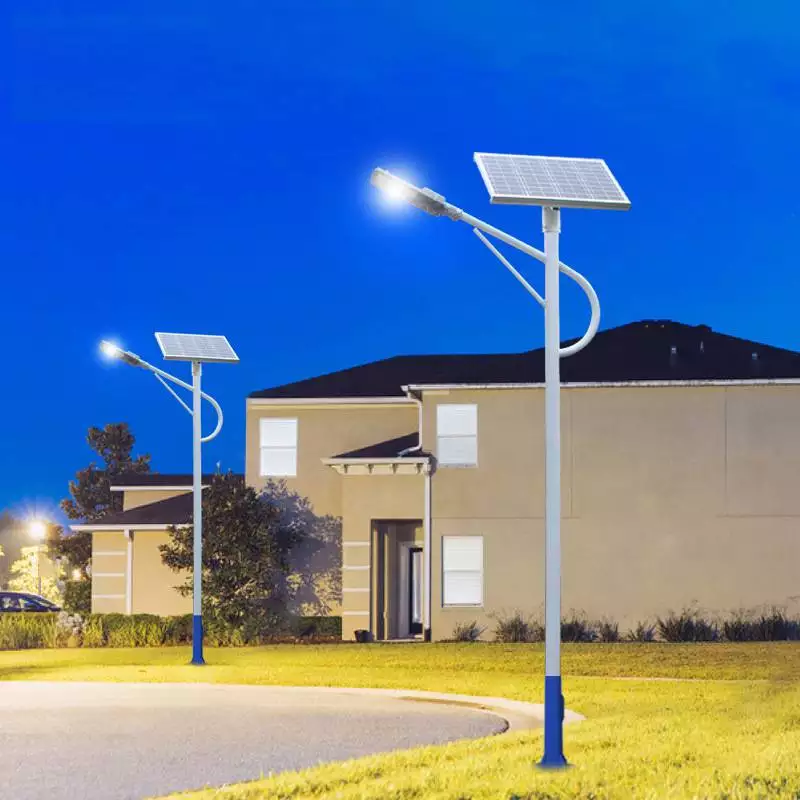
In today's world, where green and low-carbon concepts are deeply ingrained, solar street lights, as a model of integrating renewable energy with smart lighting, are rapidly replacing traditional municipal streetlights and are widely used in urban secondary roads, rural roads, park trails, and remote areas without electricity. Taking a typical configuration as an example: a 6-meter-high, one-piece formed tapered light pole made of Q235 steel, with double corrosion protection through hot-dip galvanizing and outdoor anti-rust paint; equipped with a 60W LED light source, a 40Ah lithium iron phosphate battery, and a 60W high-efficiency solar panel, supporting an intelligent operation mode of "automatic lighting at dusk and automatic shutdown after 6 hours of operation." This mature and reliable system not only achieves zero-carbon lighting during use but also demonstrates great friendliness to traffic order and the ecological environment during construction.

1. No Excavation, No Wiring: Say Goodbye to the "Street Zipper" Problem
Traditional street light installation requires digging 0.6-0.8 meters deep cable trenches along both sides of the road, laying PVC or galvanized steel pipes, inserting multi-core copper cables, backfilling, compacting, and restoring the road surface. This process is not only time-consuming but also causes serious traffic disruption: lane closures, detour signs, and construction barriers often exacerbate congestion during rush hours and can even lead to traffic accidents. Furthermore, the "street zipper" effect created by repeated excavation damages the road structure, making it prone to water accumulation and subsidence during the rainy season, resulting in high repair costs.
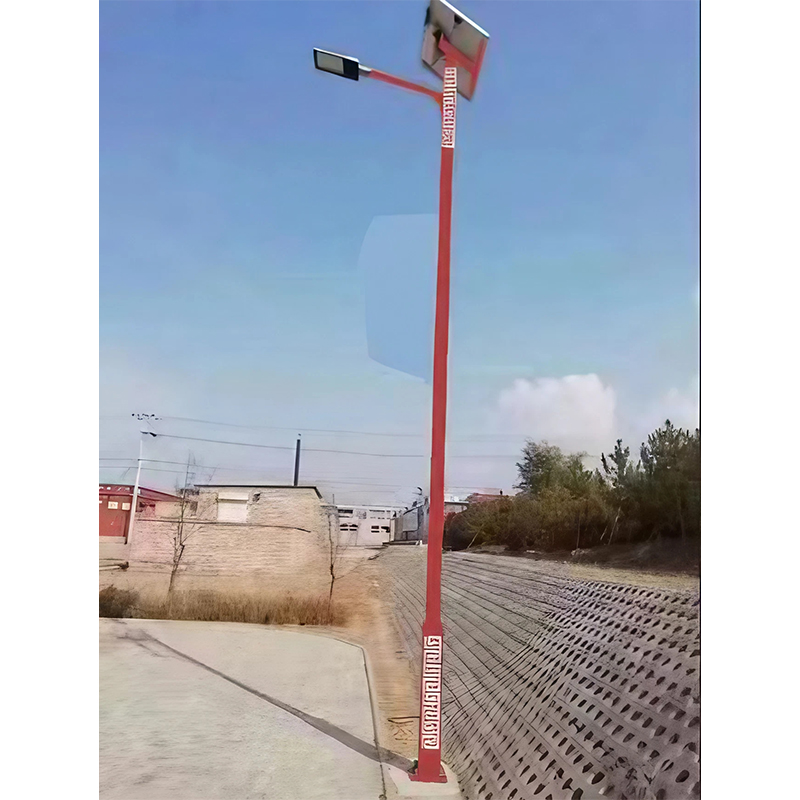
This solar street light uses an independent off-grid system. All power comes from a 60W solar panel on top, stored in a built-in 40Ah lithium iron phosphate battery, requiring no external power grid connection. Installation only requires pouring a small concrete foundation at the designated location and erecting a 6-meter tapered light pole. The entire process requires no road breaking, no pipe installation, and no cable laying, truly achieving "zero excavation." In sensitive areas such as urban secondary roads or near schools, construction can be completed quickly at night or during off-peak hours, with minimal obstruction of traffic lanes, maximizing traffic flow.

2. Lightweight Operation: Reduced Mechanical Disturbance and Ecological Footprint
Since heavy electrical equipment is not required, solar street lights can be installed with only a small crane or manual assistance. The integrated tapered light pole structure made of Q235 steel is robust and lightweight, and with modular LED light heads and battery compartments, on-site assembly is simple. This "light intervention" construction mode brings significant ecological advantages:
Reduced Heavy Machinery Access: Avoids damage to green spaces, sidewalks, or slopes caused by excavators, cable pullers, etc.;
Controlled Construction Area: The work area is limited to 2-3 square meters around the light pole base, with minimal impact on tree roots, lawns, or soil microorganisms;
No Construction Waste: No construction waste such as cable sheathing, junction box packaging, or abandoned pipes is generated, keeping the site clean and orderly.
In fragile environments such as ecological reserves, wetland edges, or ancient village stone paths, this low-disturbance characteristic is particularly valuable, effectively protecting the original natural texture and cultural landscape.
3. Immediate Installation and Use, Shortened Construction Period: Reduced Long-Term Interference
Thanks to its highly integrated design, these solar street lights can be transported and activated in just a few hours. The 60W LED light source, controller, and battery are pre-installed inside or on top of the light pole. On-site operation requires only leveling, tightening anchor bolts, and simple debugging for automatic operation. Its intelligent working mode requires no additional programming or network setup, truly achieving "installation as a service."
Compared to traditional streetlights, which require multiple steps such as cable laying, distribution box debugging, and power-on acceptance, the construction cycle of solar street lights is shortened by more than 70%. A lighting project for a 1-kilometer rural road that traditionally takes 10-15 days can be completed within 3 days with the solar solution. This significant reduction in construction time means a substantial decrease in disruption to residents' lives, wildlife activities, and surrounding businesses, resulting in significant social benefits.
4. No Grid Dependence: Avoiding the Chain Reaction of Power Supply Infrastructure
Traditional lighting extensions to remote areas often require new transformers, high-voltage lines, or extended low-voltage lines. This power infrastructure itself brings secondary environmental problems such as deforestation, landslides, and electromagnetic radiation. However, this solar street light system, equipped with a 60W high-efficiency photovoltaic panel and a 40Ah long-life lithium iron phosphate battery, can still guarantee basic lighting even during 3-5 consecutive days of cloudy or rainy weather, completely independent of the power grid. This not only saves huge investments in power infrastructure but also avoids the disruption and damage to the natural ecosystem caused by power transmission corridors.
5. Relocatable and Recyclable: A Green Closed-Loop System Throughout its Lifecycle
The light pole uses Q235 steel + hot-dip galvanizing + outdoor paint for triple corrosion protection, with a designed lifespan exceeding 15 years. The lithium iron phosphate battery is safe and environmentally friendly, and can be professionally recycled after retirement to extract lithium, iron, and phosphorus resources. More importantly, the entire system is detachable and relocatable. When road realignment or temporary works are completed, the lighting fixtures can be moved to a new site for reuse, and the foundation concrete can be broken up and backfilled, leaving no permanent traces of the project and achieving flexible use of land resources.
Solar street lights are not only carriers of clean energy, but also a vivid example of the "Low Impact Development" (LID) concept in municipal engineering. Through advantages such as no excavation, minimal construction, rapid installation, and zero grid dependence, they illuminate the night while gently avoiding harsh intervention in traffic flow and the ecosystem.
1. No Excavation, No Wiring: Say Goodbye to the "Street Zipper" Problem
Traditional street light installation requires digging 0.6-0.8 meters deep cable trenches along both sides of the road, laying PVC or galvanized steel pipes, inserting multi-core copper cables, backfilling, compacting, and restoring the road surface. This process is not only time-consuming but also causes serious traffic disruption: lane closures, detour signs, and construction barriers often exacerbate congestion during rush hours and can even lead to traffic accidents. Furthermore, the "street zipper" effect created by repeated excavation damages the road structure, making it prone to water accumulation and subsidence during the rainy season, resulting in high repair costs.
This solar street light uses an independent off-grid system. All power comes from a 60W solar panel on top, stored in a built-in 40Ah lithium iron phosphate battery, requiring no external power grid connection. Installation only requires pouring a small concrete foundation at the designated location and erecting a 6-meter tapered light pole. The entire process requires no road breaking, no pipe installation, and no cable laying, truly achieving "zero excavation." In sensitive areas such as urban secondary roads or near schools, construction can be completed quickly at night or during off-peak hours, with minimal obstruction of traffic lanes, maximizing traffic flow.
2. Lightweight Operation: Reduced Mechanical Disturbance and Ecological Footprint
Since heavy electrical equipment is not required, solar street lights can be installed with only a small crane or manual assistance. The integrated tapered light pole structure made of Q235 steel is robust and lightweight, and with modular LED light heads and battery compartments, on-site assembly is simple. This "light intervention" construction mode brings significant ecological advantages:
Reduced Heavy Machinery Access: Avoids damage to green spaces, sidewalks, or slopes caused by excavators, cable pullers, etc.;
Controlled Construction Area: The work area is limited to 2-3 square meters around the light pole base, with minimal impact on tree roots, lawns, or soil microorganisms;
No Construction Waste: No construction waste such as cable sheathing, junction box packaging, or abandoned pipes is generated, keeping the site clean and orderly.
In fragile environments such as ecological reserves, wetland edges, or ancient village stone paths, this low-disturbance characteristic is particularly valuable, effectively protecting the original natural texture and cultural landscape.
3. Immediate Installation and Use, Shortened Construction Period: Reduced Long-Term Interference
Thanks to its highly integrated design, these solar street lights can be transported and activated in just a few hours. The 60W LED light source, controller, and battery are pre-installed inside or on top of the light pole. On-site operation requires only leveling, tightening anchor bolts, and simple debugging for automatic operation. Its intelligent working mode requires no additional programming or network setup, truly achieving "installation as a service."
Compared to traditional streetlights, which require multiple steps such as cable laying, distribution box debugging, and power-on acceptance, the construction cycle of solar street lights is shortened by more than 70%. A lighting project for a 1-kilometer rural road that traditionally takes 10-15 days can be completed within 3 days with the solar solution. This significant reduction in construction time means a substantial decrease in disruption to residents' lives, wildlife activities, and surrounding businesses, resulting in significant social benefits.
4. No Grid Dependence: Avoiding the Chain Reaction of Power Supply Infrastructure
Traditional lighting extensions to remote areas often require new transformers, high-voltage lines, or extended low-voltage lines. This power infrastructure itself brings secondary environmental problems such as deforestation, landslides, and electromagnetic radiation. However, this solar street light system, equipped with a 60W high-efficiency photovoltaic panel and a 40Ah long-life lithium iron phosphate battery, can still guarantee basic lighting even during 3-5 consecutive days of cloudy or rainy weather, completely independent of the power grid. This not only saves huge investments in power infrastructure but also avoids the disruption and damage to the natural ecosystem caused by power transmission corridors.
5. Relocatable and Recyclable: A Green Closed-Loop System Throughout its Lifecycle
The light pole uses Q235 steel + hot-dip galvanizing + outdoor paint for triple corrosion protection, with a designed lifespan exceeding 15 years. The lithium iron phosphate battery is safe and environmentally friendly, and can be professionally recycled after retirement to extract lithium, iron, and phosphorus resources. More importantly, the entire system is detachable and relocatable. When road realignment or temporary works are completed, the lighting fixtures can be moved to a new site for reuse, and the foundation concrete can be broken up and backfilled, leaving no permanent traces of the project and achieving flexible use of land resources.
Solar street lights are not only carriers of clean energy, but also a vivid example of the "Low Impact Development" (LID) concept in municipal engineering. Through advantages such as no excavation, minimal construction, rapid installation, and zero grid dependence, they illuminate the night while gently avoiding harsh intervention in traffic flow and the ecosystem.