


How to Ensure Uniform Illumination and Coverage of Solar Street Lights at Different Installation Heights and Spacings?
Release Time : 2026-03-24
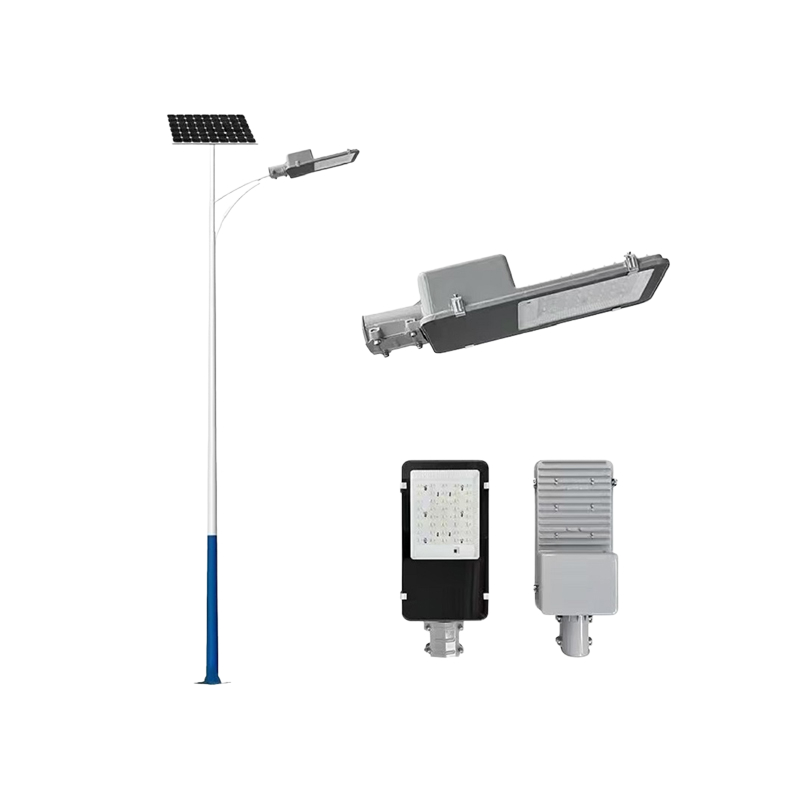
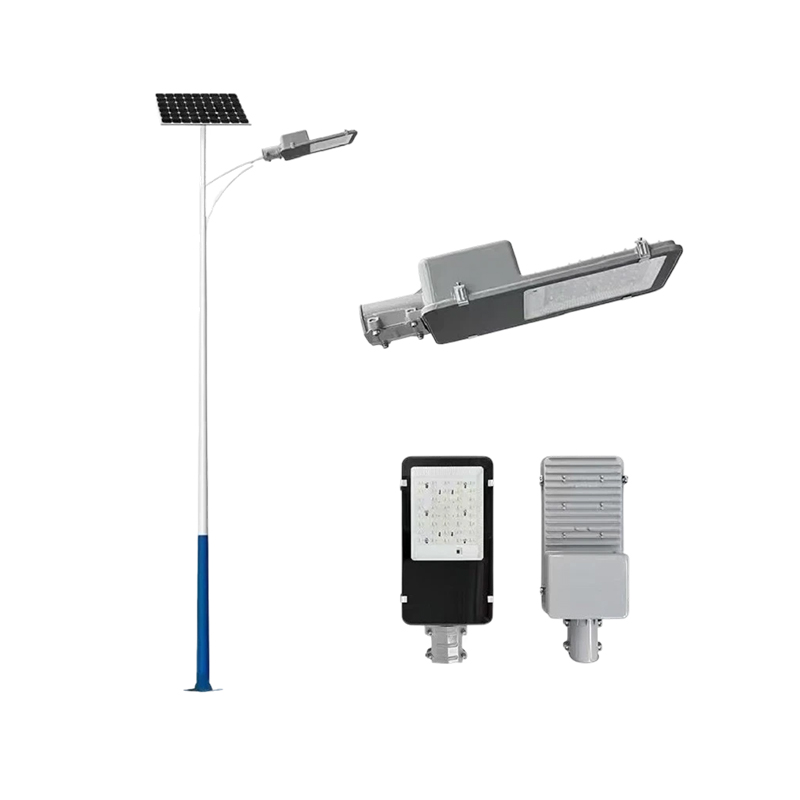
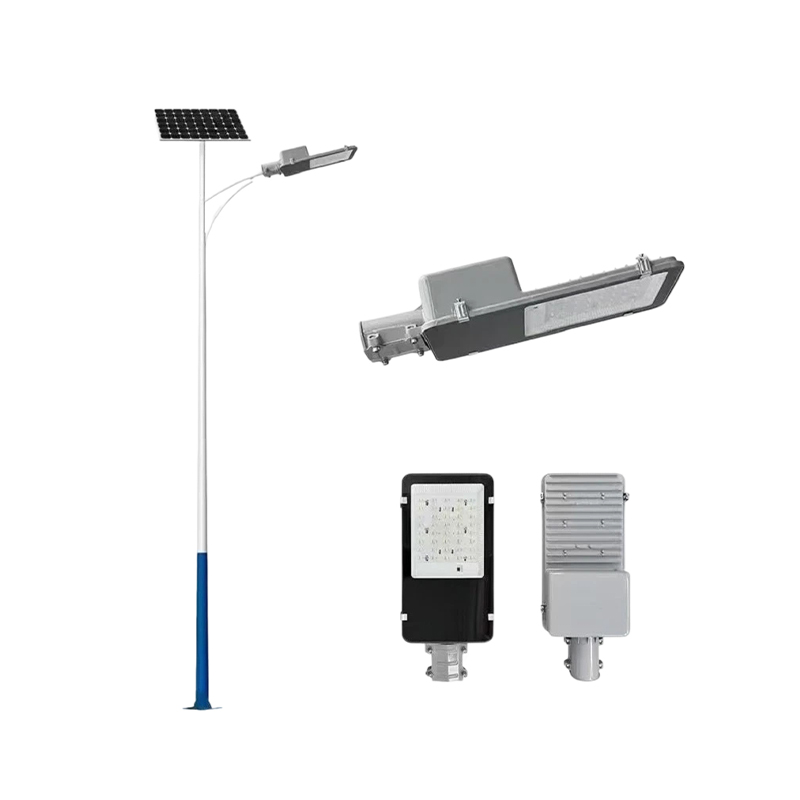
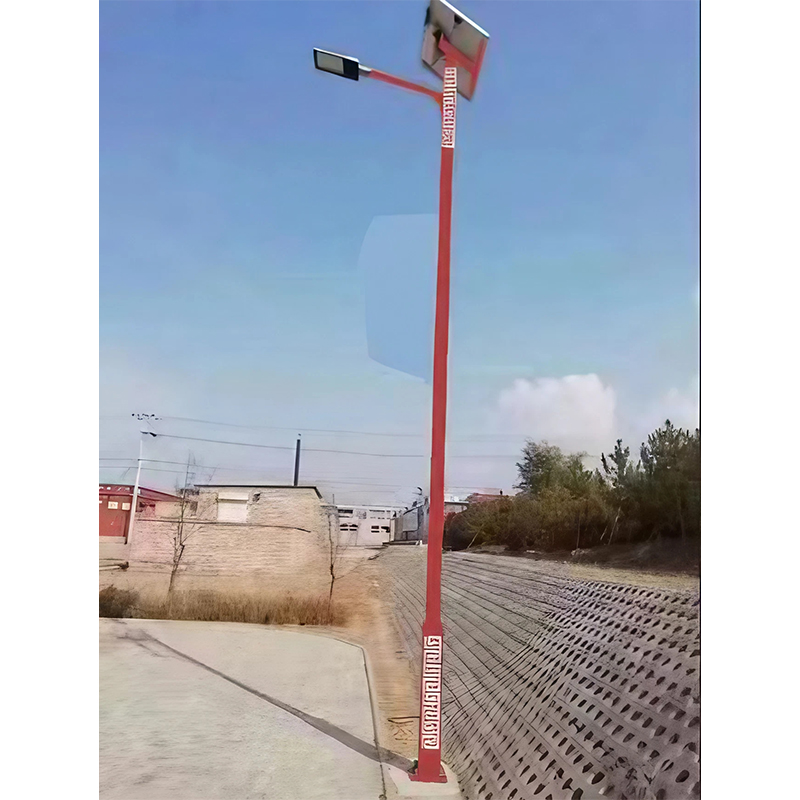
Solar street lights are essential lighting facilities for modern urban roads, residential communities, and rural roads. Their design must consider not only durability, corrosion resistance, and energy efficiency, but also ensuring uniform illumination and coverage. The rational planning of uniform illumination and coverage is crucial for nighttime driving and pedestrian safety, as well as the aesthetic appeal of the urban landscape. Scientifically designing the light source angle, power, and layout scheme under different installation heights and pole spacing is key to ensuring the lighting effect of solar street lights.
1. Matching Lamp Power with Light Source Design and Installation Height
The power of the solar street light source directly affects the illumination range and illuminance level. For 60W or higher power LED light sources, adjusting the light emission angle and luminous flux distribution can adapt to different installation height requirements. Generally, the higher the installation height, the wider the illumination coverage, but the illuminance per unit area will decrease accordingly. By optimizing the design of optical lenses and reflectors, the beam can be diffused uniformly, ensuring that even with high-pole installations, the road surface maintains suitable brightness.
2. Optimize Pole Spacing to Improve Coverage Uniformity
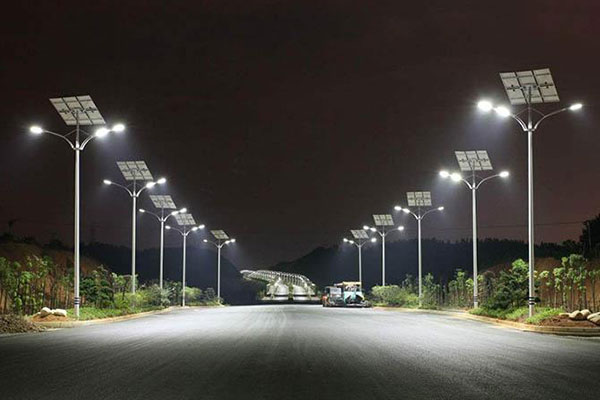
Pole spacing is a crucial factor affecting the uniformity of road lighting. Excessive spacing can lead to uneven illuminance attenuation, resulting in light spots or dark areas; insufficient spacing increases construction costs. By calculating the illuminance distribution curve and considering road width and intended use, the optimal pole spacing can be determined. For example, on urban arterial roads, a pole spacing of 2 to 3 times the installation height can ensure continuous beam coverage and create a continuous lighting area; on sidewalks or residential roads, the spacing can be appropriately shortened to improve safety.
3. Optimize Illuminance Distribution with Optical Components
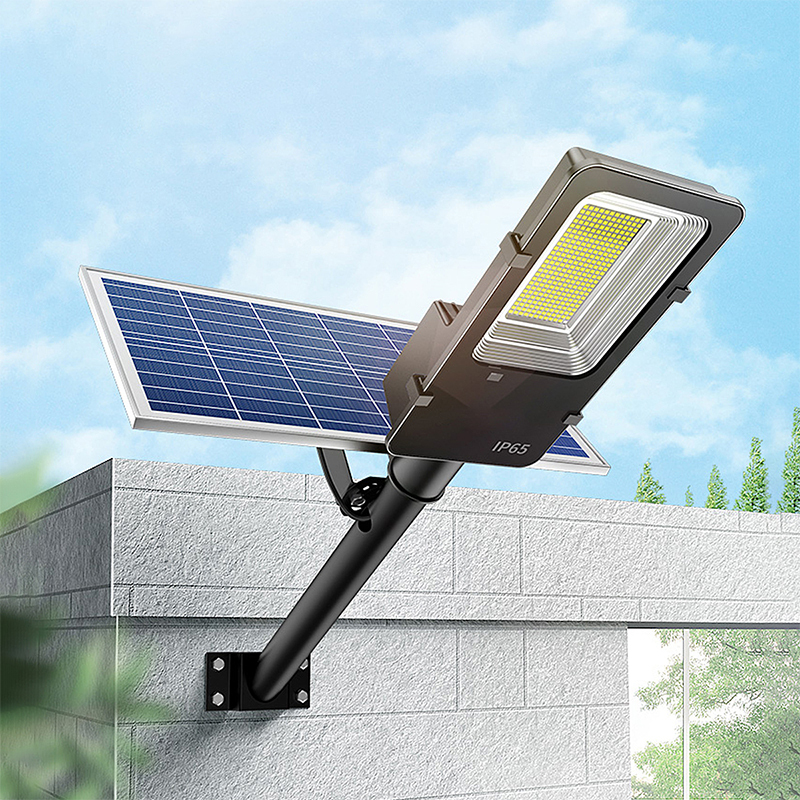
Solar street lights are typically equipped with lenses, reflectors, or light guides to control the beam angle and distribution shape. Optimizing the optical design allows the lights to focus light onto the road surface, reducing light pollution and energy waste. Different beam angles or lens types can be used for different installation heights to match the beam coverage to the road width, while avoiding significant shadows on uneven road sections, thus improving lighting uniformity.
4. Tilt Angle Adjustment and Oriented Installation
The tilt angle and orientation of the lamp head are also key factors in ensuring uniform illumination. For different road types or installation heights, fine-tuning the lamp head tilt angle allows for even light distribution along the road centerline, effectively covering the carriageway and pedestrian areas on both sides. For example, in high-pole installations, a slight forward tilt extends the beam to the distant road surface, while in low-pole installations, vertical projection is maintained to avoid insufficient illumination or concentrated bright spots.
5. Multi-Mode Control and Light Intensity Adjustment
Modern solar street lights are equipped with an intelligent control system that automatically adjusts light intensity based on nighttime hours, ambient light intensity, or pedestrian density. Illumination is reduced during low traffic hours to save energy and reduce glare; light intensity is increased during high traffic or pedestrian density to ensure safety. This dynamic adjustment mechanism further optimizes illumination uniformity and coverage under different installation heights and spacing conditions.
6. Installation Layout Considering the Geographical Environment
Road width, curves, terrain undulations, and the height of surrounding buildings all affect light distribution. By simulating and planning the illuminance of road sections, and combining installation height and pole spacing, the layout of lighting fixtures can be designed in advance to match the beam coverage with the actual road environment. For example, on curves or uphill/downhill sections, the position of the poles and the orientation of the lamp heads can be appropriately adjusted to ensure uniform light distribution and avoid localized dark areas or glare.
7. Long-term maintenance ensures uniform lighting
Even with a reasonable design, performance degradation of solar panels or LED light sources can lead to uneven illuminance. Regularly cleaning the solar panels and lamp head lenses, as well as inspecting the light source and control system, can ensure stable light output and maintain uniform lighting effects. Long-term maintenance combined with scientific design ensures the continuity and safety of nighttime road lighting.
In summary, solar street lights, under different installation heights and pole spacing conditions, achieve uniform illuminance and maximized coverage through light source power matching, pole spacing planning, optical accessory optimization, lamp head tilting and orientation, intelligent beam intensity adjustment, and a scientific layout combined with the road's geographical environment. The combination of reasonable design and maintenance not only improves the safety of driving and pedestrians at night, but also optimizes the effect of urban night lighting, providing a reliable guarantee for efficient and energy-saving road lighting.
1. Matching Lamp Power with Light Source Design and Installation Height
The power of the solar street light source directly affects the illumination range and illuminance level. For 60W or higher power LED light sources, adjusting the light emission angle and luminous flux distribution can adapt to different installation height requirements. Generally, the higher the installation height, the wider the illumination coverage, but the illuminance per unit area will decrease accordingly. By optimizing the design of optical lenses and reflectors, the beam can be diffused uniformly, ensuring that even with high-pole installations, the road surface maintains suitable brightness.
2. Optimize Pole Spacing to Improve Coverage Uniformity
Pole spacing is a crucial factor affecting the uniformity of road lighting. Excessive spacing can lead to uneven illuminance attenuation, resulting in light spots or dark areas; insufficient spacing increases construction costs. By calculating the illuminance distribution curve and considering road width and intended use, the optimal pole spacing can be determined. For example, on urban arterial roads, a pole spacing of 2 to 3 times the installation height can ensure continuous beam coverage and create a continuous lighting area; on sidewalks or residential roads, the spacing can be appropriately shortened to improve safety.
3. Optimize Illuminance Distribution with Optical Components
Solar street lights are typically equipped with lenses, reflectors, or light guides to control the beam angle and distribution shape. Optimizing the optical design allows the lights to focus light onto the road surface, reducing light pollution and energy waste. Different beam angles or lens types can be used for different installation heights to match the beam coverage to the road width, while avoiding significant shadows on uneven road sections, thus improving lighting uniformity.
4. Tilt Angle Adjustment and Oriented Installation
The tilt angle and orientation of the lamp head are also key factors in ensuring uniform illumination. For different road types or installation heights, fine-tuning the lamp head tilt angle allows for even light distribution along the road centerline, effectively covering the carriageway and pedestrian areas on both sides. For example, in high-pole installations, a slight forward tilt extends the beam to the distant road surface, while in low-pole installations, vertical projection is maintained to avoid insufficient illumination or concentrated bright spots.
5. Multi-Mode Control and Light Intensity Adjustment
Modern solar street lights are equipped with an intelligent control system that automatically adjusts light intensity based on nighttime hours, ambient light intensity, or pedestrian density. Illumination is reduced during low traffic hours to save energy and reduce glare; light intensity is increased during high traffic or pedestrian density to ensure safety. This dynamic adjustment mechanism further optimizes illumination uniformity and coverage under different installation heights and spacing conditions.
6. Installation Layout Considering the Geographical Environment
Road width, curves, terrain undulations, and the height of surrounding buildings all affect light distribution. By simulating and planning the illuminance of road sections, and combining installation height and pole spacing, the layout of lighting fixtures can be designed in advance to match the beam coverage with the actual road environment. For example, on curves or uphill/downhill sections, the position of the poles and the orientation of the lamp heads can be appropriately adjusted to ensure uniform light distribution and avoid localized dark areas or glare.
7. Long-term maintenance ensures uniform lighting
Even with a reasonable design, performance degradation of solar panels or LED light sources can lead to uneven illuminance. Regularly cleaning the solar panels and lamp head lenses, as well as inspecting the light source and control system, can ensure stable light output and maintain uniform lighting effects. Long-term maintenance combined with scientific design ensures the continuity and safety of nighttime road lighting.
In summary, solar street lights, under different installation heights and pole spacing conditions, achieve uniform illuminance and maximized coverage through light source power matching, pole spacing planning, optical accessory optimization, lamp head tilting and orientation, intelligent beam intensity adjustment, and a scientific layout combined with the road's geographical environment. The combination of reasonable design and maintenance not only improves the safety of driving and pedestrians at night, but also optimizes the effect of urban night lighting, providing a reliable guarantee for efficient and energy-saving road lighting.